Success often looks inevitable in hindsight.
We see the awards, international recognition, influential careers and millions of people who know their names. What we do not always see is what came before: the ordinary beginnings, difficult choices, uncertain seasons and small opportunities that eventually became extraordinary journeys.
Across Africa and beyond, some of the continent’s most influential women began in places and circumstances far removed from the global stages they would eventually occupy. Here are 10 African women whose beginnings remind us that greatness rarely arrives fully formed.
Wangari Maathai: From Rural Kenya to a Global Environmental Movement
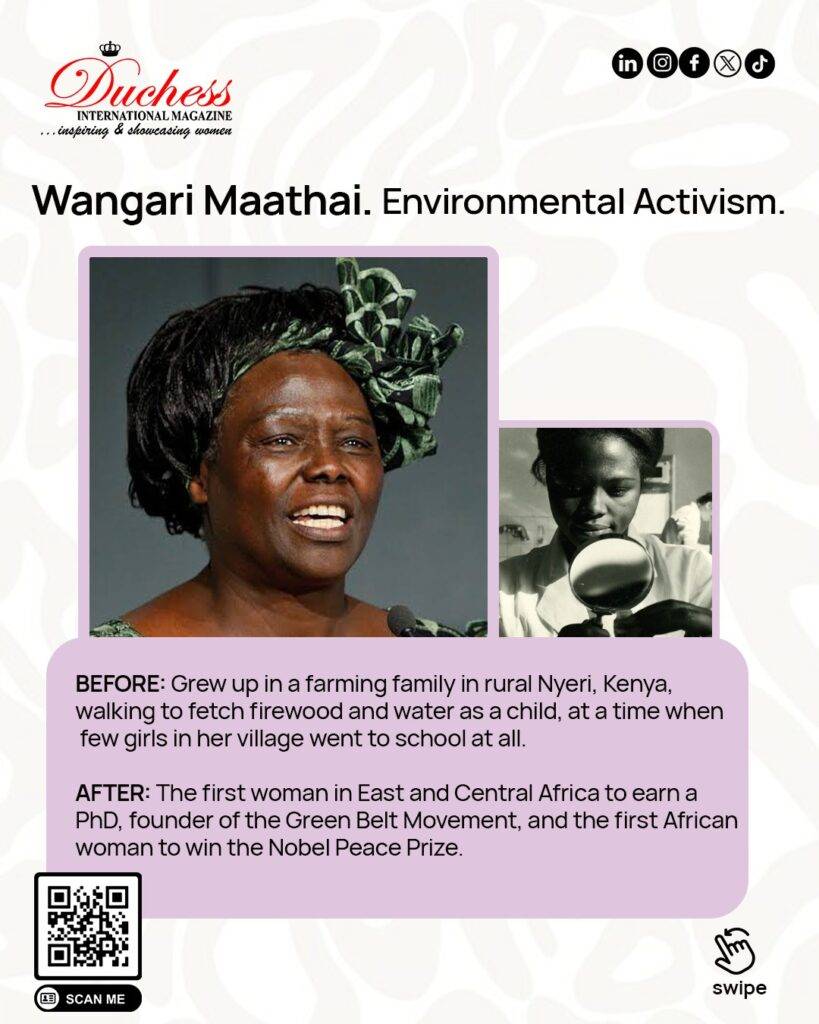
Wangari Maathai grew up in a farming family in rural Nyeri, Kenya, at a time when educational opportunities for girls were limited. Her childhood experiences of the natural environment later influence the work that defined her legacy.
She went on to become the first woman in East and Central Africa to earn a PhD and founded the Green Belt Movement, which mobilised communities, particularly women, to plant trees and protect the environment. In 2004, she became the first African woman to receive the Nobel Peace Prize, recognised for her contribution to sustainable development, democracy and peace.
Ellen Johnson Sirleaf: From Liberia to the Presidency
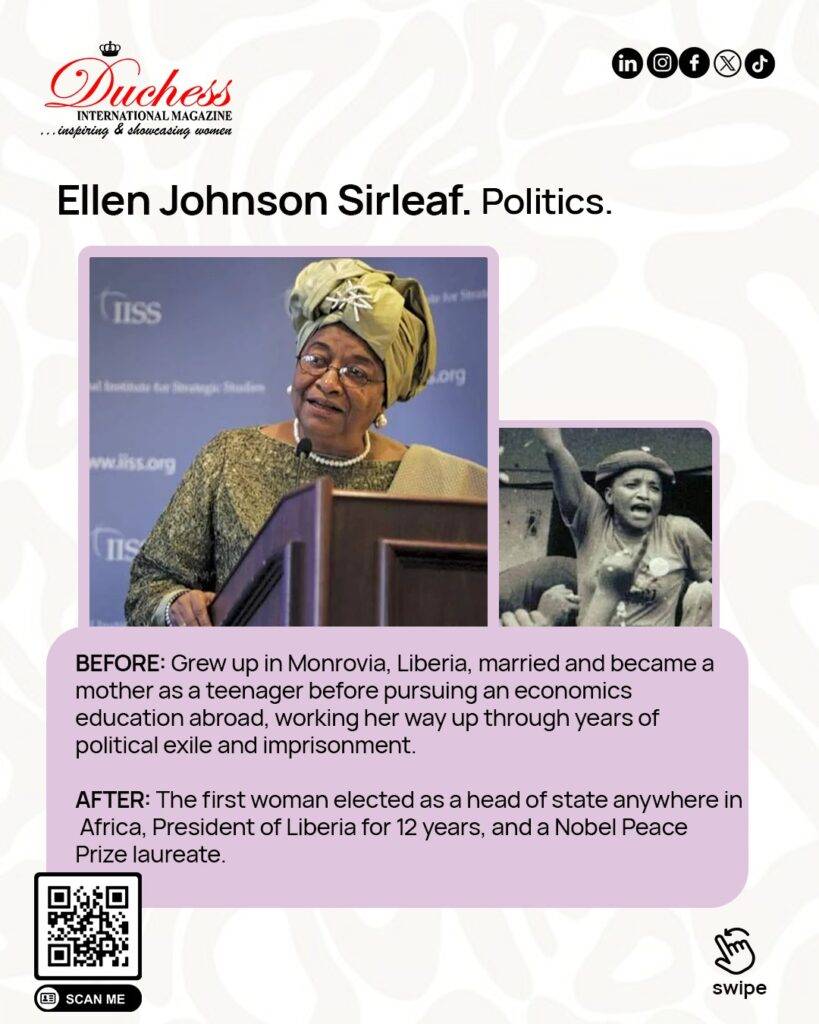
Ellen Johnson Sirleaf’s journey into politics was neither immediate nor straightforward. Born and raised in Monrovia, Liberia, she became a mother while still young before pursuing her education in economics abroad.
Her career unfolded through periods of political instability, exile and imprisonment. Yet she continued to build her experience in public service and international finance. In 2006, she made history as Africa’s first democratically elected female head of state, becoming President of Liberia. She later shared the 2011 Nobel Peace Prize for her work promoting women’s rights and peacebuilding.
Chimamanda Ngozi Adichie: From Nsukka to the World
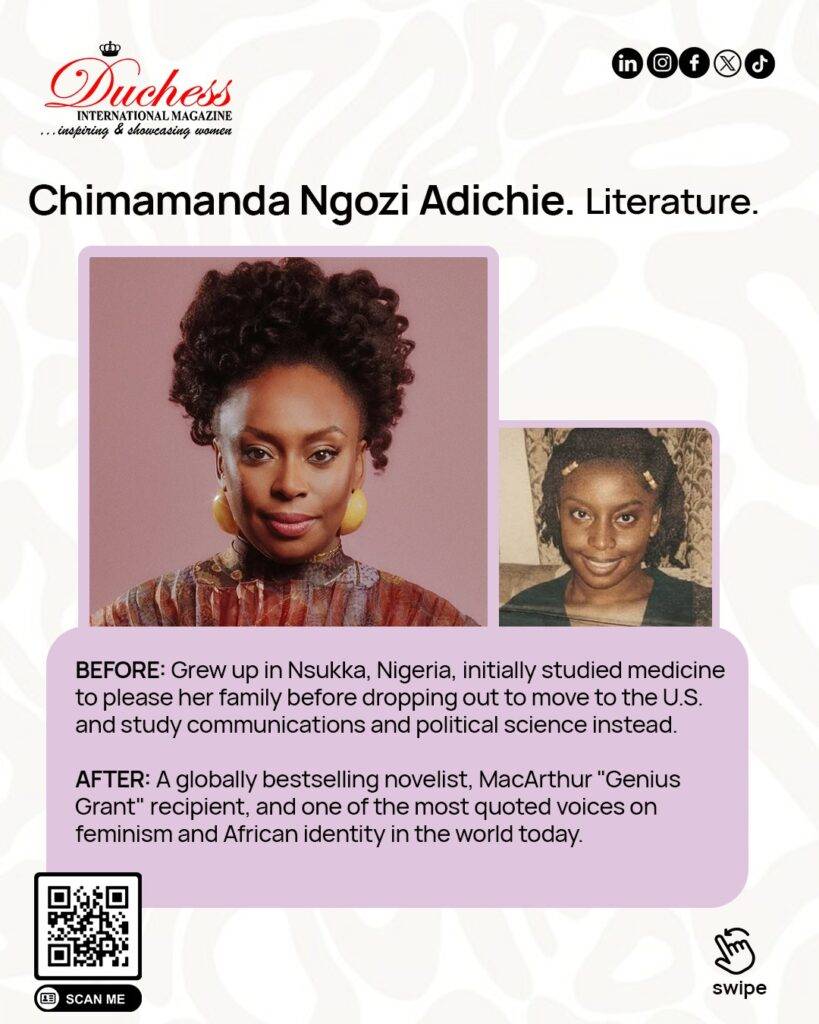
Before becoming one of Africa’s most internationally recognised literary voices, Chimamanda Ngozi Adichie grew up in Nsukka, Nigeria. Her path was not initially centred on literature. She began studying medicine in Nigeria before moving to the United States, where she studied communications and political science and eventually pursued writing more seriously.
Her novels and essays have earned international acclaim, while her writing on feminism, identity, culture and the African experience has reached audiences around the world. She has also received a MacArthur Fellowship, commonly known as the “Genius Grant.”
Ngozi Okonjo-Iweala: From Nigeria to Global Economic Leadership
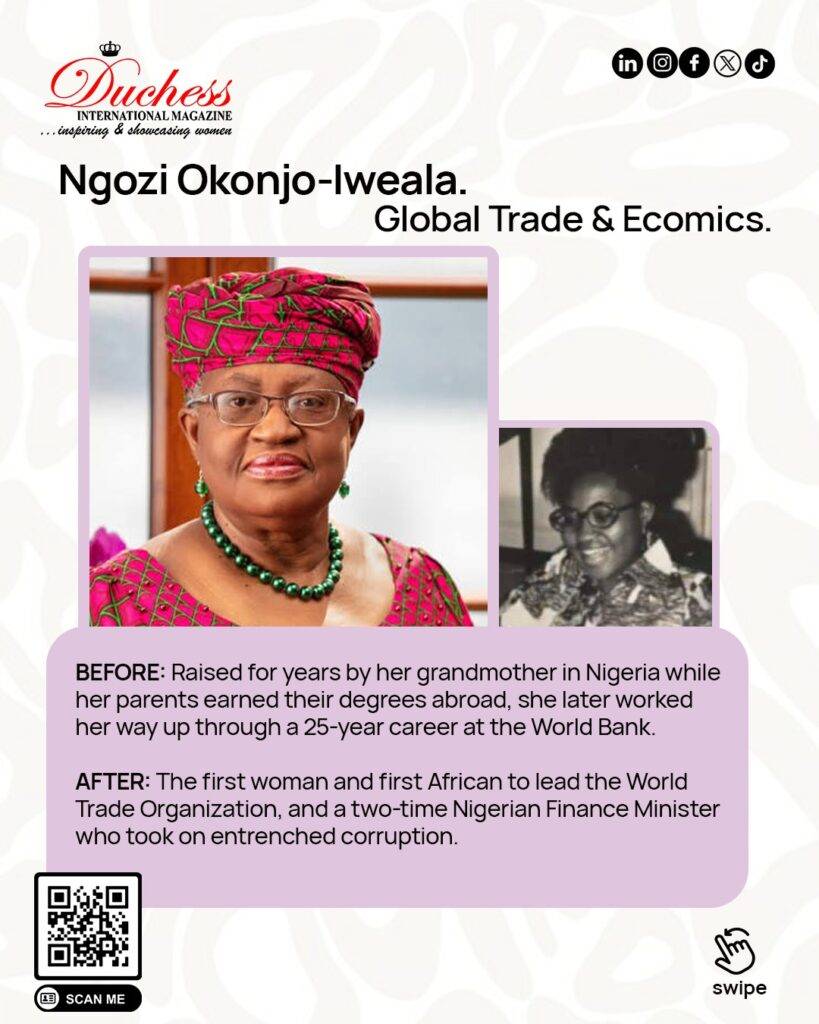
Ngozi Okonjo-Iweala’s story began with a childhood shaped by education and family sacrifice. She was raised for periods by her grandmother in Nigeria while her parents pursued their academic careers abroad.
Her own academic journey eventually took her to the United States, followed by a 25-year career at the World Bank, where she rose to one of its highest-ranking positions. She went on to serve twice as Nigeria’s Finance Minister and later made global history in 2021 as the first woman and first African to become Director-General of the World Trade Organization.
Folorunso Alakija: From Banking to Business
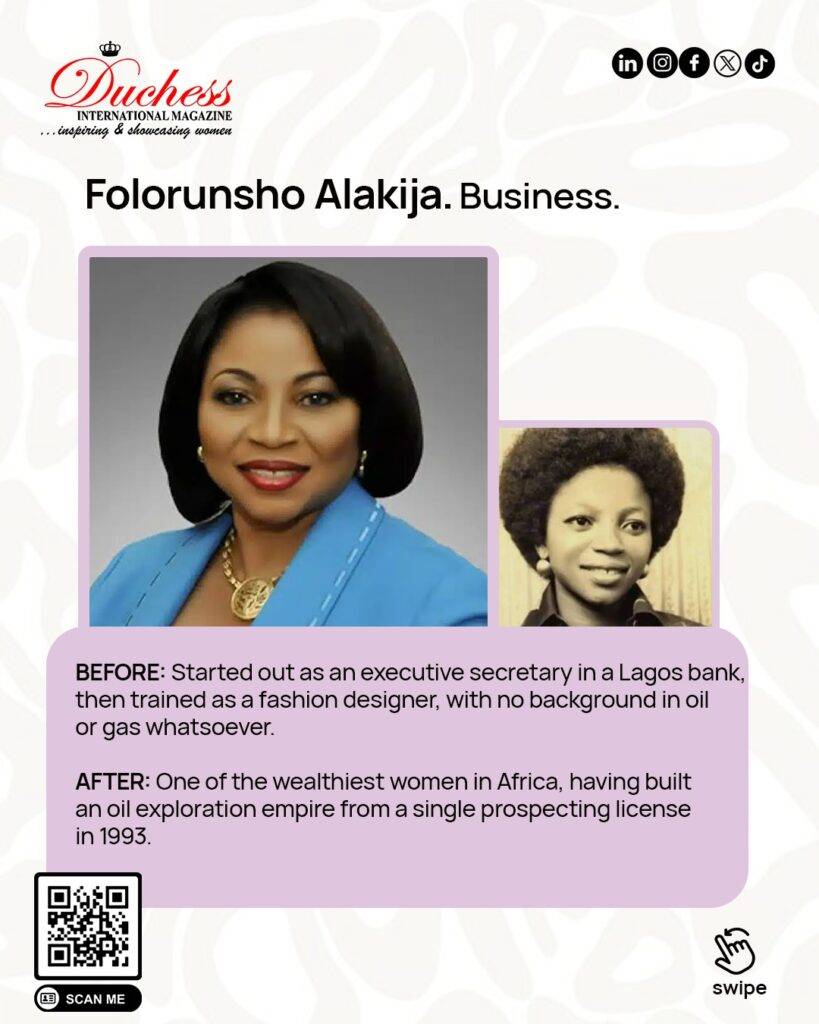
Folorunso Alakija did not begin her career in the oil industry. She started as an executive secretary at a bank in Lagos and later pursued her interest in fashion, training as a fashion designer.
Her transition into business eventually took her into the oil and gas sector, where she secured an oil prospecting licence in the early 1990s.That opportunity became the foundation for a major business empire. Alakija would go on to become one of Africa’s most prominent female entrepreneurs and one of the continent’s wealthiest women.
Caster Semenya: From a Small Village to the Global Track
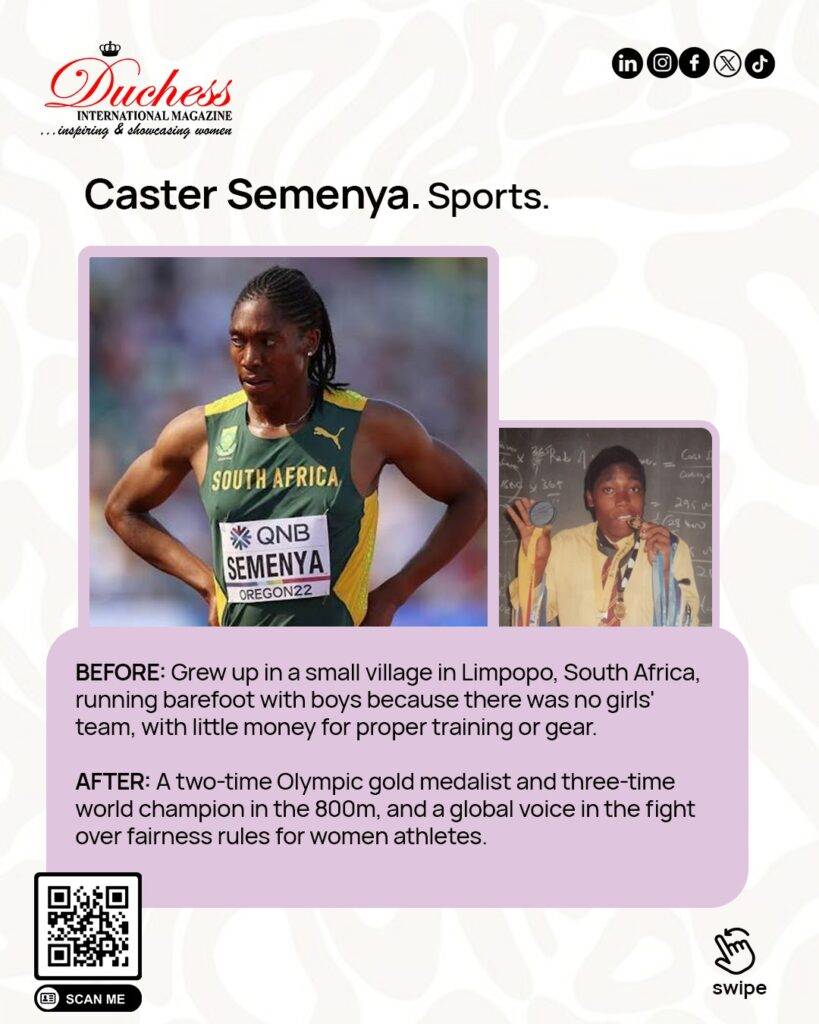
Caster Semenya’s story began in Limpopo, South Africa, where she grew up with limited resources and developed her passion for running. As a young girl, she often ran with boys because there was no girls’ team available to her. What began as a simple love for athletics eventually became an elite sporting career.
Semenya became a two-time Olympic champion and three-time world champion in the 800 metres. Her career has also placed her at the centre of an international debate over regulations governing women athletes and eligibility in el
Bozoma Saint John: From a Migrant Childhood to Global Brands
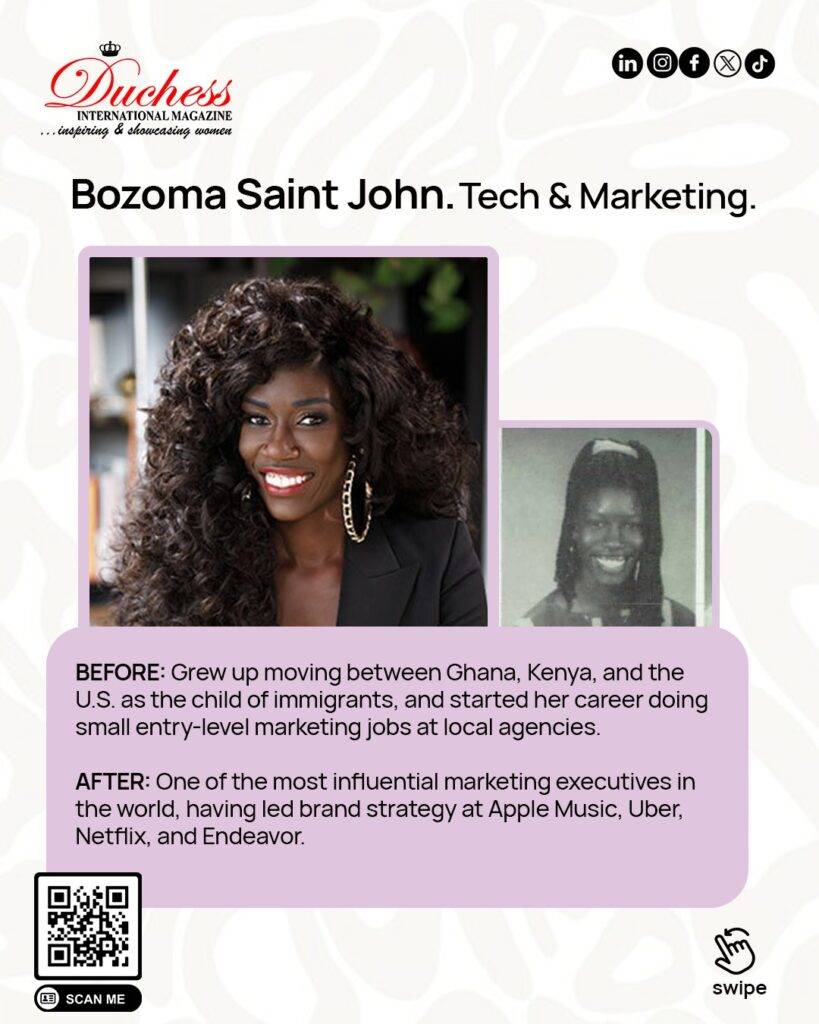
Bozoma Saint John’s journey began across continents. Born to Ghanaian parents, she spent parts of her childhood between Ghana, Kenya and the United States before building a career in marketing. She started with entry-level opportunities and gradually developed a reputation for combining culture, storytelling and brand strategy.
That reputation eventually took her into senior leadership roles at some of the world’s biggest companies, including Apple, Uber, Netflix and Endeavor. Today, she is recognised as one of the most influential figures in global marketing and brand leadership.
Funke Akindele: From Early Acting Roles to Nollywood Powerhouse
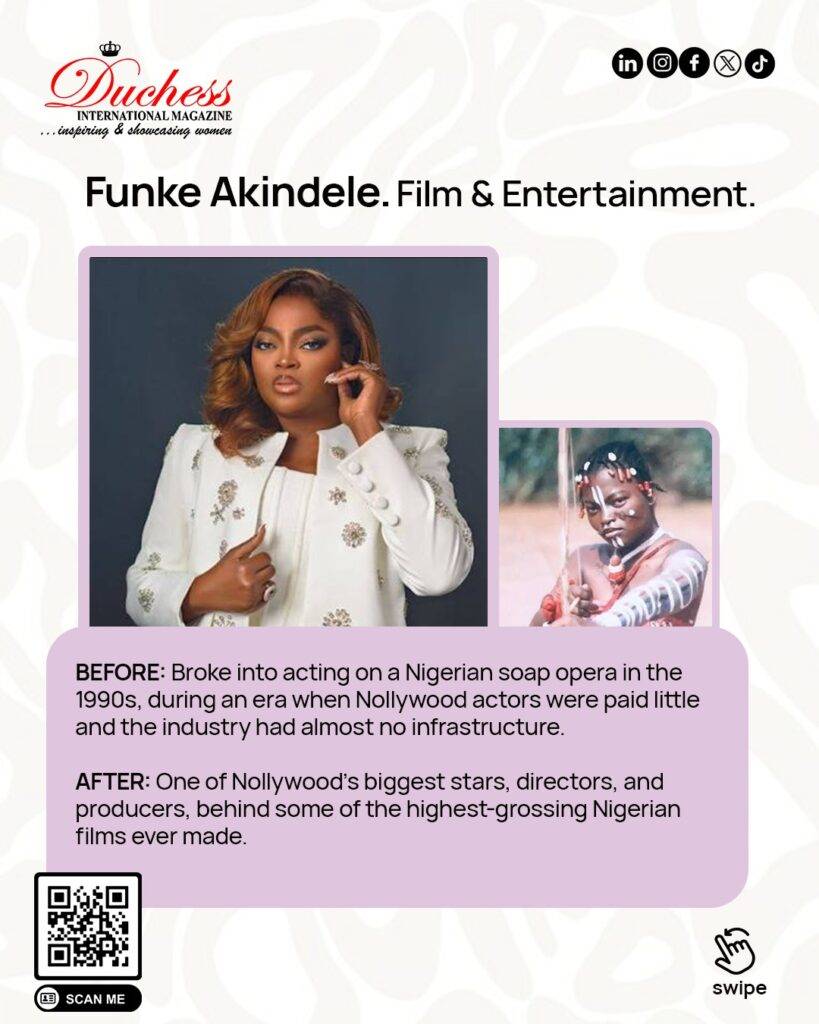
Funke Akindele entered the Nigerian entertainment industry at a time when Nollywood was still developing its infrastructure and actors had far fewer opportunities and resources than many have today. Her breakthrough came through acting, including her memorable role in the Nigerian television series I Need to Know in the 1990s.
Years later, she had transformed herself into not only one of Nollywood’s biggest stars but also a successful producer and filmmaker. Her productions have gone on to become some of the highest-grossing films in Nigerian cinema.
Graça Machel: From Rural Mozambique to Global Humanitarian Leadership
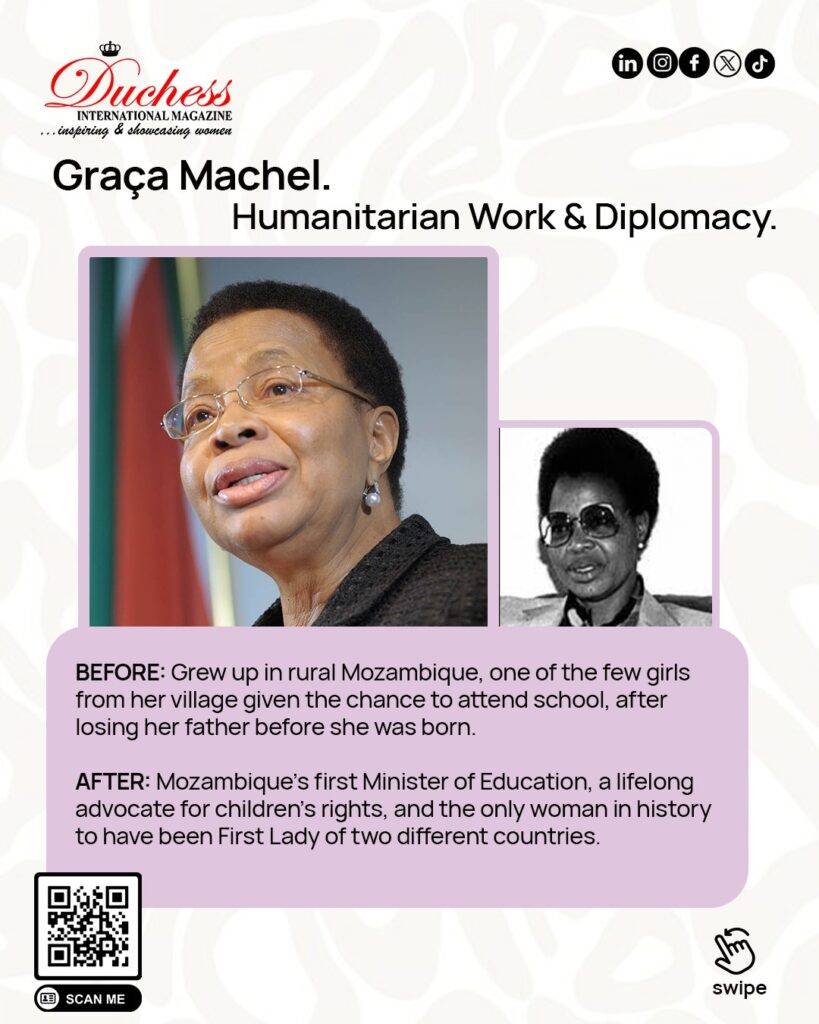
Graça Machel grew up in rural Mozambique and was among the few girls from her community given the opportunity to pursue formal education. She lost her father before she was born, but her education opened a path that eventually take her into public leadership.
After Mozambique gained independence, she became the country’s first Minister of Education and Culture, playing a major role in expanding access to education. Her work later extended far beyond government. She became a prominent advocate for children’s rights, women’s empowerment and development. She is also the only woman to have served as First Lady of two different countries, Mozambique and South Africa.
Angélique Kidjo: From Benin to the Global Stage
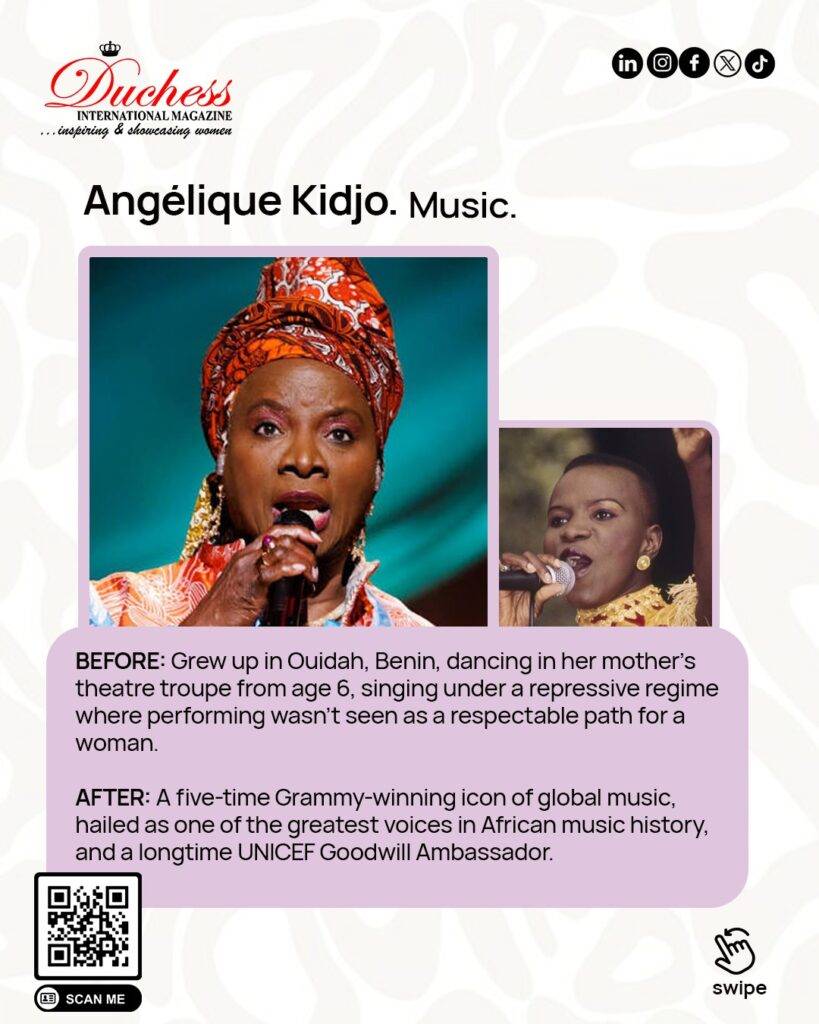
Angélique Kidjo grew up in Ouidah, Benin, surrounded by music and culture. She began performing at a young age, drawing inspiration from her Beninese heritage and musicians across Africa, before eventually leaving Benin to pursue her musical career abroad.
Today, she is a four-time Grammy Award winner and one of Africa’s most celebrated international artists, known for blending African musical traditions with global sounds. Beyond music, she has used her platform to advocate for women, children and African culture.
The Beginning Is Part of the Story
The lives of these women are remarkably different. Their fields range from environmental activism and politics to literature, economics, sport, music, entertainment and humanitarian work. But their stories share something important: none of them began with the level of influence they have today.
There were small beginnings. There were ordinary jobs, uncertain decisions, limited resources, unfamiliar environments and moments when the destination was not yet visible.
That is often the part of success we forget. We celebrate the woman who has arrived without remembering the girl who started with a dream, the young woman who took the first opportunity, or the professional who kept going before anyone knew her name.
Your beginning does not have to look impressive. It simply has to be the beginning. Whoever you are becoming, do not despise where you are starting from. Your first chapter does not have to resemble your final o