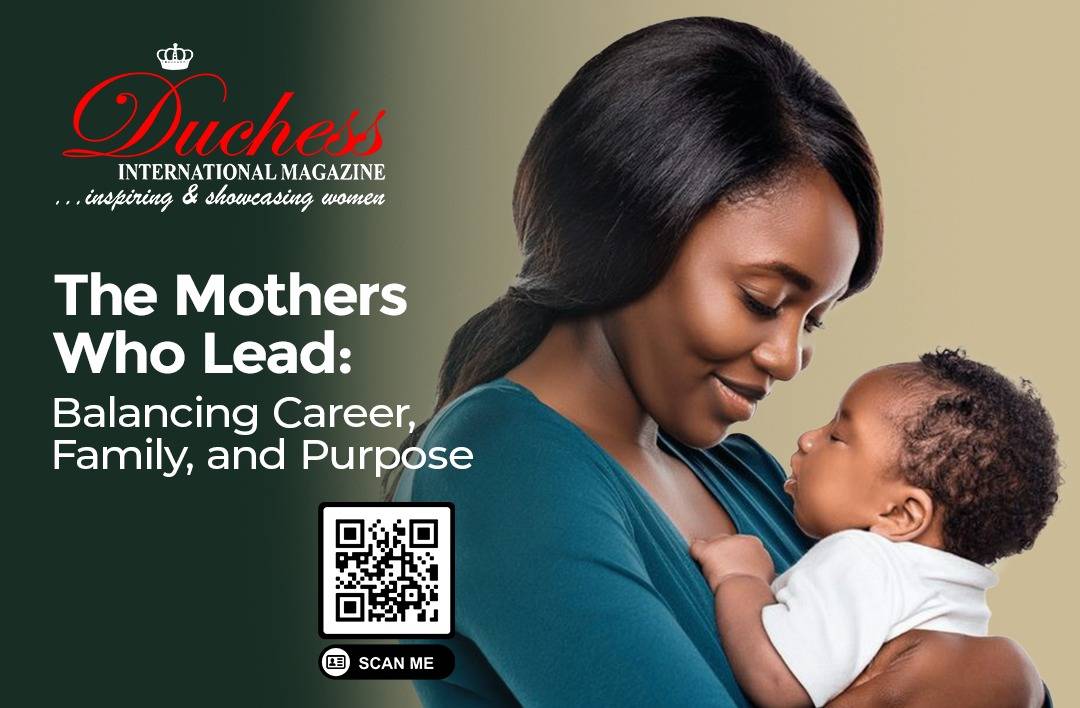
Every morning, long before offices open, markets come alive and daily responsibilities begin demanding attention, millions of mothers begin their first shift of the day. They prepare breakfast, check school bags, settle arguments, plan meals, coordinate schedules and make a dozen small decisions before stepping into their professional lives.
By the time many begin their work, they have already managed a complex operation that requires planning, negotiation, emotional intelligence and crisis management. Whether they lead boardrooms, run businesses, teach in classrooms, care for patients, trade in markets or create from home, these early hours rarely appear in conversations about leadership. When society discusses successful executives, entrepreneurs, politicians and professionals, it often focuses on titles, achievements and influence. What it frequently overlooks is the invisible work that makes those achievements possible. For many women, leadership does not begin at the office or the workplace. It begins at home.
For decades, leadership and motherhood were presented as competing ambitions. Women were often forced into an unfair choice: pursue a demanding career or devote themselves fully to family life. The assumption was that excellence in one area would inevitably come at the expense of the other. While significant progress has been made, traces of that belief remain deeply embedded in workplaces and cultures around the world. A man who dedicates long hours to building a career is often viewed as ambitious and committed. A mother doing the same may still face questions about whether she is spending enough time with her children. The standards are different, and so are the expectations. This reality explains why the achievements of mothers in leadership positions cannot be understood simply through the lens of professional success. Their journeys are often shaped by a constant negotiation between competing responsibilities, expectations and priorities.
Yet perhaps the most interesting aspect of this conversation is that many mothers reject the idea that they are “balancing it all” in the first place. Balance is one of the most celebrated words in modern discussions about work and family, but it can also be one of the most misleading. Balance suggests equal distribution, perfect harmony and a stable equilibrium between different parts of life. Most mothers know reality looks very different. Some days, a demanding project requires more attention than family plans. Other days, a sick child instantly reshuffles every professional commitment. There are moments when career ambitions take center stage and others when family needs become non-negotiable. What many mothers practice is not balance but adjustment. They are constantly recalibrating, shifting priorities and responding to changing circumstances. The image of a perfectly balanced life may be appealing, but for most women, leadership is less about maintaining equilibrium and more about making thoughtful choices amid competing demands.
This reality becomes clearer when we examine the hidden responsibilities that accompany motherhood. Beyond visible tasks lies what researchers and family experts often describe as the mental load—the ongoing responsibility of remembering, planning, anticipating and managing countless details that keep a household functioning. It includes remembering birthdays, scheduling medical appointments, monitoring academic progress, organizing transportation, planning meals, managing finances and anticipating future needs before they become urgent problems. Unlike many workplace responsibilities, these tasks rarely come with recognition or performance reviews. Yet they require strategic thinking, organization and emotional investment. The challenge for many mothers is not merely the number of responsibilities they carry but the fact that they are expected to carry them while simultaneously performing at a high level professionally. Leadership demands attention. Motherhood demands attention. Neither role comes with an off switch.
The stories of women who have reached the highest levels of leadership reveal just how complex this reality can be. Consider figures such as Ngozi Okonjo-Iweala, who built a distinguished international career while raising a family, or Mary Vilakazi, who now leads one of Africa’s largest financial-services groups. Their public accomplishments are visible, documented and celebrated. What is less visible are the countless personal decisions, sacrifices and adjustments that occur behind the scenes. Every successful mother in leadership has a story that extends beyond her résumé. There are missed events, difficult choices, moments of guilt, support systems that made progress possible and periods when competing responsibilities seemed impossible to reconcile. The public often sees achievement. It rarely sees the private negotiations that preceded it.
This is where the conversation about working mothers becomes particularly important. Society often celebrates women who appear to “have it all,” but rarely pauses to ask what “all” actually means. The phrase itself can be problematic because it suggests that success is measured by a woman’s ability to excel simultaneously in every area of life. Few men are expected to meet such a standard. A father may be praised for being actively involved in his children’s lives while maintaining a successful career. A mother is often expected to do the same as a baseline requirement. The result is a burden of expectation that many women carry quietly. They are expected to be productive professionals, present parents, supportive partners, caregivers, mentors and community contributors, often without any meaningful reduction in responsibilities elsewhere. The issue is not whether women are capable of meeting these expectations. The issue is why they are expected to carry so many of them at once.
In fact, many of the qualities that make mothers effective leaders are developed through the very experiences that create these pressures. Motherhood cultivates adaptability because plans change unexpectedly. It develops resilience because challenges continue regardless of personal exhaustion. It strengthens emotional intelligence because understanding people becomes essential. It teaches prioritization because time and energy are limited resources. It sharpens decision-making because choices often have immediate consequences for others. These are not merely parental skills. They are leadership skills. Yet organizations have historically underestimated the value of these experiences, viewing motherhood as a potential obstacle to professional advancement rather than recognizing the capabilities it can help develop. Increasingly, however, businesses are beginning to understand that leadership is not weakened by caregiving responsibilities. In many cases, it is strengthened by them.
The broader question, therefore, is not whether mothers can lead. The evidence is overwhelming. Across politics, business, education, healthcare, technology and entrepreneurship, women continue to demonstrate extraordinary leadership while raising families and contributing to their communities. The more pressing question is whether institutions have evolved quickly enough to support them. Many workplaces were designed around assumptions that emerged during a different era—one in which caregiving responsibilities were often expected to fall primarily on women while leadership structures were built around uninterrupted career trajectories. Flexible work arrangements, parental leave policies and changing attitudes have improved conditions in many places, but significant gaps remain. The challenge is not simply increasing the number of women in leadership. It is creating environments where leadership and caregiving are not treated as fundamentally incompatible pursuits.
The impact of this issue extends beyond individual careers. Children who grow up watching their mothers pursue meaningful work often gain a broader understanding of what leadership looks like. They learn that influence is not restricted by gender. They see that ambition and compassion can coexist. They observe the value of responsibility, perseverance and service. Perhaps most importantly, they witness a model of leadership rooted not only in authority but also in care. These lessons shape how future generations understand work, family and purpose. The example set by mothers who lead therefore extends far beyond their organizations or industries. It becomes part of a larger cultural legacy.
Ultimately, the story of mothers in leadership is not a story about perfection. It is not about flawlessly balancing every responsibility or effortlessly succeeding in every role. It is a story about endurance, adaptation and purpose. It is about women who continue showing up despite competing demands, shifting priorities and unrealistic expectations. It is about recognising that leadership does not begin when someone receives a title, nor does it end when the workday is over. It is exercised in boardrooms, classrooms, hospitals, businesses and homes. The mothers who lead are not remarkable because they have somehow mastered an impossible formula. They are remarkable because they continue to navigate complexity with courage and commitment. Their experiences challenge long-standing assumptions about leadership, success and caregiving. And in doing so, they are redefining what it means to lead in the modern world.