

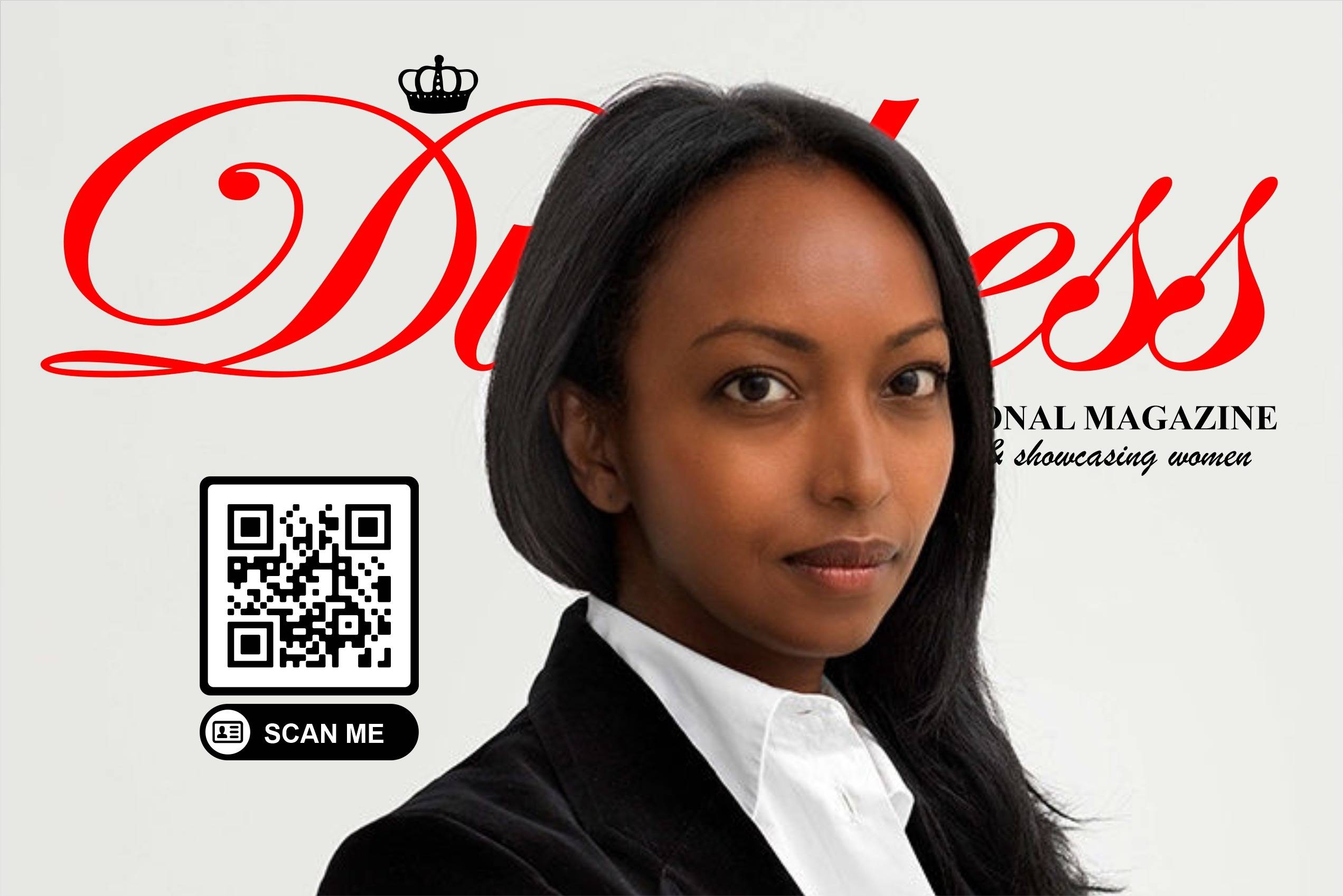
She was born in the Pacific, raised between Somalia and France, and built her first gallery in Seattle with $3,000.
When the gallerist Mariane Ibrahim opened in Paris, she was asked the question that follows many people who live between cultures. “Constantly people are asking you to choose: What are you? Are you French, are you African?” she said. “I refuse to do that. I don’t want to choose. I want to be everything.” The answer works as a biography, a business plan and a philosophy at once. Her gallery now has three spaces on three continents, in Chicago, Paris and Mexico City, and this month it returned to the Grand Palais for Art Basel Paris. Behind that growth is a woman who has spent her career treating borders of place, identity and category as things to cross, not rules to obey.
Her own life is the first crossing. She was born on the South Pacific archipelago of New Caledonia to Somali parents, grew up between France and Somalia, and moved to the United States in 2010. Her family returned to Somalia when she was five, and in 1987, shortly before civil war broke out, they relocated to France. She studied communications at Middlesex University in London and then worked for a marketing agency in Paris, but quit when she felt unchallenged. It is a familiar story for many readers of this magazine: a good job, a sound path, and a persistent sense that the real work lay somewhere else.
The turning point arrived in a Parisian bar. She spotted a poster promoting an exhibition of the photographer Seydou Keïta, who ran a portrait studio in Bamako, Mali, as the city changed after colonial rule, and it set her on the track to becoming a gallerist. She has explained why it struck her so deeply: the poster, the flower and the look reminded her of family photographs. The discovery sent her on a long road. She spent three years in Somalia, where she created an NGO to help win UNESCO World Heritage recognition for the ancient cave paintings of Laas Geel. Years later, her first ever gallery show in Seattle featured the work of Keïta’s peer, Malick Sidibé. The gallery began with the image that made her feel at home.
She opened it in 2012 with very little. She had no partners, no business plan and just $3,000, and she took a storefront that shared an entrance with a nail salon. The name, M.I.A., stood for “Missing in Art” and also reflected her birth name, Mariane Ibrahim Abdi. Many people warned her against it. Well-meaning advisers told her to learn how things worked first, but she has said, “But I knew what I wanted.” Her scepticism toward the traditional route explains why the gallery looked different from the start, since she has said she was looking for “the anti-gallery experience.”
Seattle sat outside the usual network of art capitals, and that limitation shaped her method. She relied on travel and other forms of outreach to build relationships beyond the city. She began calling African art curators at major museums to introduce her programme, and she has described her relationships with her artists as shaped by mutual respect rather than authority, viewing them as peers with whom she hopes to grow old. The strategy worked. She moved to Chicago in September 2019, and she has said the strong sense of community there was something she could not ignore. The move placed the gallery in West Town, a neighbourhood that now ranks among the best places in the United States to see contemporary art from the African diaspora, and it was followed by debuts at Art Basel Miami Beach, Paris Photo and Arco Madrid.
Expansion followed the same logic of crossing borders. In 2021 she opened a 4,300-square-foot gallery on Avenue Matignon in Paris, a city where, as she observed, there were few galleries dedicated to artists of African heritage despite France’s colonial history with the continent. The gallery marked its tenth anniversary in January 2022, and in February 2023 it opened a third space in Mexico City. She explained the choice in terms that sum up her thinking: “We are going to where the future is, not where the present moment is.” Few dealers move from a small American city to three continents in a decade, and fewer still do it by following artists and audiences rather than the established map of the art market.
The deepest border she crosses is the one around labels. She has acted as something of an ambassador for nuance in an art world prone to generalisation, emphasising that her artists, and by extension her gallery, have much more to offer than simplistic regional or heritage labels could contain. Her aim is to connect African art to the global art scene and to break from the traditional, anthropological approach of museums. The roster shows what that looks like in practice. It includes Amoako Boafo, Clotilde Jiménez, Eva Jospin, Ayana V. Jackson, Zohra Opoku and Lorraine O’Grady, and this year the gallery also presented George Clinton’s first solo exhibition with the gallery, an artist from a different tradition entirely. The thread is not geography. It is her eye.
The programme this autumn shows how far the gallery has come. It returned to the Grand Palais for Art Basel Paris 2026 with works by Raphaël Barontini and Amoako Boafo, among others, while Boafo has a solo exhibition in its Paris space through 19 December and Salah Elmur’s Working Times opens in Chicago on 7 November. Zohra Opoku, one of the gallery’s artists, also has a show at the Fondation Cartier in Paris from 22 October. Institutions and fairs are now seeking out the artists she began championing in a shared storefront. That visibility matters because it changes what is possible for the artists who come next.
What can readers take from her path? Our reading, rather than a formula she has given, comes down to three ideas. Begin before you feel ready, because the advice to learn the rules first often comes from people who are comfortable with them. Take your work to the people who will value it, even if it means building a network across continents. And refuse the pressure to choose between your identities. She has kept her sense of humour about the whole adventure, and in a 2020 interview she said, half-jokingly, that her mother still doesn’t know what she does. For the many women who have been told to shrink their ambitions into something simpler to explain, her career offers permission to be everything at once.

