

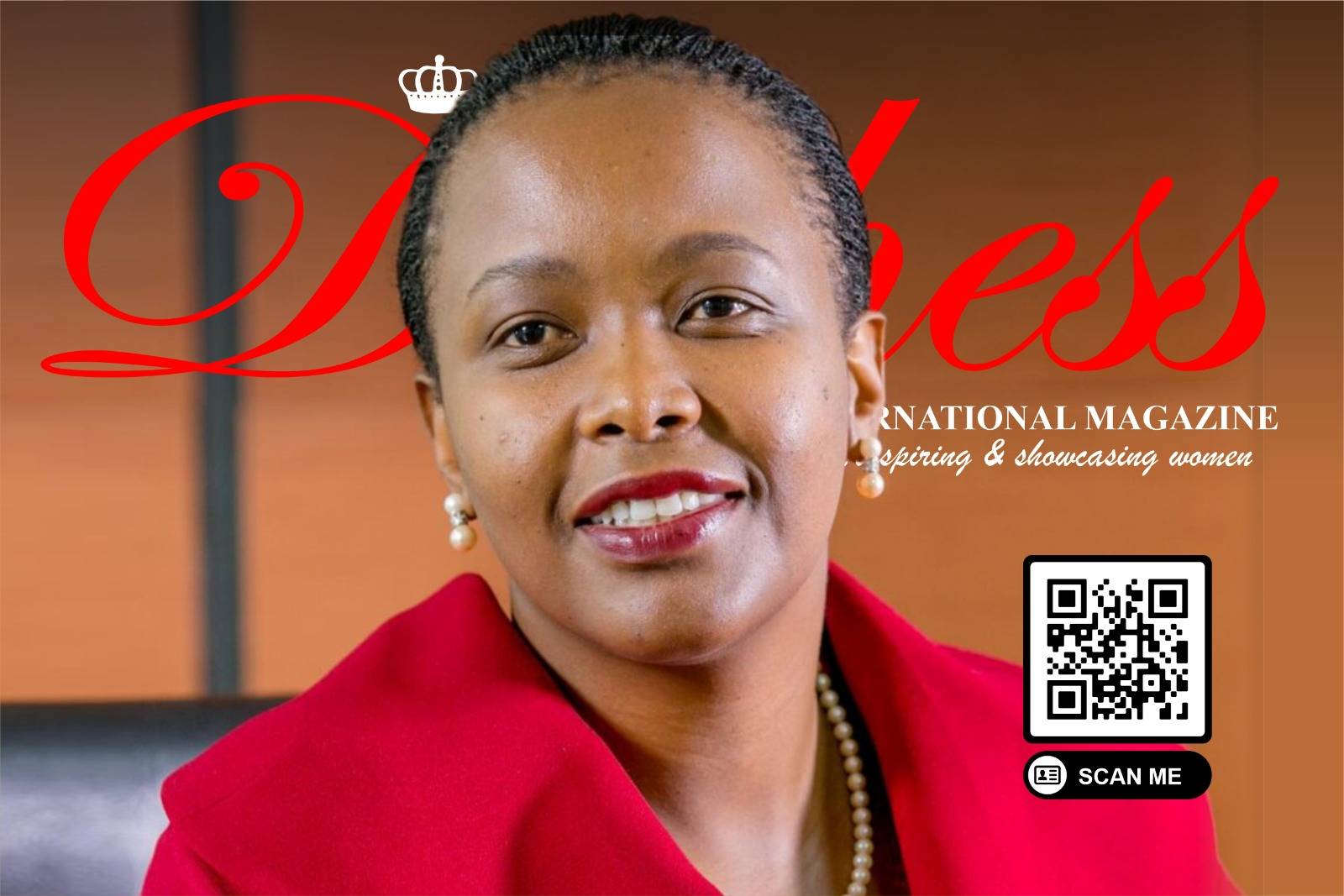
Leadership sometimes takes a person into industries they never initially imagined working in. For Clare Akamanzi, the journey from international trade negotiations and public policy to the leadership of one of the world’s most recognised sporting organisations in Africa reflects a career shaped by adaptability, strategic thinking and a commitment to creating opportunities. As Chief Executive Officer of NBA Africa, she occupies a position at the intersection of sport, business and continental development, overseeing efforts to expand basketball’s reach while building a stronger sports ecosystem across Africa. Her story is particularly significant because it demonstrates how expertise developed in one field can become a foundation for influence in another.
Akamanzi’s understanding of opportunity was shaped, in part, by her family’s history. Born to Rwandan parents who spent years as refugees in Uganda, she spent much of her early childhood growing up in Soroti, eastern Uganda. Her parents’ experiences of displacement and their eventual journey across borders gave her an early connection to the wider African story of movement, identity and rebuilding. Although she did not fully understand the circumstances of her family’s history until later, those experiences formed part of the background against which her ambitions developed. Her educational journey took her to Makerere University in Uganda, where she studied law, followed by a Master of Laws in International Trade and Investment from the University of Pretoria in South Africa. She later earned a Master of Public Administration from Harvard University’s Kennedy School of Government, where she received several awards recognising her academic excellence and contribution to the community.
Her professional career began in the demanding world of international diplomacy and trade. Working for the Government of Rwanda at the World Trade Organization in Geneva, Switzerland, she served as a trade negotiator, engaging with the international frameworks that influence how countries conduct business and participate in global markets. She subsequently worked at the Rwandan Embassy in London as a commercial diplomat, strengthening her experience in international relations, economic cooperation and investment. These roles required more than an understanding of trade agreements; they demanded negotiation, preparation, the ability to build relationships and an appreciation of how decisions made at international tables affect opportunities within individual countries. They also gave her experience in representing Rwanda in spaces where economic policy and national interests intersect.
Her return to Rwanda marked the beginning of an important chapter in public service. At the Rwanda Development Board (RDB), she held several senior positions, including Deputy Chief Executive Officer, Chief Operating Officer and Head of Strategy and Policy in the Office of the President. In February 2017, she became Chief Executive Officer of the organisation, a position she held for approximately six and a half years. The RDB plays a central role in promoting investment, tourism, exports and private-sector development, placing her at the centre of Rwanda’s efforts to attract international partnerships and strengthen its business environment. During her tenure, the organisation pursued reforms and initiatives designed to make the country more attractive to investors and support economic growth. Partnerships involving international sports clubs and organisations, including Arsenal, Paris Saint-Germain and FC Bayern Munich, formed part of Rwanda’s broader international engagement strategy. Her experience demonstrated how investment promotion, national branding and cross-sector partnerships could work together to advance a country’s economic ambitions.
In December 2023, the National Basketball Association announced Akamanzi’s appointment as Chief Executive Officer of NBA Africa, with her tenure beginning on 23 January 2024. The move brought her into a different industry, but one that draws on many of the same principles that had shaped her previous work: strategic partnerships, investment, audience development and long-term growth. NBA Africa oversees the league’s business and basketball development efforts across the continent, including the Basketball Africa League (BAL), grassroots development, media distribution, corporate partnerships and social responsibility initiatives. Her responsibility is therefore much broader than promoting a sport. It involves helping to develop an industry with connections to entertainment, technology, tourism, infrastructure, employment and youth development. The appointment also represented an important example of an African woman bringing extensive experience in public policy and international business into the leadership of a major global sporting organisation.
Under her leadership, the conversation around basketball in Africa has increasingly included the economic opportunities surrounding the game. The Basketball Africa League, established through a partnership between the NBA and the International Basketball Federation (FIBA), provides a professional platform for African clubs and players while creating opportunities for commercial partnerships and greater international visibility. Akamanzi has spoken about the importance of developing the wider infrastructure required for the sport to grow, including basketball courts, arenas, coaching programmes and pathways for young talent. In a 2025 interview, she described an ambition to build 1,000 basketball courts across Africa over the following decade. It is a vision that recognises a fundamental truth about sporting development: talented young people need more than encouragement; they need facilities, training, competitions and institutions capable of supporting their progress. Her approach places basketball within a wider conversation about how Africa can develop its own sports economy rather than remain simply a consumer of international sporting entertainment.
An important part of that vision is ensuring that women and girls have a place in the industry’s growth. Through initiatives such as BAL4Her and Her Time to Play, NBA Africa supports women’s participation in basketball and creates opportunities for women to explore careers within the wider sports sector. This matters because the sports industry extends far beyond the athletes competing on the court. It requires professionals in management, marketing, communications, creative design, technology, strategy and event production. By encouraging women to participate across these areas, such initiatives challenge the idea that sporting leadership and commercial opportunities should be dominated by men. Akamanzi’s own position also offers a visible example of a woman leading within an industry where women have historically been underrepresented in senior executive roles. Her work makes the case for expanding the conversation from women participating in sport to women helping to shape and manage the business behind it.
Her leadership journey has not been without its personal and professional challenges. In an interview with The New Times in 2025, Akamanzi spoke candidly about balancing motherhood with demanding executive responsibilities, including the exhaustion of caring for young children while managing the expectations of senior leadership. She also reflected on moments of self-doubt, particularly when navigating rooms occupied by influential figures and experienced decision-makers. Rather than presenting leadership as a position without uncertainty, she acknowledged the importance of learning, adapting, seeking support and recognising that no leader has all the answers. Her advice to young women is equally practical: build credibility, volunteer for responsibility, deliver results and remain willing to improve. It is a message grounded in her own professional journey, where opportunities have been accompanied by the responsibility to demonstrate competence and earn trust.
From international trade negotiations to Rwanda’s economic development strategy and now the expansion of basketball across Africa, Clare Akamanzi’s career reflects the possibilities that emerge when knowledge, experience and ambition are allowed to cross traditional professional boundaries. Her contribution is not limited to occupying a senior position within a global sporting organisation; it is also connected to the opportunities that stronger sporting institutions can create for young people, entrepreneurs, women and communities across the continent. In 2024, she received the Forbes Africa Investment Catalyst Award, adding to the recognition she has received for her work in business and economic development. Duchess International Magazine celebrates Clare Akamanzi for a leadership journey that continues to connect policy with enterprise, sport with opportunity, and African ambition with global platforms. Her story reminds us that the future of African industries will be shaped not only by those who participate in them, but also by the people prepared to build the structures that allow others to succeed.

