

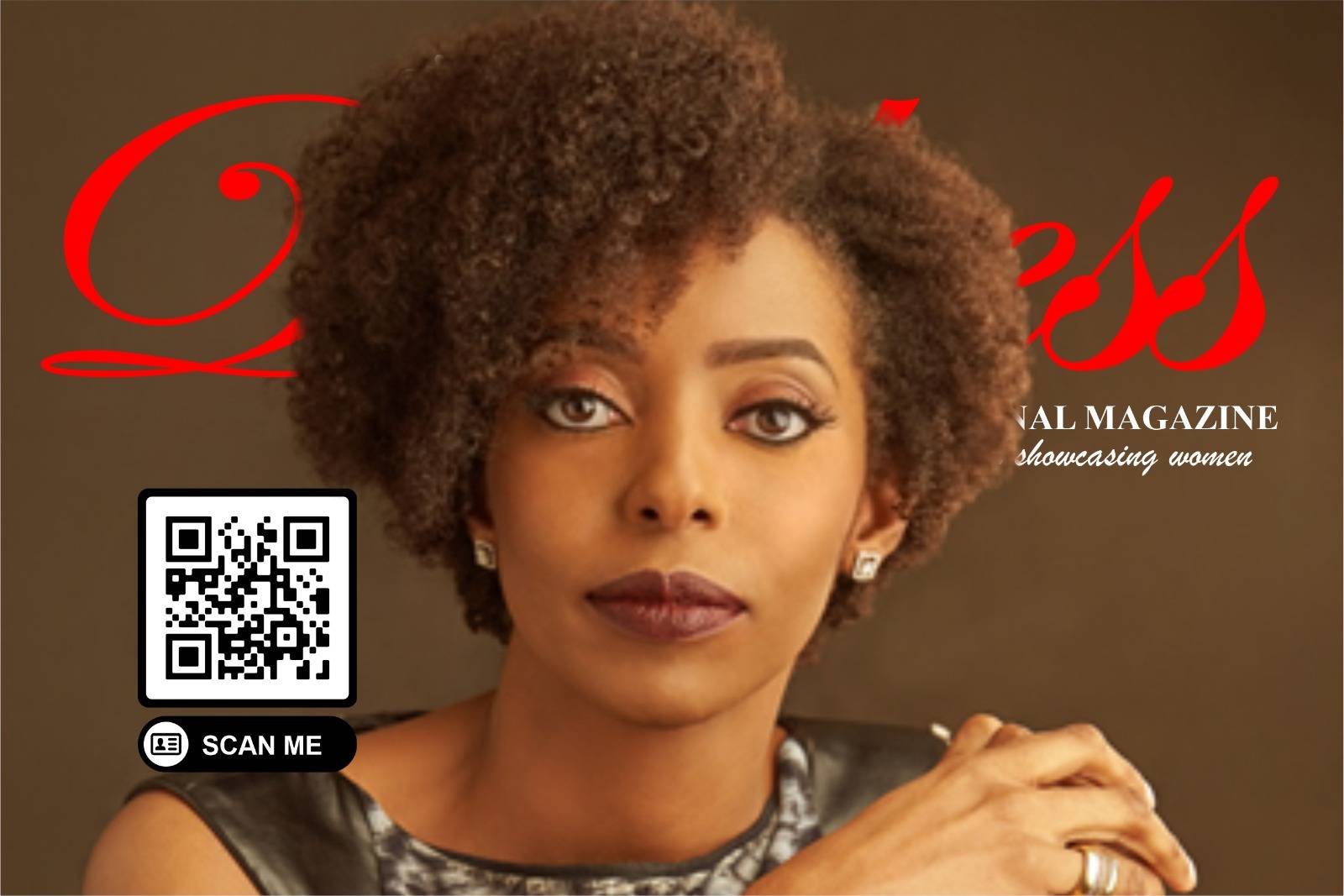
Amy Jadesimi was trained to treat patients. She qualified as a doctor at Oxford, spent three years in investment banking, and now runs an industrial free zone that, as she describes it, was “built from a disused swamp inside Apapa port.” On 3 October 2026, she stood beside her father in London as the company they lead, LADOL, signed an agreement to help Liberia build its first major shore base for offshore oil drilling. It was a long way from a hospital ward, and yet the thread connecting the two is clear. Jadesimi has spent her working life looking at systems and asking what it would take to make them work for more people.
She was born in Nigeria in 1976, attended boarding school in the United Kingdom and studied at the University of Oxford, earning a degree in physiological sciences and then her medical qualification. By her own account, she never intended to leave medicine. Then Goldman Sachs offered her a job, and she moved into investment banking in London. She has said she learned a great deal there and came to realise she wanted to do something industrial that created real jobs. After three years in banking, she left to complete an MBA at Stanford. She never went back to the hospital.
When she returned to Nigeria, she set up a financial consulting firm, joined the management team of LILE, an oil services company, and then became managing director of LADOL. She has spoken warmly about that decision. Being in Nigeria, she has said, helped her grow as a person and gave her a sense of self-worth she does not feel outside the country, and she is grateful to her parents for an education she now uses to run a business of this kind.
LADOL is the company her father, Chief Oladipo Jadesimi, founded, and he remains its executive chairman. Its development began in 2001, when a group of Nigerian investors drew up a plan for an industrial free zone, and the site, on an island in the Port of Apapa, was designated a free zone in June 2006. She has described it as an industrial village, where the workforce runs from boat drivers to top engineers, finance staff and maintenance crews. For her, it is a place with people in it, not an office tower.
What distinguishes LADOL is the work it keeps in Nigeria. Its best-known project was Egina, the giant offshore production vessel built for TotalEnergies. LADOL formed a joint venture with Samsung Heavy Industries to build a facility in the zone where Egina was integrated, the first vessel of its kind ever integrated in Nigeria, with the partners investing about $300 million in the yard. She has explained the significance: work that once would have gone to the United States or South Korea could now be done at home, bringing jobs, skills and revenue with it.
It has not been an easy road. In 2018, LADOL barred Samsung from the free zone and sued the company, accusing it of breaching contracts and Nigerian laws. The dispute halted activity in the zone and cost thousands of jobs. Both sides later announced that it had been fully resolved. Jadesimi has also spoken about the obstacles that came before it: monopolies that, she says, kept an indigenous company like LADOL small, inefficient and expensive. In a 2019 interview with Forbes, she said it had taken 17 years to turn the swamp into a working free zone.
Her ambitions go well beyond oil and gas. She says LADOL is building a blueprint for the “sustainable industrialisation of Africa.” The zone began with oil and gas because it is the largest industrial sector in Nigeria, but she wants to diversify, targeting manufacturers in areas such as low income housing, textiles and agriculture, and has described plans to expand into eight sectors that fit a circular economy, including clean technology. She believes commodity-rich countries can use their natural resources to build a diverse set of industries. She has also argued that the market is far from saturated, and that Nigeria alone could use “10 or 15 LADOLs.”
Her work extends beyond the zone itself. Through LADOL, she joined Venture Strategies for Health and Development, working with Nigerian doctors and birth attendants to reduce maternal mortality, a cause that echoes her medical training. She is an Archbishop Desmond Tutu Fellow and a former World Economic Forum Young Global Leader, and she has been named among Forbes’ 20 Youngest Power Women in Africa and the Financial Times’ Top 25 Africans to Watch. The African Leadership Forum voted her Young CEO of the Year in 2018, and she has served on the Business and Sustainable Development Commission, the Prince’s Trust International advisory board, a UNDP steering committee on the Sustainable Development Goals and a UNICEF advisory group.
The newest chapter may be the most telling. The agreement LADOL signed in London with the National Oil Company of Liberia is a joint development agreement for a proposed shore base in Buchanan. LADOL will serve as lead technical partner, helping fund a six month feasibility study before any building begins. Liberia wants to keep the jobs, contracts and training at home, after its last drilling campaign relied on services brought in from Côte d’Ivoire, Ghana and Senegal. If the project goes ahead, it will be LADOL’s first attempt to reproduce its Lagos model in another West African country. That is what the headline means by going beyond the boardroom. The decisions that matter are made in meetings, but the proof is in a yard, a workforce and a vessel that is finally built at home.

