

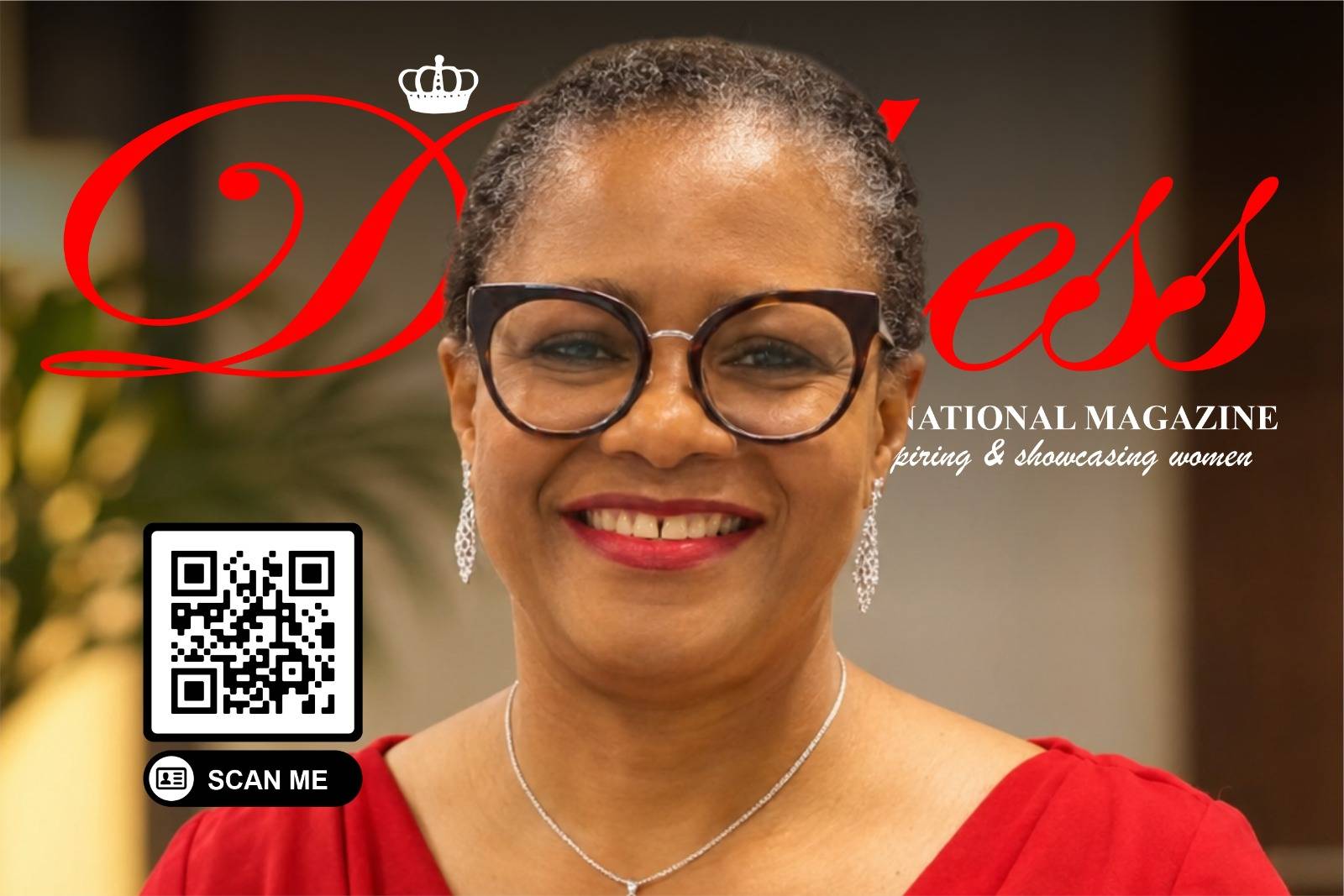
When the history of the modern African diaspora is written, the true architects of integration will not be found among the performative elite. They will be found among those who held the keys to state enforcement and chose to build bridges where others erected walls.
True authority does not require a gilded boardroom or a corporate letterhead to command a room. For over three decades, Yemisi Jenkins MBE has operated at the intense, often unforgiving frontline of British law enforcement and cross-border public policy. As the President of the Association of British Nigerian Law Enforcement (ABLE) Officers, she commands a critical network of professionals navigating the complex mechanisms of state security, civic justice, and migrant identity. When she stood at the DoubleTree by Hilton Brighton Metropole to welcome global delegates to the Duchess International Magazine Leadership Summit 2026, she was not merely playing the role of a gracious host. She was presenting a living masterclass in the summit’s demanding banner: Honouring Our Communities: The Audacity to Lead – Redefining Power, Purpose & Legacy.

Her path to becoming a foundational pillar of the UK-African establishment was forged through a deliberate willingness to enter institutions historically designed to exclude her. Navigating the rigid, deeply conservative hierarchies of British public service as a woman of African descent requires an extraordinary threshold of psychological fortitude and professional discipline. Long before her contributions were formally recognised by the British Crown with an MBE, Jenkins understood that presence without purpose is just tokenism. She refused to let her identity be reduced to a diversity statistic. Instead, she anchored her ascent in undeniable technical competence, proving that systemic gatekeeping can be dismantled when a leader prioritises unyielding excellence over social compliance.
The transition from a senior public servant to an institutional community builder crystallised through her visionary leadership at ABLE. Under her presidency, the association evolved from a basic professional registry into a powerful vehicle for systemic advocacy, mental health scaffolding, and structural mentorship. Jenkins recognised that Black law enforcement officers operate within a unique, highly volatile intersection of racial identity and constitutional duty. By establishing rigorous professional support networks, providing strategic counsel to Home Office regulators, and ensuring that emerging officers of colour possess the institutional protection required to thrive, she has successfully built an infrastructure that commands mainstream law enforcement to respect African intellectual capital.
This profound understanding of structural power sat quietly beneath her opening remarks at the Brighton meet and greet. Addressing a transcontinental delegation of bank chairs, tech innovators, and political reformers, Jenkins immediately reframed the purpose of the gathering. She argued that international summits are ultimately meaningless if their intellectual profits do not cascade directly into local community resilience. By orchestrating a structured forum where delegates from different professional fields had to look each other in the eye, strip away their corporate vanities, and exchange raw operational perspectives, she engineered a space where abstract ideas could become binding social contracts.
Her unyielding focus on public safety and community development has earned her recognition at the absolute highest levels of global diplomacy and statecraft. Yet, her methods remain deliberately disruptive to the traditional, risk-averse philosophies that dominate the diaspora elite. Jenkins rejects the narrative that community leadership should rely on soft, voluntary charity or temporary non-profit handouts. Her public policy directives call for the implementation of hard market mechanisms, fair-trade institutional partnerships, and compulsory gender-responsive budgeting within local councils. Her lifetime of service proves that true social impact is only sustainable when it is backed by legal accountability, data-driven strategy, and structural enforcement.
Executing a multi-decade legacy of this magnitude requires an absolute refusal to be distracted by institutional friction or superficial digital visibility. In a modern culture obsessed with curated aesthetics and immediate online validation, Jenkins provides a refreshing, unsentimental blueprint for leadership rooted in substance rather than spectacle. She has spoken candidly to younger generations about the grueling realities of public service, consistently maintaining that the only variables you can truly control are your skills, your knowledge base, and your conduct. Her career stands as a definitive response to a modern corporate world that frequently confuses the decoration of an office with the actual discipline of command.
Also, her strategic footprint continues to expand into the architecture of intergenerational wealth protection and youth education. Jenkins has consistently maintained that an economy that leaves its young girls unprotected is inherently crippled. She actively supports initiatives that provide young women with unfiltered access to advanced legal training, financial literacy, and cyber-security infrastructure. By bridging the gap between elite international governance boards and the practical, daily struggles of working-class families, she ensures that the economic and security profits of our collective advancement are structured to protect the most vulnerable tiers of society.
For the readers and ambitious founders of Duchess International Magazine, Yemisi Jenkins MBE stands as a striking example of modern luxury entrepreneurship and civic command. She proves that true elegance is found in unwavering execution, that a deep understanding of institutional psychology is a powerful tool for structural transformation, and that an African woman can govern within the highest echelons of Western statecraft without ever altering her authentic identity. Her legendary path delivers an absolute, non-negotiable lesson to the next generation of global trailblazers: you do not ask for a seat at the table of power. You build your own table, master the complex logistics of your industry, protect your community, and command the world to negotiate on your terms.
Ultimately, as the curtains fall on the historic Brighton summit, the mandate she left behind remains absolute. The title on your door or the prefix before your name will never save you when history asks what you did with the responsibility you carried. Titles change, organisations restructure, and positions end, but the real kind of leadership goes with you into every room and every community you touch, long after the nameplate has been taken down. Yemisi Jenkins MBE did not just welcome the world to the United Kingdom; she demonstrated that when you own your pipeline and serve your people, you shape the story, the market, and the future

