

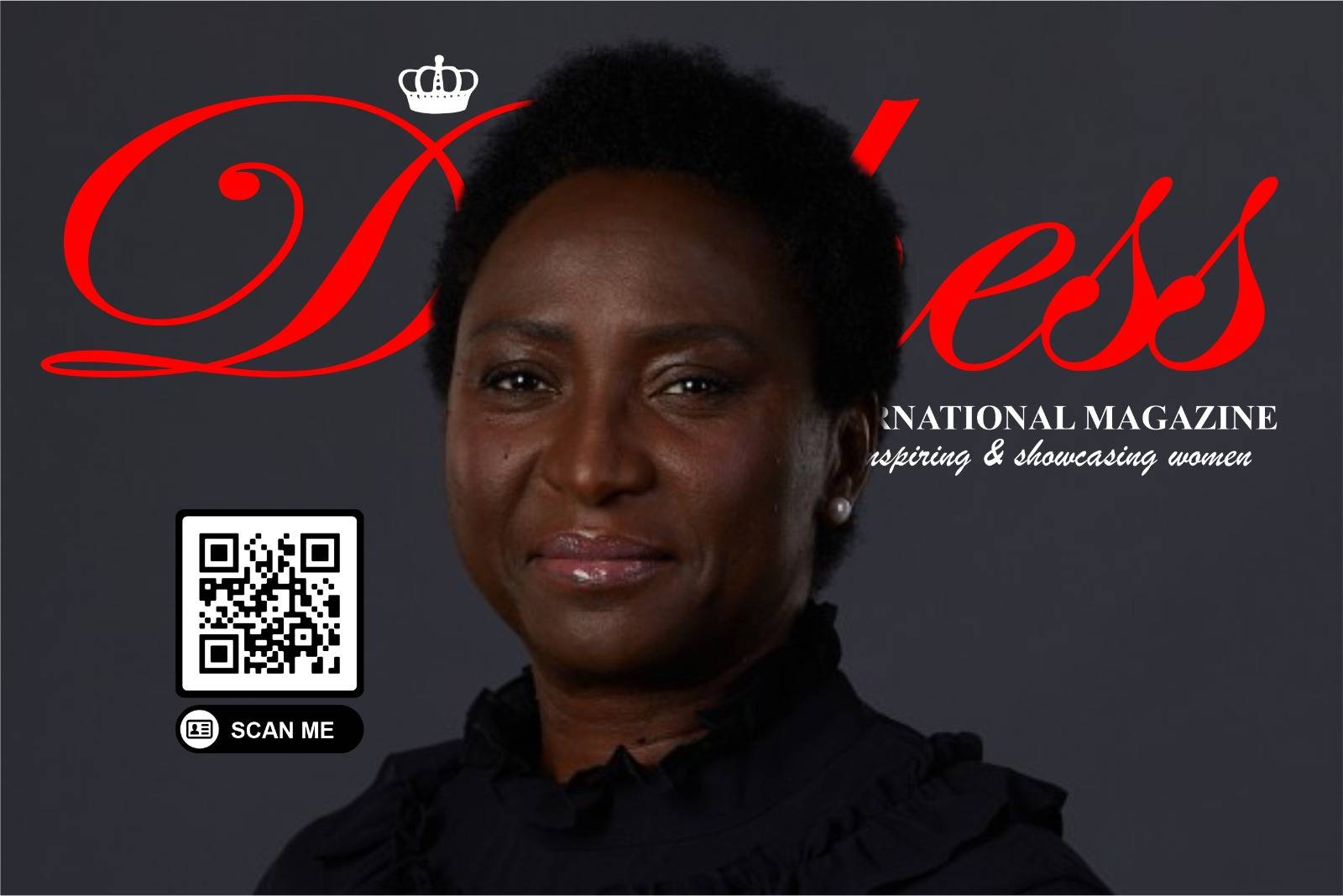
Irene Ochem learned what economic empowerment means at home. Her mother was widowed early in her marriage, with five children to raise, educate and feed, and Ochem grew up watching what that responsibility cost. She has said that living through it showed her, firsthand, why a woman must be economically empowered. Decades later, on 10 and 11 November 2026, she convenes the annual conference of the organisation she founded, the Africa Women Innovation and Entrepreneurship Forum (AWIEF), at the Cape Town International Convention Centre. Between the kitchen table and the convention floor lies a career spent inside some of the world’s most formal institutions, which she then used to build something for the women she grew up around.
Her path began with languages and distance. Born in Nigeria, Ochem earned a degree at the University of Nigeria, Nsukka, a diploma in translation in Italy, and an MBA in International Management from the University of London. She speaks four languages. For more than 20 years, she worked with international organisations in Europe and Africa, including the United Nations Industrial Development Organization in Italy, and later served as a Research Administration Manager at the University of Cape Town and a consultant to the UN Economic Commission for Africa and the African Union. It was a career spent learning how large institutions think, plan and spend.
The seed of her later work was planted early. As a young volunteer at the International Centre for Theoretical Physics, a UNESCO-linked institute, she saw how badly women were missing from the sciences. Over the years, as a conference organiser, administrative coordinator and development specialist, that concern grew into something broader: a vision of the entire entrepreneurship ecosystem, from the women starting out to the experts, funders and policymakers around them. She also arrived at a hard-headed conclusion about success. Hard work, she has said, is not enough on its own, and she often cites the writer George Monbiot’s observation that if wealth followed hard work, every woman in Africa would be a millionaire.
She founded AWIEF in 2015, and its first conference took place in Lagos that year. She approached it with the professional’s eye of someone who also runs a conferences company, ICO Conferences and Events, and with a clear view of what a gathering could do. Welcoming delegates in 2018, she described the event as “not so much a conference but a convocation,” a gathering for a special purpose. The idea was never only to hold a meeting. It was to bring women entrepreneurs, investors, policymakers and development partners into the same room and keep them connected afterwards.
The organisation has grown well beyond its conference. Its flagship Growth Accelerator, launched in 2017, is an investment readiness programme that links early-stage women entrepreneurs to mentors, investors and markets, with partners that have included Nedbank, the African Development Bank and Victoria’s Secret. The AWIEF Awards, established in 2017, celebrate excellence in African female entrepreneurship. The Academy for Women Entrepreneurs, funded by a grant from the US Department of State, offers entrepreneurial education in Lesotho, Eswatini and South Africa, and a European Union co-funded programme supports women in tourism and hospitality. This year, AWIEF also launched Pitch n Grow, an annual pitch competition. Ochem says AWIEF’s capacity building programmes have directly supported more than 5,000 women-led businesses across Africa.
Her philosophy is practical. Business is hard, she says, especially for a young start-up, and many women business owners lack confidence, so part of AWIEF’s work is helping women recognise their own achievements. She stresses the importance of the right mind-set, being open to change and learning, persistent and resilient, and of financial literacy, especially managing cash flow. She is equally clear that context matters. Social norms limit women’s participation in North Africa, access to finance is the main hurdle in East and West Africa, and in Southern Africa women still face barriers in male-dominated sectors such as mining, energy and technology. AWIEF is also deliberately open to men, because she has found that women’s enterprises succeed more sustainably with male support.
The women she calls builders are not abstractions. She points to market women and border traders across the continent, and argues that African women are among the most economically active in the world. “Africa remains a place for optimism,” she says, and she believes that putting women at the centre of economic recovery is how that optimism becomes real. For AWIEF 2026, the forum has partnered with Open Society Foundations to examine how women-led enterprise can support peace and security in fragile and post-conflict regions, and it signed a cooperation agreement with the Qingdao Women Entrepreneurs Association in China in April. The scope has widened, but the starting point has not changed: the woman running a business without enough capital, training or recognition.
Recognition has followed. Leading Ladies Africa named her among Nigeria’s 100 Most Inspiring Women in 2020, Financial Nigeria put her on the cover of its October 2024 issue, and she has served on the board of Malnutrition Matters since 2020. She is also candid that the work is demanding. She says she keeps a balance with yoga, reading and travel, and that part of looking after herself is asking for help. It is a quietly practical view from a woman who has asked a great many institutions for help on behalf of other people.
What drove Irene Ochem, in the end, is not hard to trace. A mother raising five children alone, a young volunteer noticing who was missing from the laboratory, and a professional who spent two decades learning how the world’s institutions allocate money and attention all point to the same conclusion. The women who build Africa’s markets, businesses and households deserve the same access as those who write its policies. She took what she learned in those rooms and carried it back to the people who were not in them, and each year, she opens the doors again.

