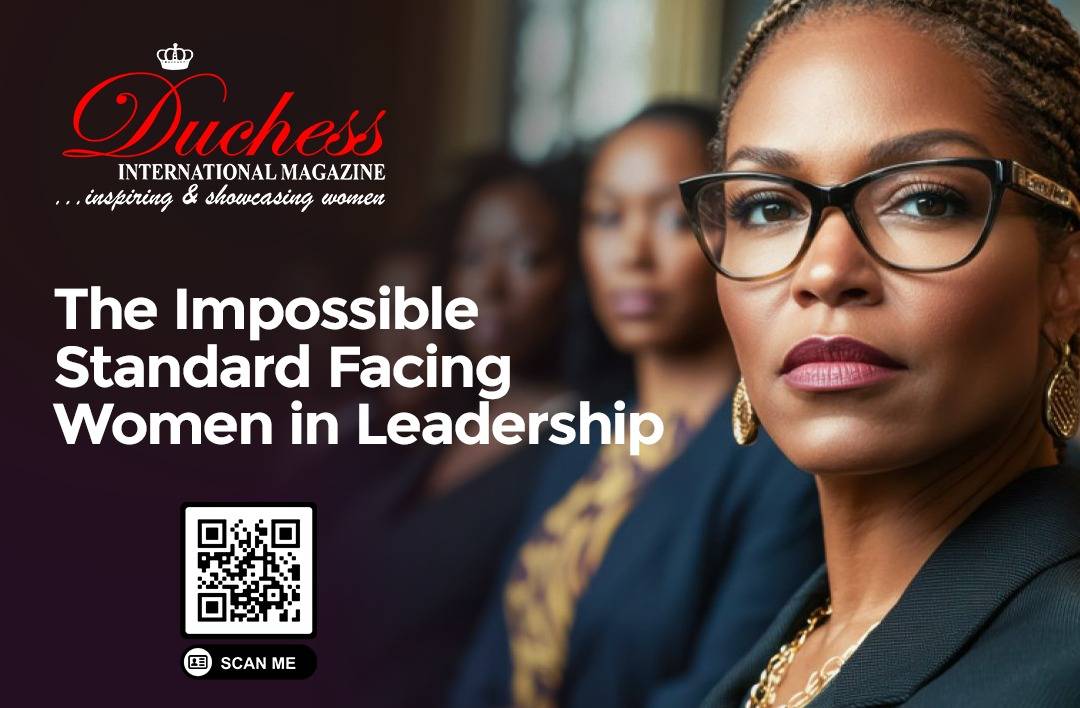
There is a quiet, unspoken rule that governs the lives of women who rise to positions of power. It is a rule that is never written down, never acknowledged in boardrooms or official ceremonies, but it is enforced with remarkable consistency. The rule is simple: a woman in leadership must be twice as good to be considered half as capable. She must perform flawlessly, not because excellence is expected, but because any misstep will be used as evidence that she never belonged in the first place.
This is the invisible tax that women in leadership pay every single day. It is the tax of being watched more closely, judged more harshly, and forgiven less easily than their male counterparts. When a woman in power makes a mistake, the mistake is not treated as a human error or a learning opportunity. It is treated as proof. Proof that women are too emotional, too indecisive, or too inexperienced to lead. The failure of one woman becomes the failure of all women, and the door that was barely open begins to close again.
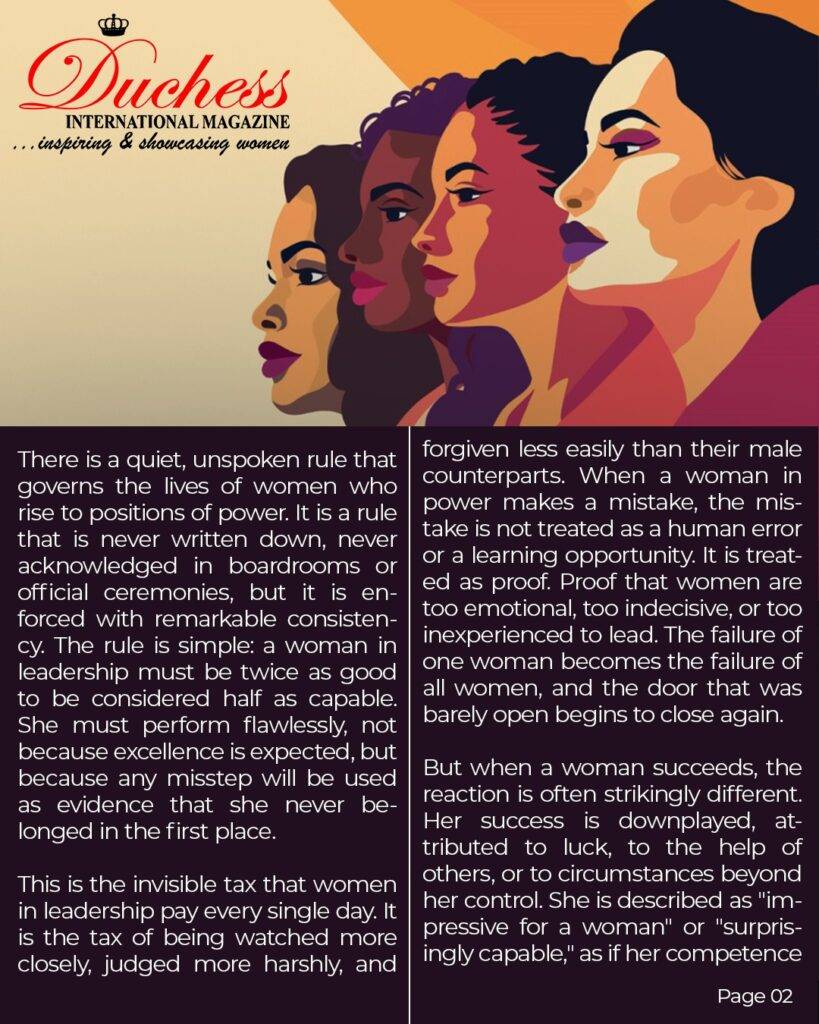
But when a woman succeeds, the reaction is often strikingly different. Her success is downplayed, attributed to luck, to the help of others, or to circumstances beyond her control. She is described as “impressive for a woman” or “surprisingly capable,” as if her competence is an anomaly rather than an expectation. Her achievements are celebrated, yes, but they are celebrated with a quiet caveat that suggests she is the exception, not the rule.
This double standard is exhausting. It forces women in leadership to carry a burden that their male colleagues rarely have to consider. Every decision becomes a high-stakes performance. Every action is scrutinised for signs of weakness. Every word is weighed, measured, and analysed for hidden meaning. The result is a leadership experience that is not just demanding, but deeply isolating. Women learn to perform perfection because perfection is the only standard that keeps the critics at bay.
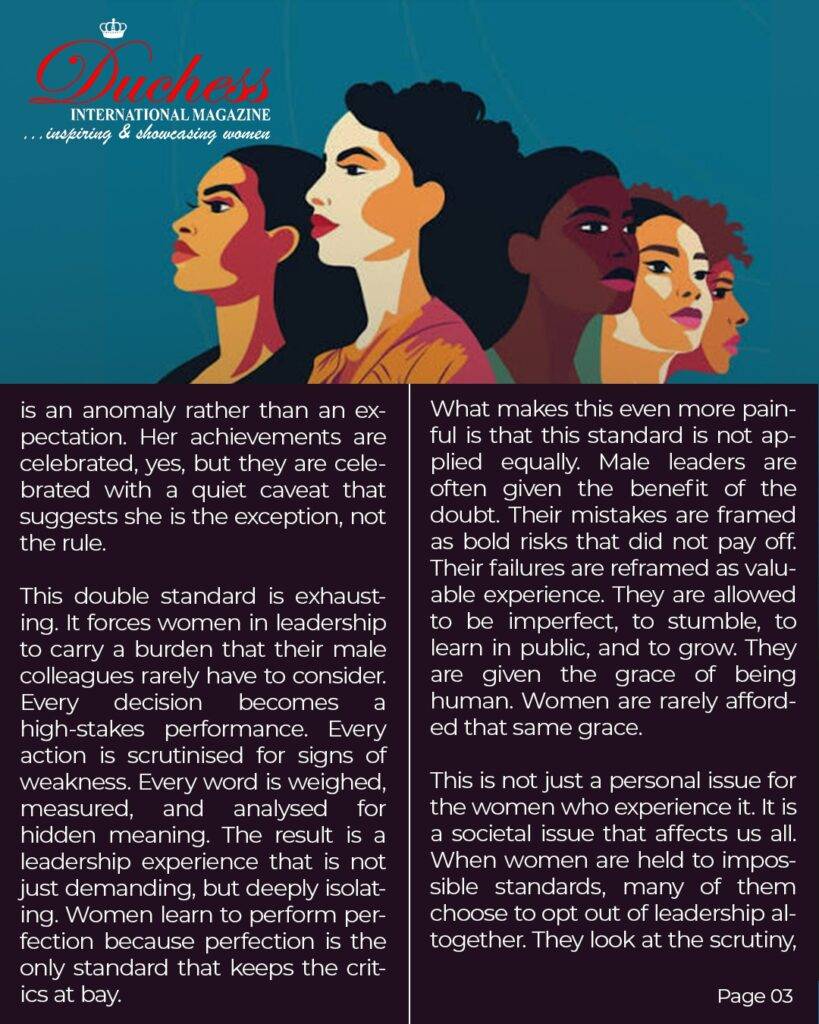
What makes this even more painful is that this standard is not applied equally. Male leaders are often given the benefit of the doubt. Their mistakes are framed as bold risks that did not pay off. Their failures are reframed as valuable experience. They are allowed to be imperfect, to stumble, to learn in public, and to grow. They are given the grace of being human. Women are rarely afforded that same grace.
This is not just a personal issue for the women who experience it. It is a societal issue that affects us all. When women are held to impossible standards, many of them choose to opt out of leadership altogether. They look at the scrutiny, the criticism, and the loneliness of the role, and they decide it is not worth the cost. When that happens, we all lose. We lose the perspectives, the ideas, and the solutions that women bring to the table. We lose the progress that comes when leadership reflects the diversity of the people it serves.
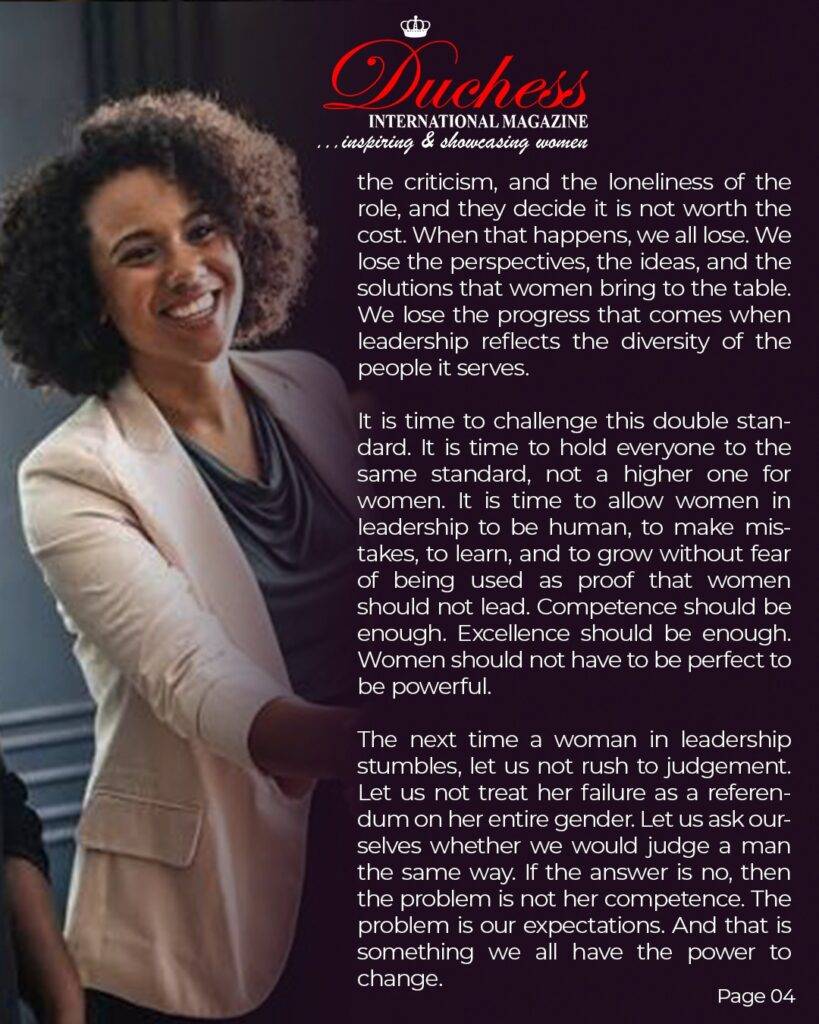
It is time to challenge this double standard. It is time to hold everyone to the same standard, not a higher one for women. It is time to allow women in leadership to be human, to make mistakes, to learn, and to grow without fear of being used as proof that women should not lead. Competence should be enough. Excellence should be enough. Women should not have to be perfect to be powerful.
The next time a woman in leadership stumbles, let us not rush to judgement. Let us not treat her failure as a referendum on her entire gender. Let us ask ourselves whether we would judge a man the same way. If the answer is no, then the problem is not her competence. The problem is our expectations. And that is something we all have the power to change.