

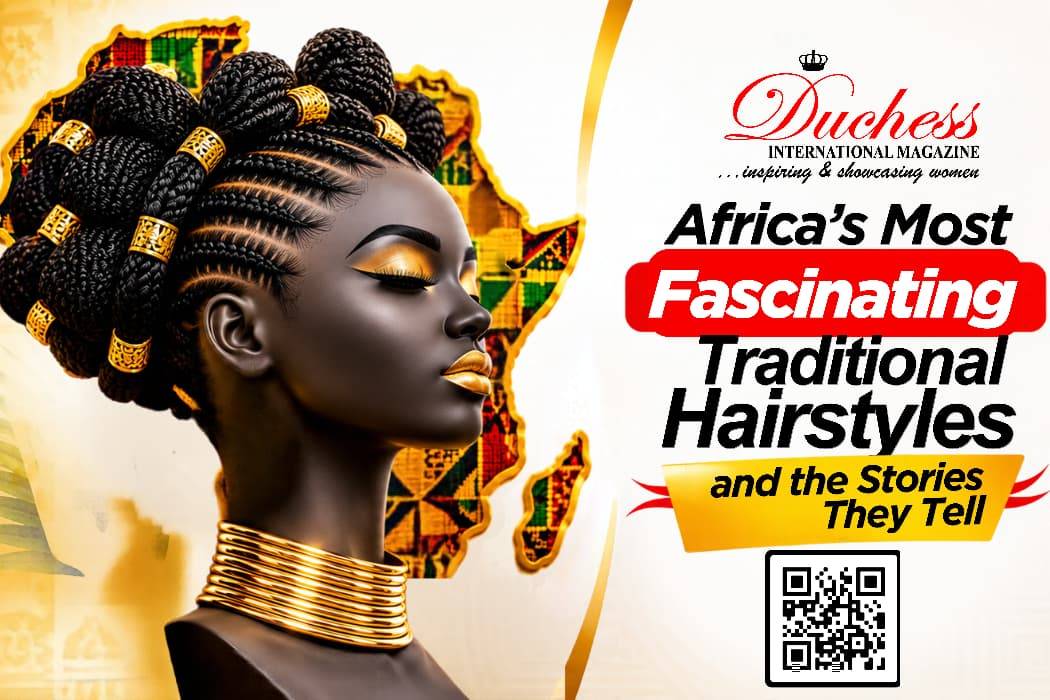
Across Africa, hair has long been more than a matter of personal appearance. It has been shaped, braided, threaded, adorned and sculpted into expressions of identity, artistry and cultural belonging. Long before contemporary beauty trends made intricate braids, natural hairstyles and elaborate hair accessories popular across international fashion platforms, African communities had developed distinctive ways of using hair to communicate stories about who they were and where they belonged. In different societies, a hairstyle could offer clues about age, marital status, social position, religious beliefs or important stages of life. Some styles were associated with particular ceremonies, while others reflected the creativity and craftsmanship of the women and men who wore them. The beauty of these traditions lies not only in their appearance, but also in the histories and cultural knowledge woven into every design.
In Nigeria, the Yoruba tradition of hairstyling offers a remarkable example of hair as a form of artistic expression. Styles such as shuku, in which the hair is gathered and braided towards the crown, and koroba, known for its distinctive basket-like arrangement, demonstrate the imagination and technical skill involved in traditional hair design. Another notable practice is hair threading, where strands are wrapped with thread to create structured shapes and sculptural forms. These techniques are part of a wider Yoruba tradition in which hairstyles have communicated taste, identity, social position and changing cultural influences. The work documented by photographer J. D. ‘Okhai Ojeikere, who created an extensive photographic archive of Nigerian hairstyles between the late 1960s and mid-1970s, remains an important visual record of this artistry. His photographs preserve designs that might otherwise have existed only in the memories of the women who wore them and the hands of the hairdressers who created them.
Moving across West Africa and the Sahel, Fulani braids are among the continent’s most recognisable traditional hair expressions. Associated with the Fulɓe people, whose communities extend across several countries, these styles are known for their intricate patterns, carefully arranged plaits and decorative details. Depending on the community and individual style, the hair may feature a central braid, side braids, beads, cowrie shells or other ornaments. The result can be both delicate and striking, combining precision with personal expression. Fulani-inspired hairstyles have also travelled far beyond their original cultural settings, becoming popular in contemporary salons and international beauty culture. Yet their significance extends beyond their modern popularity. They form part of a wider tradition in which hairstyling can express heritage, individuality and belonging, reminding us that many designs now celebrated as fashion trends have deep roots in African communities.
In Rwanda, the traditional hairstyle known as Amasunzu offers another fascinating example of the relationship between hair and cultural identity. Recognised for its distinctive sculpted appearance, with carefully shaped sections and curved forms, Amasunzu has become an important visual reference in discussions of Rwandan cultural heritage. Historically, it was worn by both men and women, although the particular designs and their associations could differ. The hairstyle was connected to social identity and traditional ideas of presentation, and its elaborate structure required considerable skill to create and maintain. Like many African hairstyles, Amasunzu should not be reduced to a single meaning or interpretation; its significance belongs to the cultural and historical contexts in which it developed. Today, its striking silhouette continues to attract attention as a distinctive expression of Rwanda’s artistic heritage and a reminder of the continent’s remarkable diversity in hair design.
Further south, among the Himba people of Namibia, hairstyles are closely connected to distinctive forms of adornment and cultural identity. Himba women are widely recognised for their sculptural braids and the use of otjize, a mixture of ochre and butterfat applied to the skin and hair. The reddish appearance created by this mixture is one of the most recognisable elements of Himba cultural presentation. Hairstyles may be shaped and adorned in ways associated with age and stages of life, with hair extensions and decorative elements contributing to their elaborate appearance. These practices are part of a wider aesthetic tradition in which hair, jewellery, clothing and body adornment work together. The result is not simply a striking look, but a visual expression of cultural continuity, community identity and an inherited understanding of beauty.
Among the Maasai communities of Kenya and Tanzania, hair traditions have also played a role in expressing social identity and stages of life, particularly in relation to men and age-set traditions. Historical accounts describe Maasai warriors, known as moran, wearing elaborate hairstyles, sometimes shaped into distinctive forms and coloured with red ochre. Such grooming practices could distinguish age groups and communicate a person’s place within the community. Hair was therefore part of a broader system of appearance and adornment that included clothing, jewellery and other cultural markers. Although contemporary styles and practices continue to evolve, historical documentation shows how carefully crafted hairstyles formed part of the visual identity associated with Maasai warriorhood. They also demonstrate that African hair traditions have never belonged exclusively to women; across the continent, men’s hairstyles have carried their own histories and social meanings.
The beauty of African traditional hairstyles is also found in the processes through which they are created. In many communities, hairdressing has historically been a shared social activity, bringing women together for hours of conversation, storytelling and the exchange of everyday experiences. The hairdresser’s work requires more than the ability to divide and braid strands; it involves an understanding of proportion, symmetry, technique and the particular design being created. In some traditions, specialised combs, threads, ornaments and other tools contribute to the process. The African comb itself has a long history, with research at the Fitzwilliam Museum documenting its cultural, artistic and social importance over thousands of years. Its handles and decorative forms have carried references to identity, status and spiritual beliefs. These objects remind us that the artistry of African hair culture extends beyond the finished hairstyle to the tools, knowledge and relationships that make it possible.
Colonialism, changing social attitudes, migration and modern beauty industries have all influenced how African hairstyles are worn and perceived. Some traditional styles became less visible in certain settings as European beauty standards gained influence, while others were adapted to changing lifestyles and new materials. Yet African hair traditions have continued to evolve rather than disappear. Contemporary braiders, natural-hair advocates, photographers, designers and cultural practitioners are bringing renewed attention to styles rooted in different communities. International fashion and entertainment have also introduced African-inspired braiding techniques to wider audiences, although this visibility makes it important to acknowledge their origins and cultural contexts. Appreciation becomes more meaningful when the histories behind these styles are recognised, rather than treating them as anonymous trends detached from the people who developed them.
Today, African traditional hairstyles occupy an interesting space between heritage and contemporary expression. Younger generations are rediscovering historical designs, adapting them for modern occasions and using them to communicate pride in their identities. At the same time, archives, museums and cultural researchers are preserving photographs, objects and oral histories that help document the stories behind these practices. The work of photographers such as Ojeikere is particularly valuable because it captures the creativity of ordinary people and the artistry of hairstyles that might otherwise be overlooked in written histories. These records show that African hair culture is not a single tradition but a collection of distinct practices shaped by geography, history, community and individual imagination. Each style deserves to be understood within the context from which it emerged.
Africa’s traditional hairstyles tell stories that cannot always be captured in a photograph. They speak of generations of artistic knowledge, the relationships between women and their communities, the identities of different peoples and the changing ways Africans express beauty. From Yoruba sculptural designs and Fulani braids to Rwanda’s Amasunzu, Himba adornment and Maasai warrior hairstyles, these traditions reveal a continent rich in creativity and cultural expression. Their continued presence in contemporary beauty culture is a reminder that heritage does not have to remain in the past; it can be preserved, reinterpreted and celebrated by new generations. To appreciate these hairstyles fully is to recognise the people, histories and craftsmanship behind them. They are not simply beautiful arrangements of hair. They are living expressions of African culture, each carrying a story worth knowing.

