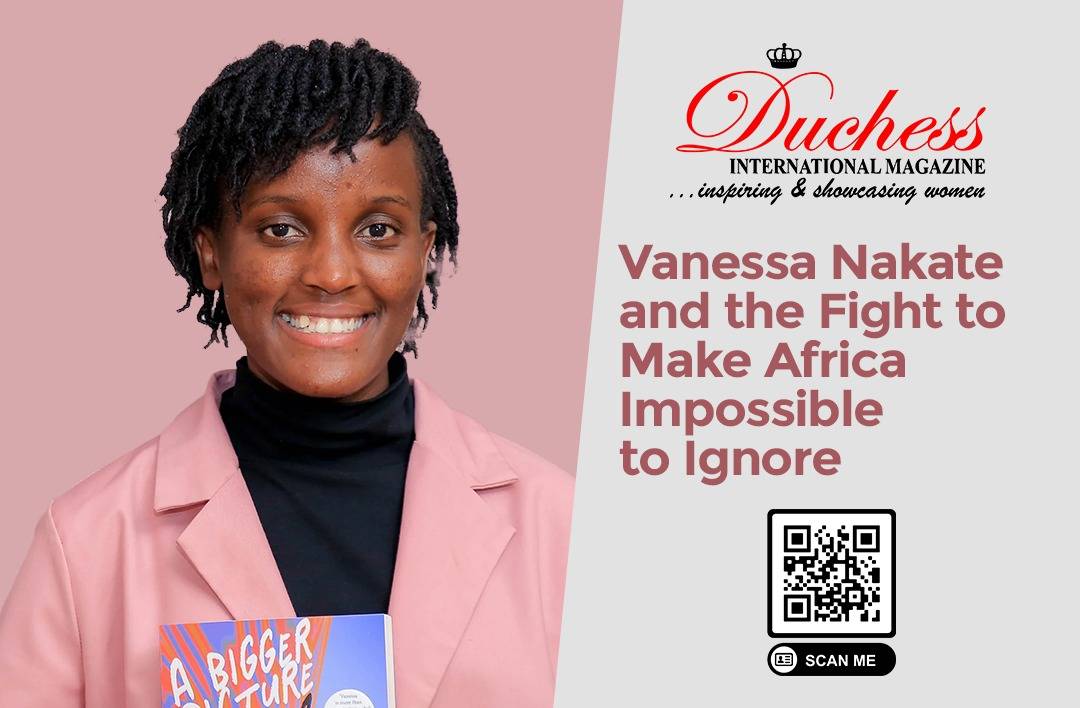
There are moments that reveal more than years of speeches ever could. For Vanessa Nakate, one of those moments came in January 2020 at the World Economic Forum in Davos. A photograph of young climate activists was published by a major news agency. When the image appeared online, Nakate, the only African in the group, had been cropped out. Her response was immediate and unflinching. “You didn’t just erase a photo,” she wrote. “You erased a continent. But I am stronger than ever.” The incident sparked international outrage, but its significance extended far beyond a single photograph. For Nakate, it symbolized a much larger problem. Africa was not simply being cropped out of pictures; it was being cropped out of conversations.
Born and raised in Uganda, Nakate did not begin her journey with the intention of becoming a global activist. Like many young people, she was simply paying attention to the world around her, connecting the droughts, floods, and landslides she was already witnessing at home to the climate warnings she was reading about. She has said plainly that in her county, a lack of rain means starvation and death for the less privileged. That was never an abstraction for her, and it became the foundation of everything she built afterward.
In January 2019, inspired by Greta Thunberg’s example in Sweden, Nakate staged a solitary strike outside Uganda’s Parliament. She has since been candid about how small and improvised that beginning actually was. She had no resources and no permits to organize a large demonstration, so she started by asking a local school principal for permission to speak to students instead. Her first and only strike directly in front of Parliament, conducted alongside a friend, was a one-time event: when she returned alone two weeks later, she was turned away, and subsequent attempts to protest there were refused outright. What began as a single afternoon outside a government building became, through nothing but persistence, the seed of a continental movement.
As her profile grew, so did her message. Nakate repeatedly challenged the tendency to treat Africa as a footnote within climate discussions. The continent contributes only a small share of global greenhouse gas emissions, yet it faces some of the most severe consequences. This imbalance became central to her advocacy. She argued that conversations about climate change could not be separated from conversations about fairness, inequality, and responsibility. Who bears the greatest burden? Who has the resources to adapt? Who gets a seat at the table when solutions are being discussed? These were not merely policy questions. They were questions about whose lives are valued and whose experiences are acknowledged.
The Davos photograph became a defining moment because it captured, in a single image, the very issue Nakate had been raising for years. Rather than allowing the incident to define her, she used it to draw attention to a broader pattern of exclusion. The story quickly became international news, but more importantly, it forced many people to confront uncomfortable questions about representation and visibility. Who gets recognized as a leader? Whose stories are considered important enough to tell?
What makes Nakate’s leadership particularly compelling is that she has consistently resisted the temptation to focus solely on visibility. For her, representation is not the destination; it is the starting point. She went on to found Youth for Future Africa and the Rise Up Movement, organizations built specifically to tell the stories of activists across the continent striking, organizing, and demanding action in their own communities. Throughout her advocacy, she has repeatedly drawn attention to the communities living on the frontlines of climate change: farmers facing unpredictable weather patterns, families dealing with prolonged droughts, communities struggling with floods and food insecurity. By grounding global climate debates in human experiences, she has helped shift the conversation from abstract statistics to lived realities.
Her work also reflects a broader transformation taking place among a new generation of African leaders. Previous generations often fought to gain access to international platforms. Nakate’s generation is increasingly focused on reshaping those platforms themselves. Rather than waiting for permission to participate, they are demanding inclusion as equal stakeholders. This shift is significant because it changes the nature of the conversation. Africa is no longer presented merely as a recipient of decisions made elsewhere. It is increasingly asserting itself as an essential voice in discussions about the future of the planet.
There is another reason Nakate’s story resonates so deeply. It challenges assumptions about what leadership looks like. Traditional images of leadership often center on political power, corporate influence, or institutional authority. Nakate began with none of those things. She was a young woman standing alone outside a parliament building, turned away the second time she tried. Yet her influence grew because she understood something fundamental about persistence, something she has since distilled into a single, often-repeated line of her own: your actions matter, and no action or voice is too small to make a difference.
Ultimately, Vanessa Nakate’s significance extends far beyond climate activism. Her story is about visibility, voice, and the power of refusing to accept erasure. She has spent years challenging the idea that Africa should remain on the margins of conversations that shape its future. In doing so, she has helped redefine what global leadership can look like in the twenty-first century. What remains, long after any single photograph, is something far more enduring: a movement, a message, and a reminder that entire continents should never have to fight to be seen. Through her work, Vanessa Nakate has made that increasingly impossible to ignore.