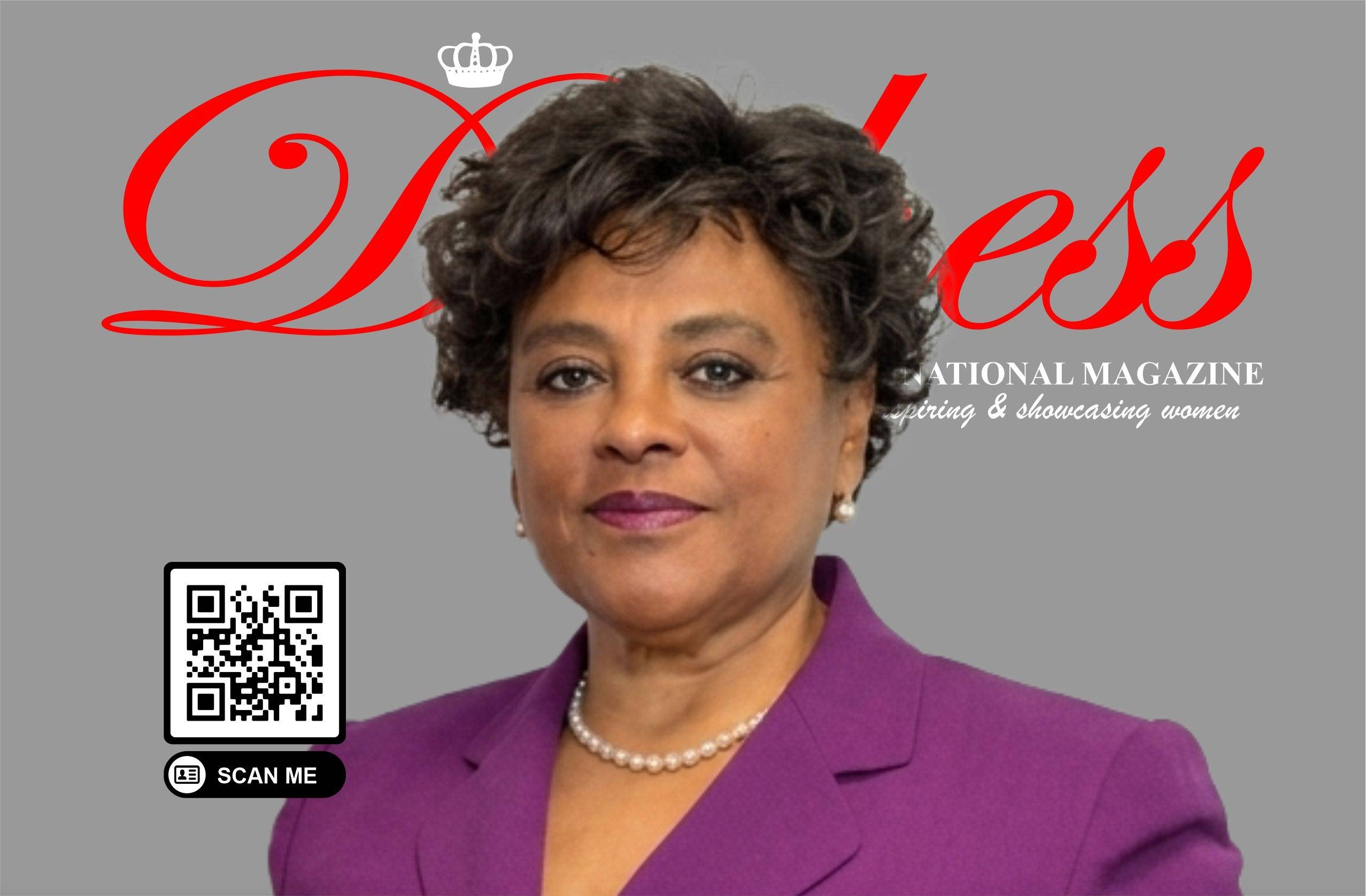
Carolina Cerqueira does not enter a room in the manner of theatrical power. She enters it in the manner of structure itself, quiet, deliberate, and already understood. In the chamber of the National Assembly of Angola, where political language often competes with political intention, her presence is defined by something rarer than visibility. It is defined by control without noise, authority without excess, and leadership that is expressed through order rather than performance. Her rise to become the first woman to preside over the National Assembly was not framed as interruption, but as inevitability that arrived late.
The defining image of Carolina Cerqueira is not found in celebration, but in continuity. It is the image of a parliamentary chamber settling into silence as she takes the chair, not because attention is demanded, but because attention is already directed. In that stillness lies the essence of her leadership style. She does not amplify the institution. She stabilises it. And in modern political environments where visibility is often mistaken for influence, her form of authority stands apart as procedural rather than performative, architectural rather than theatrical.
Her academic formation reveals the quiet precision behind this presence. With studies in journalism and social communication, she entered public life through the discipline of language, narrative control, and institutional messaging. This is not incidental. It is foundational. Communication, in her case, was never about expression alone. It was about governance through clarity, where information becomes a stabilising force in public administration. This foundation later evolved through advanced engagement with political science and international relations, disciplines that expanded her understanding of the state not as a single entity, but as a system of interconnected pressures, expectations, and diplomatic realities.
Her early career unfolded within government communication structures, where precision was not stylistic but essential. In this environment, language carried institutional weight, and every message required calibration between public transparency and state coherence. It is here that she developed a defining professional trait, the ability to operate where communication is not commentary, but governance itself. From this space, she transitioned into broader executive and diplomatic responsibilities, representing Angola in formal international settings and engaging with institutional frameworks that demanded composure under negotiation, clarity under pressure, and restraint under visibility.
The most significant turn in her career did not arrive as rupture, but as accumulation. Her appointment as Speaker of the National Assembly marked a transition from institutional participant to institutional custodian. It is within this role that her leadership becomes most visible and, paradoxically, least performative. She presides over debate, regulates parliamentary rhythm, and ensures that legislative process remains anchored in order even when political discourse becomes fragmented. Her authority is not exercised through interruption, but through structure, the ability to maintain coherence where competing interests converge.
A defining moment in understanding her leadership style emerges not through a single dramatic event, but through the consistency of her parliamentary presence. Sessions do not revolve around her personality. They revolve around the system she upholds. In moments of tension within legislative debate, her role is not to escalate presence but to restore equilibrium. This is where her authority becomes most visible to those who understand governance deeply. It is not loud, but it is absolute within its procedural domain.
Her significance also extends beyond institutional function into historical positioning. As the first woman to lead the National Assembly, she occupies a symbolic threshold in Angola’s political evolution. Yet her influence resists reduction to symbolism alone. The weight of her position is sustained by execution. Representation matters, but it is reinforced daily by the discipline of parliamentary management, the regulation of legislative process, and the maintenance of institutional credibility in a system shaped by democratic consolidation.
What distinguishes Carolina Cerqueira most is not simply that she holds office, but that she embodies a specific philosophy of power. It is a philosophy that treats governance as architecture rather than performance. In this architecture, stability is not passive. It is constructed. Order is not assumed. It is maintained. And leadership is not measured by volume, but by the ability to sustain institutional integrity under continuous political complexity.
In the evolving narrative of Angolan governance, her legacy is still being written in real time. But even now, it is already defined by clarity of function and restraint of expression. She represents a form of political leadership that is increasingly rare, where authority is not announced but understood, and where influence is measured not by presence in discourse, but by the durability of the systems left behind.