

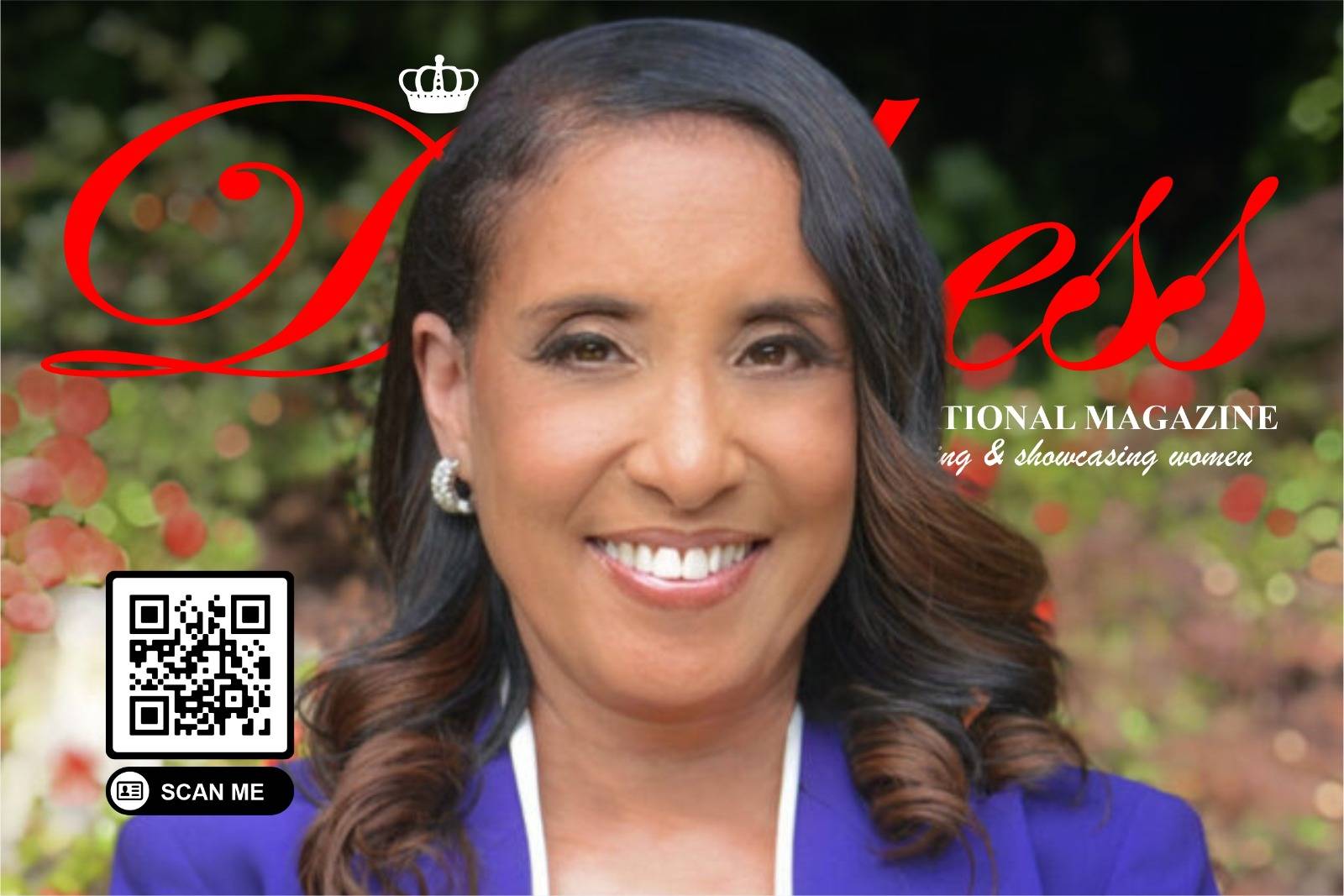
A woman’s influence cannot always be measured by the title attached to her name. Sometimes, it is found in the lives she has touched, the knowledge she has shared, the institutions she has helped shape and the opportunities she has created for others. Dr. Penny Brown Reynolds has built a career that brings together several dimensions of public life: law, education, faith, media, entrepreneurship and community advocacy. Known to television audiences as Judge Penny, she has spent years working across professional and community spaces, with a recurring interest in justice, family development and the advancement of women and young people. Her election as Georgia’s first Black woman elected Secretary of State is a historic milestone, but it is only one chapter in a much broader story.
Her academic journey reflects an enduring commitment to learning and professional development. Reynolds earned a Bachelor of Science in Criminal Justice from Georgia State University, graduating cum laude, before completing her Juris Doctor at the university’s College of Law in 1994. She later pursued a Master of Arts in Religious Education at the Interdenominational Theological Center, graduating at the top of her class, and earned a Ph.D. in Criminal Justice from Nova Southeastern University in 2021. She also completed the Women and Power Executive Education programme at Harvard Kennedy School. This combination of legal, academic and theological education speaks to the range of interests that have informed her work. It also helps explain why her professional life has extended beyond the practice of law into teaching, public policy, faith and community engagement.
Her legal career began long before her name became familiar to television audiences. She worked as an Assistant Attorney General in Georgia and also served as an Assistant District Attorney, gaining experience in state law and the administration of justice. In 1997, she became Chief of Staff and General Counsel to Georgia Lieutenant Governor Pierre Howard, and in 1998 she was appointed Executive Counsel to Governor Roy Barnes. In both positions, she broke significant racial barriers, becoming the first African American to hold these respective roles in Georgia’s history. She later served as a judge in Fulton County State Court from 2000 to 2008, handling civil and criminal proceedings. These experiences established her as a legal professional whose work extended from the courtroom to the highest levels of state administration.
Yet Reynolds’ professional identity has never been confined to legal institutions. Her interest in education led her into university teaching, including work at Georgia State University’s Andrew Young School of Policy Studies, where she taught criminal law, race and criminal justice, and criminal procedure. She received the department’s Outstanding Instructor of the Year award in 2020. Her academic engagement also included policy advisory work at Albany State University, where she contributed to planning and initiatives focused on student success. Alongside these responsibilities, she has delivered lectures and keynote addresses at universities, professional gatherings and community events. For Reynolds, knowledge has been something to apply, share and make accessible, whether through a classroom, a public lecture or conversations about the institutions that shape society.
Faith and family advocacy form another important part of her story. An ordained minister with a Master of Arts in Religious Education, Reynolds has connected her theological training with her interest in strengthening families and supporting vulnerable communities. Through the JP Foundation, a nonprofit organisation she has led, her work has focused on women, young people, children and families, with education and advocacy central to its mission. Her professional record also documents a women’s entrepreneurship initiative developed in partnership with the Coca-Cola Foundation, intended to support more than 100 women in launching businesses. She established an annual women’s empowerment conference that attracted thousands of participants from across different states and countries. These initiatives reveal a side of her leadership that is less visible than her legal career but equally important: a commitment to building platforms through which people can access support, knowledge and opportunity.
Her work as an author has provided another avenue for sharing ideas about personal development, relationships and women’s experiences. Among her published books are 7 Steps to Peace of Mind, Real Talk for Real Sisters: Wisdom & Truth for Today’s Women and Teens, and My Mother Told Me. The titles reflect her interest in subjects that reach beyond professional achievement, including personal wellbeing, family relationships and the experiences of women and young people. She has also written about women’s legal rights in Georgia, contributing to Women and the Law: A Guide to Women’s Legal Rights in Georgia. Through these publications, Reynolds has approached writing as a way to inform, encourage reflection and make conversations about everyday challenges more accessible. Her work as an author adds depth to a career that has consistently moved between professional expertise and public engagement.
For many viewers, however, her most recognisable public identity came through television. As the host and executive producer of the syndicated programme Family Court with Judge Penny, Reynolds brought family disputes and relationship issues into a format that could reach audiences beyond the traditional courtroom. The programme ran for one season and received an Emmy Award nomination in 2009. She described television as an extension of her ministry, reflecting her interest in using media to engage with family and social issues. Her media experience also included participation in CNN’s Black in America series, Reclaiming the Dream, through which she was recognised alongside other leading voices. These experiences allowed her to connect with audiences in a different way, translating aspects of her professional and personal interests into conversations that reached beyond legal and academic circles.
The significance of her November 2026 election becomes clearer when considered against this wider background. On 3 November, Georgia voters elected Reynolds as Secretary of State, making her the first Black woman elected to the office. The distinction is important: Robyn Crittenden had previously become the first Black woman to serve in the position after being appointed in 2018. Reynolds’ election marks a different milestone, one achieved through a statewide vote. The office oversees state elections, voter registration and certification of results, alongside responsibilities involving business filings and professional licensing. Her campaign highlighted priorities including voting access, election administration and support for small businesses. She is scheduled to assume office in January 2027, bringing her experience in law, government and public service to a role with responsibilities that affect millions of Georgians.
Dr. Penny Brown Reynolds’ journey is ultimately one of many connected callings: lawyer, judge, educator, minister, author, media personality, entrepreneur and public servant. Each role has offered a different way to engage with people and institutions, from helping resolve legal disputes to teaching students, supporting families and creating platforms for women’s empowerment. Her historic election adds a new dimension to that journey, but it should not overshadow the work that came before it. Duchess International Magazine celebrates Reynolds not only for breaking a significant barrier in Georgia’s political history, but also for the breadth of her professional and community contributions. Her story invites us to recognise leadership in its many forms and to appreciate the women whose influence reaches far beyond the titles they hold.

