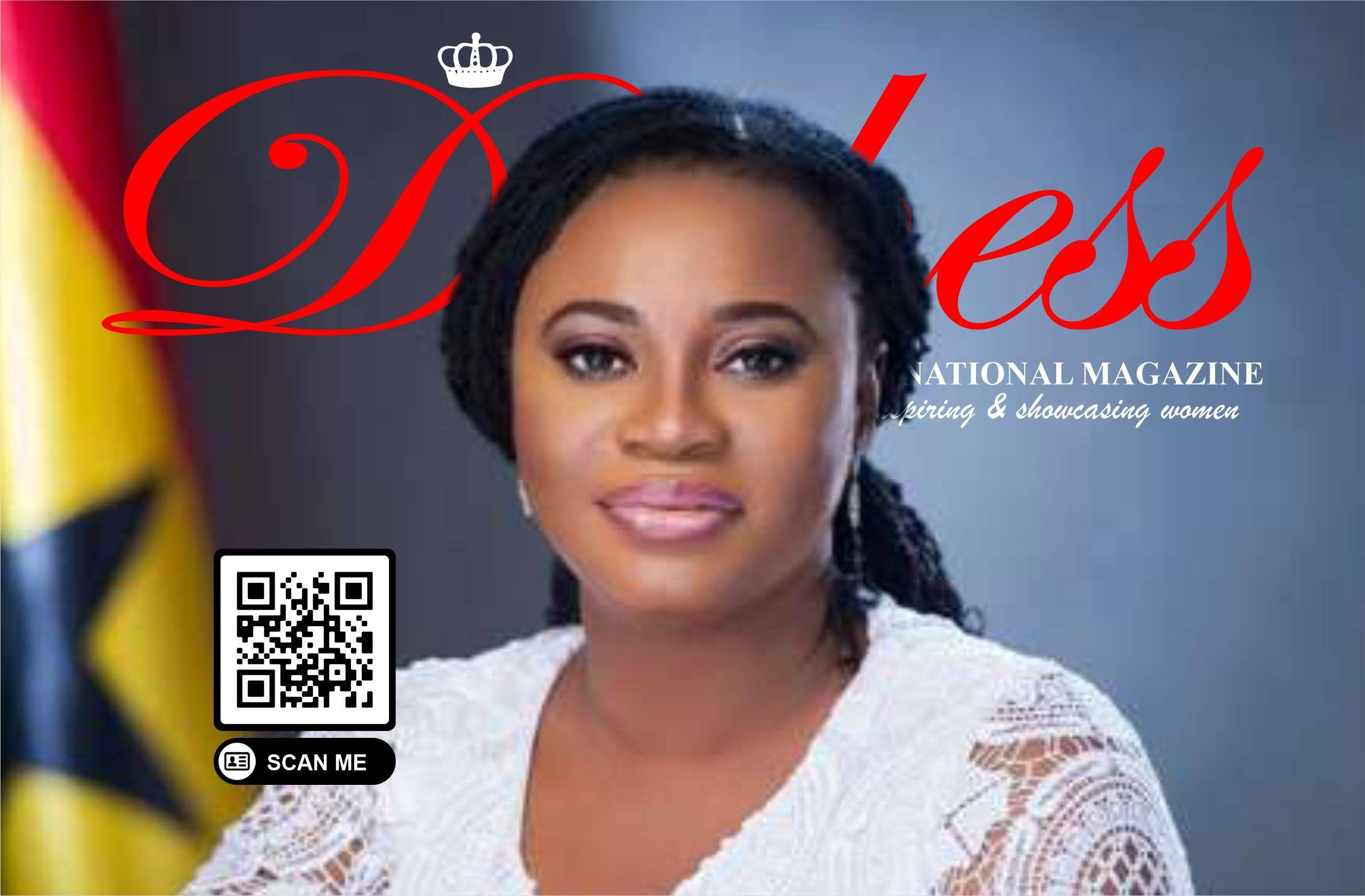
There are women who make history quietly, and there are women who carry the full weight of history on their shoulders while the world watches and waits. Charlotte Kesson-Smith Osei belongs to the second group. Her name is etched into the story of Ghana and the wider African continent as a woman who dared to occupy spaces that had never been opened to women before. But her journey is not simply a tale of achievement and applause. It is a story about the particular cost of being first, the invisible tax that women pay when they step into rooms that were not built with them in mind, and the quiet resilience required to keep standing when the ground beneath you shifts.
Long before she became a household name in Ghanaian public life, Charlotte Osei was building a reputation as a formidable lawyer with a sharp mind and an unrelenting work ethic. She trained at the University of Ghana and later earned an LLM from Queen’s University in Canada, equipping herself with the kind of academic foundation that would serve her across decades of public service. Her early career saw her move through some of Ghana’s most demanding legal and financial institutions, including Ghana Commercial Bank and Unibank Ghana Limited. She later founded Prime Attorneys, a business law firm she led as founder and lead counsel for six years, and it was here that she sharpened the leadership style that would come to define her public life.
By the time she stepped into her first major national role as Chairperson of the National Commission for Civic Education in 2011, Osei was already known for a leadership approach rooted in structure, discipline, and reform. Under her direction, the NCCE underwent what many observers have described as its most significant institutional transformation, managing a workforce of over 1,700 staff across 200 offices nationwide. She did not simply occupy the position. She reshaped it, bringing a level of organisation and accountability that had not been seen before, and proving that she was not content to be a figurehead. She wanted to build institutions that worked.
In 2015, Osei was sworn in as Chairperson of the Electoral Commission of Ghana, becoming the first woman in the nation’s history to hold that office. It was not a ceremonial appointment designed to make headlines. It came with enormous responsibility. As Chairperson, she carried direct responsibility for supervising every public election and referendum in the country, demarcating electoral boundaries, and ultimately declaring the outcome of presidential elections. These are decisions with consequences that ripple far beyond any single election cycle, and Osei bore that weight with a composure that many found remarkable.
Her tenure included presiding as Returning Officer for Ghana’s 2016 presidential and parliamentary elections, a process that was widely acknowledged both locally and internationally as credible and well managed. For a country whose democratic institutions are still relatively young by global standards, overseeing a transparent and peaceful transfer of power was no small feat. It required steadiness, impartiality, and an unwavering commitment to the democratic process, all of which Osei demonstrated at a time when the entire nation was watching her every move. It was accomplished under the leadership of a woman who had to prove, at every turn, that she belonged in the room.
That is often the invisible tax placed on women who break ground first. Competence alone is rarely enough. It has to be competence performed publicly, repeatedly, and without room for the kind of missteps that male predecessors might have been afforded more grace to make. Osei understood this reality intimately. Every decision she made was scrutinised not just as a professional action but as a reflection of whether a woman could be trusted with power at all. It is a burden that is rarely named but always felt, and Osei carried it with a dignity that spoke to her inner strength.
Her time at the Electoral Commission ended in 2018 when she was dismissed on grounds of financial malfeasance, allegations she has consistently contested, with the matter reportedly making its way through Ghana’s Supreme Court. It would have been easy, and deeply understandable, for a career to end there, buried under controversy and the particular scrutiny reserved for women who fall from high office. Many would have retreated into private life, choosing silence over the painful work of rebuilding a reputation that had been publicly questioned. But Osei chose a different path, and that choice reveals more about her character than any title she has ever held.
Instead of retreating, Osei rebuilt. In 2019, she became the first Ghanaian and the first African woman appointed by the United Nations and the President of Afghanistan as an International Elections Commissioner to Afghanistan’s Electoral Complaints Commission, a role that tasked her with strengthening the country’s capacity to manage and resolve election-related disputes. The following year, she led the ECOWAS technical mission to Liberia, working to clean up the country’s voters’ roll ahead of its senatorial elections. She has also served in observer and technical advisory roles across Nigeria’s electoral processes, extending her expertise well beyond Ghana’s borders and proving that her value to the continent could not be diminished by controversy at home.
Across every chapter of her career, from private legal practice to civic education to international elections work, one thread remains constant: Osei’s command of governance. Colleagues and profiles describe her as a “trisector expert,” someone equally fluent in the demands of the public sector, the private sector, and not-for-profit institutions. That range is rare, and it is precisely what has allowed her to move fluidly between boardrooms, government commissions, and international bodies without losing credibility in any of them. In an era where corporate governance failures make headlines almost as often as their successes, Osei’s career offers a case study in what disciplined, structure-driven leadership can look like.
It would be incomplete to tell Osei’s story without naming what it likely required of her personally. Every glass ceiling broken carries a cost that rarely makes it into official biographies. There is the scrutiny that outpaces the achievement, the assumption of guilt that can attach itself to women in power more quickly than to their male counterparts, and the emotional labour of leading institutions while also being watched as a symbol. Charlotte Osei did not simply hold positions of power. She held the added weight of being watched as proof of whether a woman could be trusted with that power at all.
Her story resists easy conclusion because she is, by all accounts, still writing it. What is clear is that her career reflects the layered reality many trailblazing women live: the achievement and the scrutiny, the breakthrough and the backlash, the public triumph and the private cost. She did not simply occupy space that had never been occupied by a woman before. She had to justify her place in it, defend her record publicly, and then find the resolve to keep contributing on an international stage. For every woman who steps into a role that history has never handed to someone who looks like her, Charlotte Osei’s journey offers a sober but necessary truth. Breaking the glass ceiling rarely feels like triumph in the moment. Often, it feels like survival. It is only in hindsight, and often only through the eyes of those who come after, that it starts to look like legacy.