

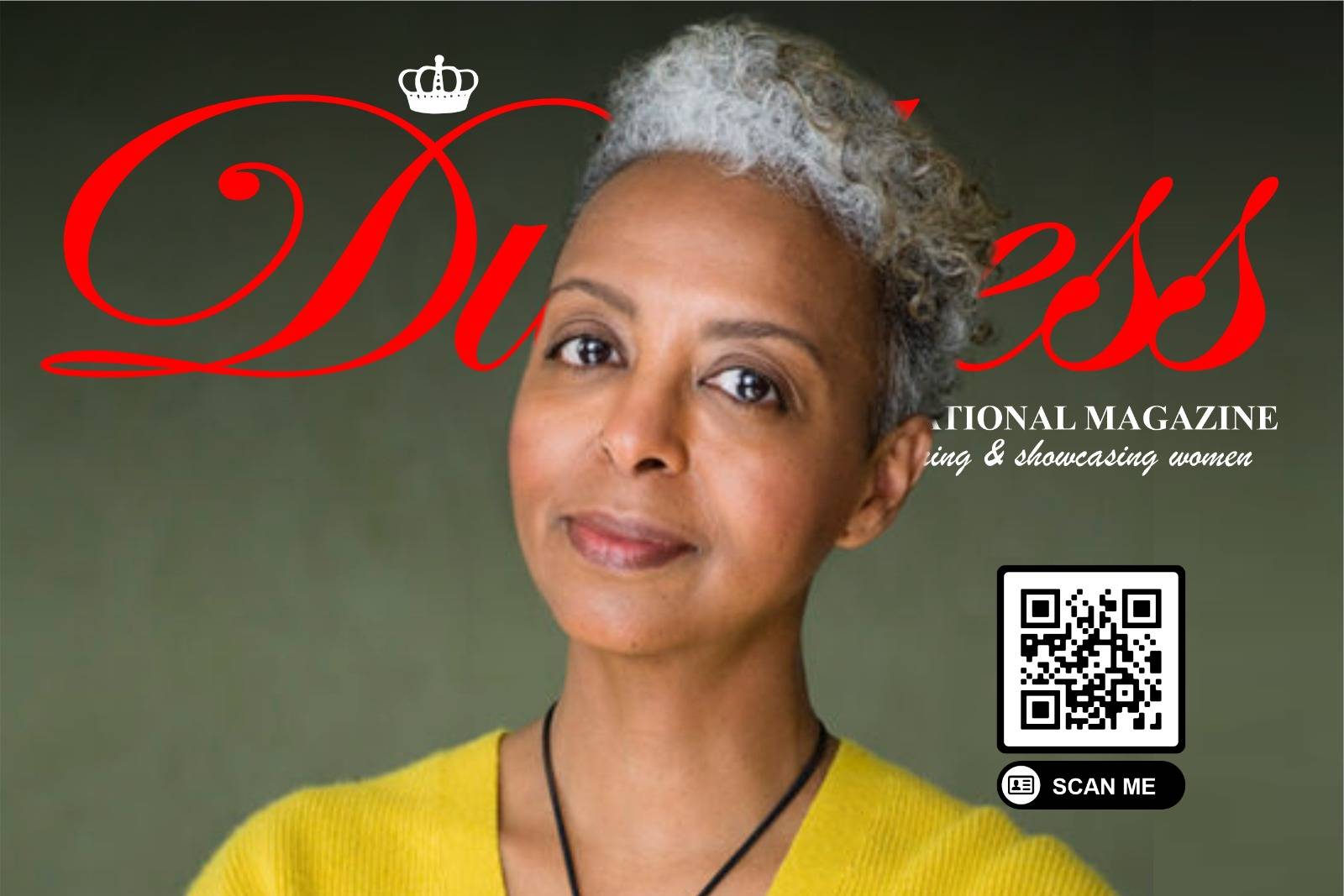
History is often written by those who hold the pen, leaving the most vital stories buried in the margins. For Ethiopian-American novelist Maaza Mengiste, the space between official historical records and the lived realities of the people who shaped them is not just a gap; it is a calling. Through her meticulously researched fiction, she has explored revolution, political violence, displacement, and war, pulling overlooked human experiences into the centre of the narrative. Her internationally acclaimed novel, The Shadow King, in particular, shatters the familiar image of war as an exclusively male experience. She does not just write about history; she reclaims it, bringing the forgotten Ethiopian women who resisted Italy’s invasion to the forefront where they have always belonged.
Born in Addis Ababa, Ethiopia, Mengiste was a child when her family fled the Ethiopian revolution. Her early experiences of displacement and growing up across different countries would later inform her interest in memory, belonging and the lasting consequences of political upheaval. In an interview with The Guardian, she spoke about her family’s departure from Ethiopia and how the history of that period became part of the material she explored in her debut novel. Rather than treating history as a distant collection of dates and political figures, Mengiste has consistently examined how national upheaval enters ordinary homes, changes relationships and shapes the lives of people who have little control over the events surrounding them.
Her academic journey took her to the United States, where she earned a Bachelor of Arts degree from the University of Michigan in 1993 and a Master of Fine Arts from New York University’s creative writing programme in 2007. These qualifications formed part of her development as a literary professional, but her work has extended beyond writing fiction. She has also worked as an essayist and photographer, with writing published in respected literary and international publications, including The New Yorker, Granta, The New York Times and The New York Review of Books. She has also taught creative writing, serving on the faculties of Princeton University and Queens College before joining Wesleyan University, where she is a professor in the Department of English.
In 2010, Mengiste published her debut novel, Beneath the Lion’s Gaze, a work that examines Ethiopia during the fall of Emperor Haile Selassie and the rise of the military regime known as the Derg. Through the experiences of a physician and his two sons, the novel explores how political violence reaches into family life, testing personal convictions, loyalties and the limits of moral courage. The book received significant critical recognition and was selected by The Guardian as one of the ten best contemporary African books. Its reception established Mengiste as a distinctive literary voice capable of connecting national history with the intimate experiences of individuals living through extraordinary political change.
Her second novel, The Shadow King, published in 2019, brought her work to a wider international audience. Set during Italy’s invasion of Ethiopia in 1935, the novel draws attention to Ethiopian women who participated in the resistance, challenging historical narratives that have often placed men at the centre of warfare. Through characters including Hirut and Aster, Mengiste explores courage, class, power, violence and the complicated realities of women living through conflict. The novel emerged from extensive historical research, including her engagement with photographs of Ethiopian women who took part in the resistance. For Mengiste, these images opened a window into a history that she had not adequately encountered in her own education, prompting her to investigate the experiences of women whose contributions had received far less attention.
The international recognition that followed The Shadow King was substantial. The novel was shortlisted for the 2020 Booker Prize, placing Mengiste among the writers recognised by one of the world’s most prominent literary awards. It was also a finalist for the 2020 Los Angeles Times Book Prize in Fiction and was named among the year’s best books by several publications, including The New York Times, NPR, TIME and Elle. Her shorter fiction has also earned recognition: her story “Dust, Ash, Flight”, published in the anthology Addis Ababa Noir, received the 2021 Edgar Award for Best Short Story. These achievements reflect a body of work that has reached readers across different countries while maintaining a strong connection to Ethiopian history and experience.
Her contribution to literature has continued to attract major institutional recognition. Among her distinctions are a Guggenheim Fellowship, a National Endowment for the Arts award, a Fulbright Fellowship, a DAAD Artists-in-Berlin Fellowship and an Award in Literature from the American Academy of Arts and Letters. In September 2026, she was named a MacArthur Fellow, an honour recognising her work in fiction and nonfiction writing. The MacArthur Foundation highlighted her ability to combine history, memory and imagination to reveal the human costs of political violence. Alongside her writing, her work as an educator allows her to contribute to literary conversations and the development of emerging writers.
Maaza Mengiste’s literary significance lies in her insistence that history should be examined beyond its most familiar figures and official accounts. Her novels make room for the experiences of women, families and ordinary people whose lives are shaped by political decisions and armed conflict. Through Beneath the Lion’s Gaze and The Shadow King, she has demonstrated how fiction can revisit the past without reducing it to a simple account of heroes and villains. Her writing asks readers to consider whose experiences have been preserved, whose have been overlooked and what becomes possible when those stories are finally given space. In bringing Ethiopian women’s wartime experiences into the foreground, Mengiste has made a compelling contribution to the way history, literature and women’s voices meet.

