

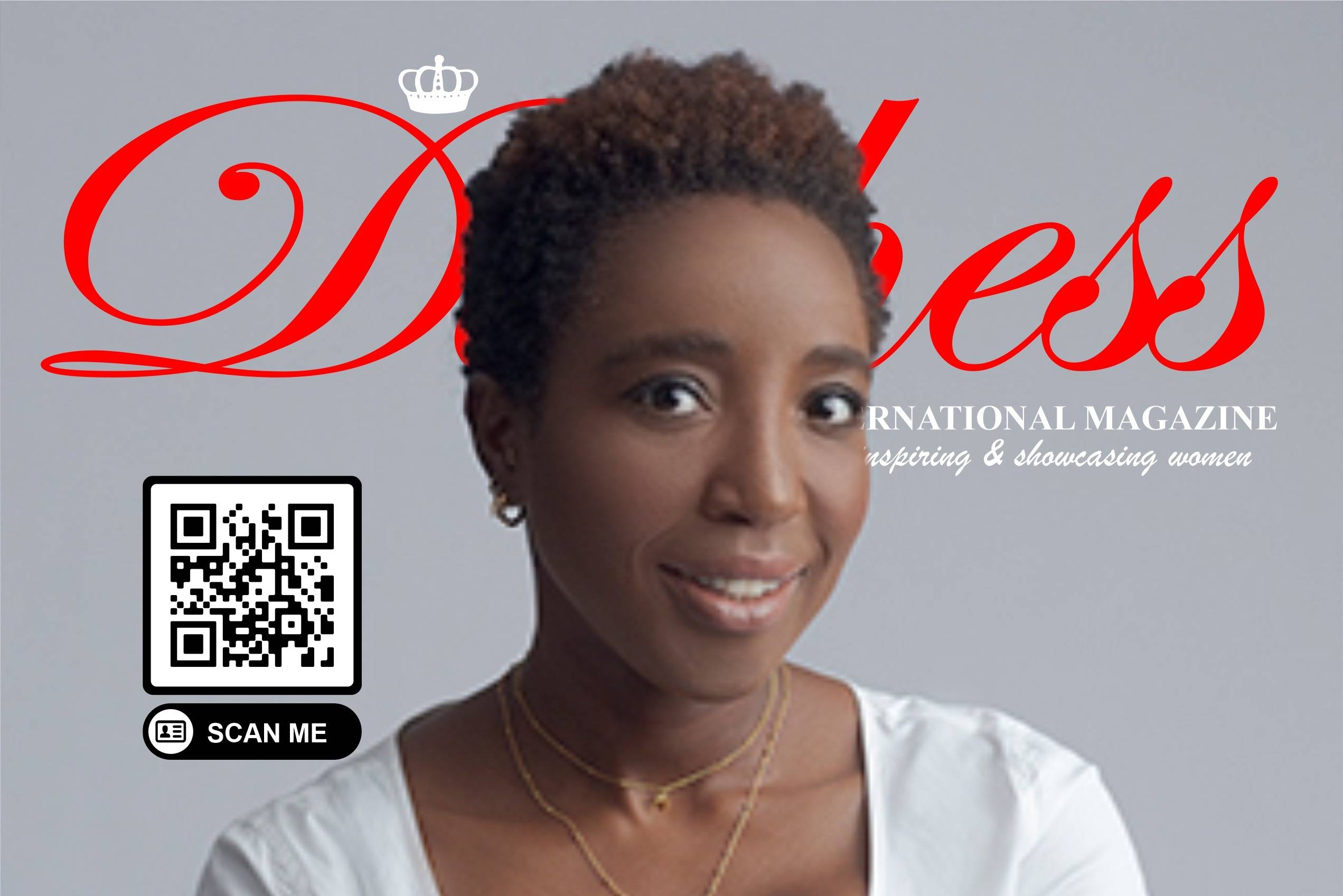
When Eloho Omame was running Endeavor Nigeria, she kept running into the same problem. Founders were being selected, supported and introduced to investors, yet very few of them were women. The usual explanation was that there simply was no pipeline. Omame came to a different conclusion. “I couldn’t solve this problem by transplanting entrepreneurs suddenly into my pipeline,” she has said. The gap, in her view, started earlier than any programme could reach. It started with who got the first check.
By then, she had spent roughly two decades inside the machinery of money. Her career included time at Credit Suisse and at FirstBank Nigeria, where she worked as Senior Manager and Head of Corporate Development from 2009 to 2012, before she joined General Atlantic, the global growth investor, where she became a Vice President in 2014 and led investments in Nigeria, Kenya and South Africa. She holds an MBA from London Business School. It is the background of someone who learned to read a business plan the way an investor does, which turned out to matter for what came next.
In 2018, she became the founding Managing Director and CEO of Endeavor Nigeria, the local arm of the global network that supports high-impact entrepreneurs. Over the next three years, she built what is described as West Africa’s largest support organisation for tech startups at the scale-up stage. It was the right vantage point for noticing a pattern. Odunayo Eweniyi, the PiggyVest co-founder who would become her partner, has described the answer the two of them kept hearing when they asked why a particular cohort had so few women: there was no pipeline of them. Both women had reason to doubt it.
In January 2021, they launched FirstCheck Africa, a female-led, female-focused angel fund and investor community. Its stated mission is to advance equity, capital and leadership for a generation of women in Africa through technology and entrepreneurship. When it launched, the firm pointed to a striking picture: startup capital flowing into Africa had risen fivefold in five years, yet none of the most highly valued, category-defining African startups had women among their founders. By mid-2022, FirstCheck had backed ten female-founded or co-founded companies, among them Pivo, Akiba Digital and Healthtracka, with a debut fund of $10 million that TLcom Capital had committed $2 million to. Its investments now span startups in Nigeria, Kenya, Egypt and South Africa, in sectors from fintech and health to education and commerce.
What makes FirstCheck distinctive is how plainly it frames the work. It is not positioned as charity. The firm describes itself as a mission-driven fund seeking solid financial returns from commercially driven technology ventures, investing in for-profit companies with at least one female founder or co-founder. It is also wary of the model the ecosystem has leaned on in the past. The team has said it is not a fan of rigid support programmes for female founders, preferring to work as practical co-creators with the founders it backs. Omame has made a similar point about building a base of women angel investors: she does not believe siloed, female-only networks are the way to do it, and FirstCheck’s angel programme is designed to include men. She has also described underrepresentation as an opportunity, a gap that investors who see it early can act on.
She did not step away from the mainstream to do any of this. In June 2022, she joined TLcom Capital as a Partner, helping the firm find early-stage opportunities as it deployed its $150 million TIDE Africa II fund, while continuing her work at FirstCheck. She now sits on the boards of HUB2, Illa, Talstack and Zone, chairs the board of Big Cabal Media, the publisher of TechCabal, and is a Kauffman Fellow. She was also named an inaugural member of Nigeria’s National Council for Digital Innovation and Entrepreneurship, created under the country’s Startup Act of 2022. The effect is that she sits on both sides of a question many investors treat separately: how to build a serious fund, and how to widen who gets funded.
It would be a mistake to read her as only a gender-lens investor. In an August 2026 interview, she argued that African venture is compounding, explaining what a decade of early losses, which she called school fees, has bought the ecosystem. She talked about how her firm weighs the role of AI when every founder claims to use it, and said TLcom will not approve an investment without first naming who is likely to buy the company. The details matter, because they show the standard she brings to FirstCheck. The point of backing women is not to lower the bar. It is to make sure the bar is applied to the right people, without the filter that has so often screened them out before the evaluation begins.
Her view on why this matters most in hard times is worth noting. When financing conditions get tough, she has said, underrepresented founders tend to be hit hardest, which is why it matters that the investors around the table have both experience and a real commitment to helping a company through the downturn. A first check is not only money. It is a signal to other investors, to customers and to the founder herself that someone with experience believed in the company before the evidence arrived. It is the hardest signal to get, and the one every later round builds on.
Omame has said she thinks by writing, and she keeps a backlog of articles on investing in Africa that she means to publish. That is a fitting detail for a woman whose real work has been about making a case: that the women missing from the pipeline were never missing from the continent, and that capital goes where conviction sends it first. The title of this feature calls what she does financing the future of African women in tech. The more precise description may be that she is making it ordinary for the first check to go to them.

