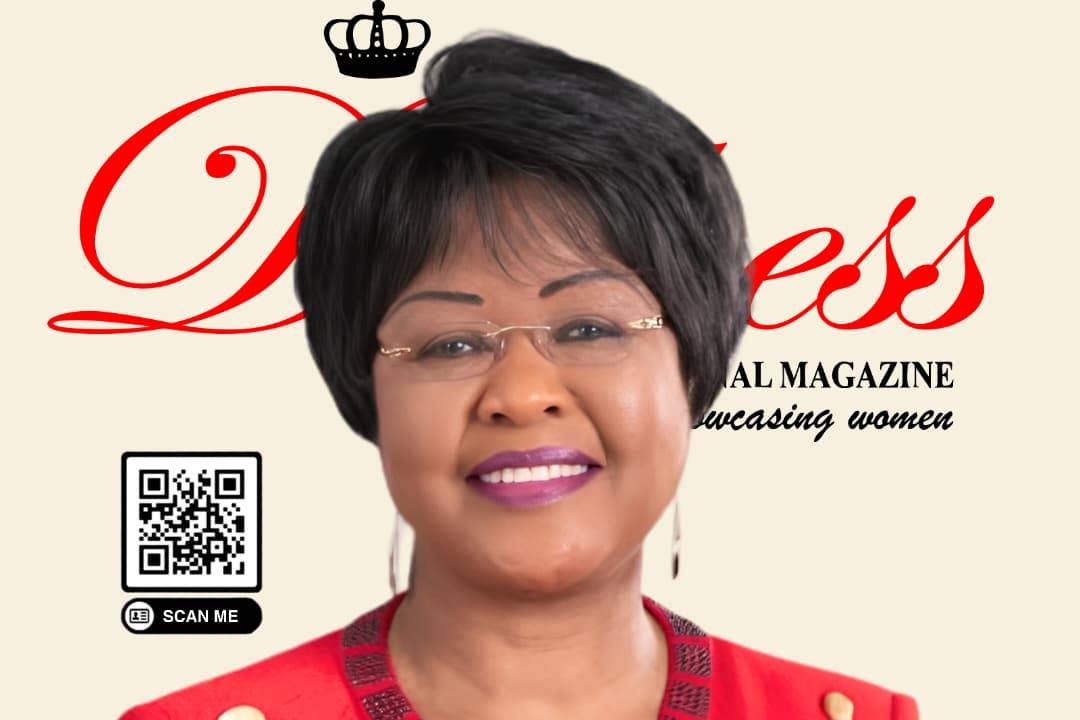
What would it take for Africa to exercise greater control over its resources, strengthen its institutions, and build an economic future shaped by its own priorities? For Dr. Arikana Chihombori-Quao, a Zimbabwean-born medical doctor, entrepreneur, former diplomat, and Pan-African advocate, these questions are central to understanding the continent’s place in the world. Her public work challenges Africans to look beyond political independence and examine the economic relationships, historical legacies, and institutional weaknesses that continue to influence development across the continent. Known for her direct speaking style and outspoken criticism of colonialism and its lasting consequences, she has made African unity, diaspora engagement, and economic self-determination recurring themes of her advocacy. Her arguments are often forceful and sometimes controversial, but they raise questions that remain important to Africa’s future: how can countries move beyond dependence on the export of raw materials, retain more value from their natural resources, and create institutions capable of delivering prosperity to their citizens? For Chihombori-Quao, answering these questions begins with a change in how Africans understand their history, recognise their collective potential, and approach the task of shaping their economic destiny.
Her journey into public life began in a very different professional environment. After moving from Zimbabwe to the United States, Chihombori-Quao pursued an academic path in the sciences, earning a bachelor’s degree in general chemistry and a master’s degree in organic chemistry at Fisk University before obtaining her medical degree from Meharry Medical College. She subsequently established herself in family medicine in Tennessee, where she practised for nearly three decades and developed her experience as a medical professional and entrepreneur. Her career in healthcare required scientific training, clinical judgement, and an understanding of the practical challenges individuals and families face when seeking medical care. She also built and managed the Bell Family Medical Centers, demonstrating an interest in the organisational and business dimensions of healthcare delivery. Although medicine and international relations are different fields, her professional experience provides useful context for understanding the breadth of her interests. Her transition into advocacy brought a new focus to questions of institutional performance, access to resources, and the systems that determine whether people and communities can thrive. Rather than following a conventional diplomatic or political route from the beginning of her career, she brought the experience of a medical practitioner and businesswoman into conversations about Africa’s development.
Chihombori-Quao’s most prominent diplomatic appointment came in 2016, when she became the African Union’s Permanent Representative to the United States. In that role, she was responsible for advancing the AU’s relationships with American government institutions, engaging the African diplomatic community, connecting with the diaspora, and supporting continental priorities, including the African Continental Free Trade Area and the AU’s Agenda 2063 development framework. The appointment placed her at the intersection of diplomacy, economic cooperation, and the relationship between Africa and its global diaspora. Her tenure also became controversial because of her outspoken public criticism of France’s historical and continuing relationships with African countries, particularly the monetary and political arrangements she argued constrained their independence. In October 2019, the African Union Commission announced the end of her appointment after three years of service. The Commission stated that her appointment had ended in accordance with the terms governing political appointments and acknowledged her contribution during her tenure. Although the circumstances prompted public speculation and debate, the AU’s official statement did not establish that her outspoken criticism of France was the reason for her departure. The distinction matters: her public criticism is an important part of her story, but a responsible account should not present an unconfirmed explanation for the end of her diplomatic service as established fact. Her experience nevertheless illustrates the difficult relationship that can arise between an outspoken public advocate and the formal responsibilities of diplomatic office.
After leaving the diplomatic post, Chihombori-Quao continued to advocate for a more integrated and economically self-reliant Africa, with particular emphasis on the role of Africans living abroad. The African diaspora represents a substantial source of professional expertise, business connections, investment, cultural influence, and remittances. Chihombori-Quao argues that these resources could play a greater role in supporting development if they were mobilised around shared continental priorities rather than remaining disconnected across national borders. Through the African Diaspora Development Institute (ADDI), which she founded, she has promoted a vision of stronger links between Africans on the continent and people of African descent around the world. The underlying idea is that diaspora engagement should extend beyond symbolic solidarity to include practical collaboration in areas such as healthcare, education, entrepreneurship, investment, and technology. Turning that vision into lasting development, however, requires more than goodwill or a shared identity. It depends on transparent institutions, credible investment structures, accountable leadership, clear legal protections, and projects that can demonstrate measurable results. Diaspora investors and professionals must also be able to assess risks and understand how their contributions will be managed. Chihombori-Quao’s work is significant in part because it keeps this relationship on the agenda, challenging both African institutions and diaspora communities to consider how their resources and expertise might contribute to sustainable development.
A major part of her advocacy concerns the way Africa’s colonial history continues to influence contemporary economic relationships. The 1884–1885 Berlin Conference formalised the involvement of European powers in the partition of Africa and accelerated the territorial arrangements that enabled colonial occupation. The consequences of colonial rule varied across countries, but the period profoundly affected political boundaries, economic structures, systems of production, and patterns of trade. Chihombori-Quao argues that independence from colonial administration did not automatically produce economic autonomy, particularly where countries remained dependent on exporting raw materials while importing higher-value manufactured goods. This argument speaks to a wider development challenge. A country may possess valuable minerals, agricultural resources, or energy reserves without capturing the full economic benefits of processing, manufacturing, and distributing the products derived from them. When more value is created elsewhere, domestic industries can miss opportunities to generate skilled employment, develop technical expertise, and build resilient supply chains. Yet the path towards economic independence is not simply a matter of rejecting international relationships. African countries also need investment, research capacity, reliable infrastructure, competitive businesses, regional cooperation, and policies that encourage local production without sacrificing efficiency or consumer welfare. The central question is how to build partnerships in which African economies retain more value, negotiate from informed positions, and have greater influence over the terms of their development.
These questions also shape Chihombori-Quao’s approach to international aid and the role of global financial institutions. She has been a vocal critic of development arrangements that, in her view, can leave African countries dependent on external financing and policy decisions made beyond their borders. Her position challenges the assumption that financial assistance alone is sufficient to produce sustainable development. The debate deserves serious consideration: aid programmes should be evaluated according to their outcomes, transparency, local ownership, and long-term effects, rather than simply the amount of money committed. At the same time, it would be misleading to treat all international assistance as ineffective or to assume that every development partnership serves the same purpose. Public health programmes, emergency relief, agricultural research, education initiatives, and infrastructure financing operate in different circumstances and can produce different results. The relevant question is whether a programme addresses an identified need, strengthens local capacity, respects the people it is intended to serve, and contributes to outcomes that can be sustained. African governments also carry responsibility for transparent public spending, effective regulation, sound economic management, and policies that allow domestic enterprises to grow. Chihombori-Quao’s advocacy is most useful when it encourages this wider examination of power and accountability, prompting African leaders and international partners alike to demonstrate that their policies deliver meaningful benefits to the communities they affect.
Her ideas about African self-determination are also expressed through her writing. In Africa 101: The Wake Up Call, published in 2020, Chihombori-Quao examines the historical exploitation of Africa and argues that Africans and people of African descent must take a more active role in defending the continent’s interests. Drawing on historical accounts and personal narratives, the book reflects her preference for direct language and her belief that the continent’s challenges cannot be fully understood without confronting the legacies of slavery, colonial rule, and continuing economic inequalities. It is also an invitation to reconsider how history is taught and how its lessons influence present-day decisions. Understanding colonialism matters, but historical knowledge becomes especially powerful when it informs practical choices about education, investment, governance, industrial development, and regional cooperation. For younger Africans, the challenge is to engage critically with the past without allowing it to become the only explanation for present circumstances. The continent’s history includes exploitation and resistance, but it also includes innovation, entrepreneurship, intellectual achievement, and diverse systems of organisation that predate colonial rule and continue to evolve. By bringing these discussions into public debate, Chihombori-Quao contributes to a wider Pan-African conversation about identity, historical memory, and the responsibility of Africans to participate in shaping their future.
Healthcare remains another important dimension of her work, reflecting the professional background she carried into public advocacy. Before becoming an AU representative, she was involved in efforts to connect African healthcare needs with the skills and experience of medical professionals in the diaspora. She also chaired the African Union–African Diaspora Health Initiative, which sought to encourage diaspora health professionals to contribute to addressing healthcare needs on the continent. This work touches on a pressing development question: how can African countries expand access to quality healthcare while building stronger domestic capacity in medical education, research, pharmaceutical production, and clinical services? Recruiting and retaining skilled healthcare workers, ensuring reliable supplies, investing in modern facilities, and strengthening public health systems require sustained resources and effective planning. Diaspora professionals can contribute through training, research partnerships, investment, knowledge exchange, and clinical collaboration, but these efforts are most effective when they complement strong local institutions rather than operate as isolated interventions. For Chihombori-Quao, healthcare is part of a broader argument that Africa must develop the capacity to meet more of its own needs while engaging the world on more balanced terms. The ambition is not to eliminate international cooperation, but to ensure that African institutions and communities have a stronger role in setting priorities, directing resources, and sustaining the results.
In February 2026, Chihombori-Quao returned to an international academic platform when she participated in Georgetown University in Qatar’s Black History Month programme, where her contribution formed part of a broader discussion about anti-Blackness, African identity, and collective action. The event offered another opportunity to present her Pan-African perspective to an international audience and to engage with questions about the historical and contemporary experiences of people of African descent. Its significance lies not simply in the visibility of a former diplomat, but in the continuing relevance of the issues she raises. Debates about racism, economic inequality, historical responsibility, and Africa’s position in global affairs remain active across universities, policy institutions, business communities, and diaspora networks. Her style is direct and often deliberately provocative, which can make her arguments memorable while also inviting scrutiny. Such scrutiny is necessary. Claims about international institutions, economic dependency, and the effects of foreign policy should be examined through credible evidence, competing perspectives, and the experiences of the communities concerned. Pan-African advocacy is strongest when it combines a clear sense of purpose with rigorous analysis and practical proposals. The Georgetown event demonstrated that these questions continue to attract international attention and remain relevant to conversations about history, identity, and the responsibilities of the present.
For the readers of Duchess International Magazine, Dr. Arikana Chihombori-Quao offers a portrait of female leadership shaped by professional reinvention, intellectual conviction, and a willingness to challenge established narratives. Her career has moved across medicine, entrepreneurship, diplomacy, writing, and advocacy, demonstrating that a woman’s influence need not be confined to one profession or institution. Her story also raises questions about how African women can participate in debates that extend beyond individual advancement to the future of nations and the continent as a whole. Yet the most meaningful measure of her vision lies not in the forcefulness of her speeches alone, but in the extent to which the ideas she promotes can encourage informed decisions, stronger institutions, productive partnerships, and measurable improvements in people’s lives. Economic sovereignty is not achieved through rhetoric alone; it requires the difficult work of building industries, supporting research, improving governance, developing skilled workforces, and creating opportunities for businesses to compete. Likewise, unity between Africa and its diaspora must be sustained through trust, shared priorities, and practical collaboration. Chihombori-Quao’s contribution is to keep these ambitions in public view and to insist that Africans should play a more active role in defining the terms of their future. Her journey invites the next generation of African leaders, entrepreneurs, scholars, and professionals to examine what greater independence would mean in practice and what each might contribute to making it possible.