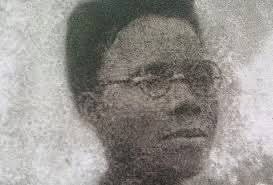
Adunni Oluwole remains one of the most controversial and intriguing figures in Nigeria’s late colonial political history. At a time when nationalist leaders were mobilising the masses for immediate self-rule, Oluwole stood almost alone as a vocal opponent of rapid independence, arguing that Nigeria was not yet prepared for the responsibilities and dangers that would follow the departure of British colonial administration.
Born in 1905 into the family of an Ibadan warrior, Adunni Oluwole’s reputation for fearlessness was rooted in both her upbringing and her temperament. Her early life was partly spent under the care of Bishop Howells of St John’s Church, Aroloya, Lagos, after which she grew up in Mushin. From a young age, she showed signs of independence and creativity. As a youth, she wrote a highly successful play for the Girls’ Guild of St John’s Church, Lagos, which was directed by Herbert Macaulay, one of Nigeria’s foremost nationalists. She later distinguished herself as the only woman to found a professional theatre company in Western Nigeria, using drama as a tool for social and political commentary.
Oluwole rose to national prominence during the General Strike of 1945, a defining moment in Nigeria’s labour and nationalist movements. When the colonial government withheld workers’ salaries, she mobilised women to support the striking workers and personally donated funds to trade unions to help them cope with the crisis. Her actions earned her recognition as a powerful grassroots organiser with strong appeal among ordinary people, particularly women and rural dwellers.
Politically, Adunni Oluwole was a committed unitarist and a fierce critic of the Nigerian political elite. In 1954, she founded the Nigerian Commoners Party, a movement that opposed the rapid transfer of power to Nigerians, which she believed would only replace British colonialism with what she described as “internal colonialism” by indigenous elites.
Despite being a woman in a male-dominated political space, she won a seat in Ikirun, in present-day Osun State, during the 1954 Western Region House of Representatives election, defeating candidates from both the NCNC and the Action Group led by Nnamdi Azikiwe and Obafemi Awolowo respectively.
Her views shocked many Nigerians. Among Yoruba-speaking communities, her movement became mockingly known as Egbe Koyinbo Máílò—“The White Man Must Not Go”. Yet her message resonated with sections of the rural population who were already burdened by taxation and wary of elite politics. Oluwole argued that independence, if poorly managed, would lead to dictatorship, corruption and the oppression of the masses.
Her confrontational style brought her into direct conflict with powerful figures. On 25 August 1955, she presented her views at the palace of the Olubadan of Ibadan, where she was publicly insulted and threatened by Ibadan politician Adegoke Adelabu.
Following her banishment from Ibadan, she continued her activism in Akure, staging dramatic public demonstrations in which she tied ropes around her waist and had hired men pull her through the streets as a symbol of the suffering she believed ordinary Nigerians would endure under post-colonial leadership.
Adunni Oluwole died in 1957 from complications related to whitlow, three years before Nigeria attained independence. Though widely dismissed and ridiculed in her lifetime, her warnings have since been revisited by historians and commentators who see in her activism an early critique of post-colonial governance in Nigeria. Today, she is remembered as a fearless woman who dared to challenge the dominant nationalist narrative and paid a heavy personal price for her convictions.
Source:
– Toyin Falola, The Political Economy of a Pre-Colonial African State: Ibadan, 1830–1900 (and related essays on Yoruba political culture).
– Tekena N. Tamuno, Nigeria and Elective Representation, 1923–1947.
– Nigerian historical archives and secondary literature on late colonial politics in Western Nigeria.