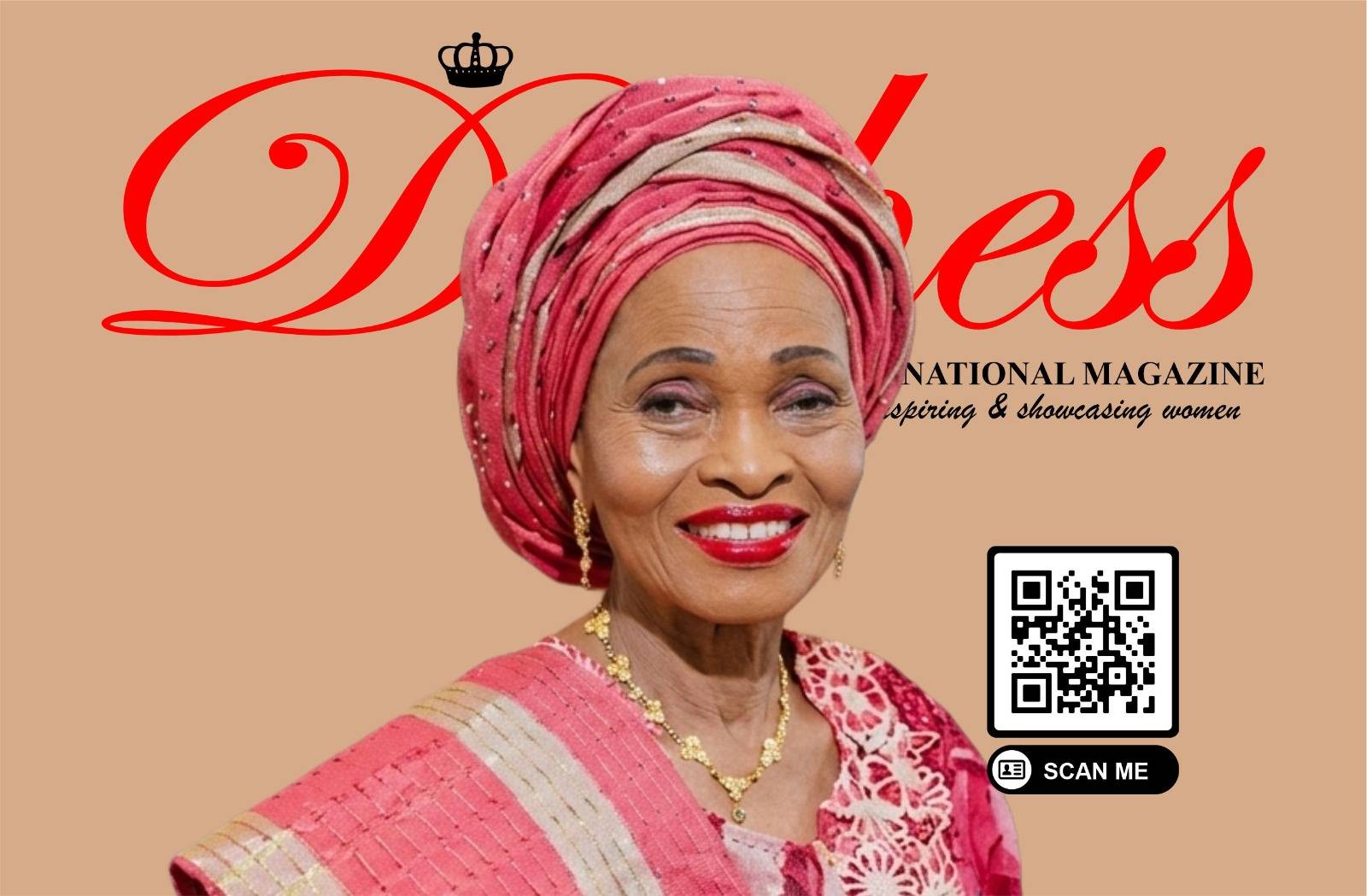
Anike Agbaje-Williams occupies a rare and foundational place in African media history, not as a participant in its gradual emergence, but as one of its earliest defining presences at the precise moment when broadcasting in Africa crossed from sound into vision. In the formative years of television on the continent, when the medium itself was still uncertain in structure and purpose, she became its first human expression. She is recorded as the first person to appear on television in Nigeria and across Africa, a distinction that places her at the exact threshold where African broadcasting transformed from radio transmission into a visual language capable of shaping public imagination, identity, and cultural memory.
Born in Abeokuta in 1936, she began her formative education in Lagos at CMS Girls’ School before continuing at St Anne’s School, Ibadan, following the institution’s relocation. Her early academic environment was shaped by discipline and structure, and although it existed far from the world of broadcasting she would later inhabit, it quietly cultivated the clarity of expression, composure, and presence that would define her public career. She subsequently entered broadcasting through the Nigerian Broadcasting Corporation in Lagos during the mid-1950s, stepping into a professional space that was still evolving its own identity, standards, and institutional rhythm. She did not arrive as a figure consciously aligned with history; rather, she emerged through a natural command of voice, timing, and delivery that quickly distinguished her within a medium where precision and presence were essential to credibility.
Her defining moment arrived in 1959 with the inauguration of Western Nigeria Television in Ibadan, the first television station in Africa. Within that pioneering broadcast environment, she became the first face ever transmitted on television in Nigeria and across the continent, an appearance that carried significance far beyond its technical novelty. It marked the beginning of visual broadcasting in Africa and introduced a new cultural grammar in which image and voice converged to shape public understanding. In that instant, she stood at the intersection of technology and culture, becoming the opening image of a medium that would eventually redefine communication across the continent.
What followed was not a symbolic appearance confined to a historic broadcast moment, but a sustained institutional presence within the evolving architecture of early Nigerian media. She developed into a broadcaster, producer, and later director of programmes, actively participating in the construction of early content systems at a time when formats were still being invented and production practices were still being defined. Her work extended into the shaping of editorial structure and broadcast discipline, contributing to how programmes were conceived, organized, and delivered to audiences encountering television for the first time in their lives.
Her influence also extended beyond television into radio, where she became the first voice on the Western Nigeria Broadcasting Service network. This dual positioning across both radio and television placed her within a foundational category of broadcasters whose contributions were not limited to visibility alone but extended into the structural formation of broadcasting practice itself. She was part of the generation that helped translate broadcasting from a technical experiment into an institutional system with recognizable rhythms, professional expectations, and cultural weight.
The broader arc of her career unfolded during a critical period in Nigerian media history, when broadcasting institutions were undergoing a transition from experimental frameworks into structured public systems. Within that environment, she contributed to the establishment of early presentation styles, newsroom discipline, and production consistency, helping to shape the professional ethos that would guide successive generations of broadcasters. These contributions, though often operating behind the visible surface of programming, became embedded in the operational foundation of Nigerian broadcasting and in the standards that would later define its maturity.
After more than three decades of service, she retired in 1986, leaving behind a broadcasting ecosystem that had expanded significantly from its experimental origins into a central pillar of public communication in Nigeria. By that time, television had become firmly integrated into national life, yet its earliest identity remained inseparable from the pioneering phase in which she had played a decisive role. Her presence lingered not only in institutional memory but in the foundational practices that continued to shape broadcast culture long after her departure.
She passed away in 2025 at the age of 88, closing a life that had quietly but decisively shaped the emergence of African television. Her legacy endures not as a concluding chapter in media history, but as an originating force within it. She remains remembered as the first face of African television and as one of the foundational figures who transformed broadcasting in Nigeria from an emerging experiment into an enduring cultural institution with lasting institutional memory.