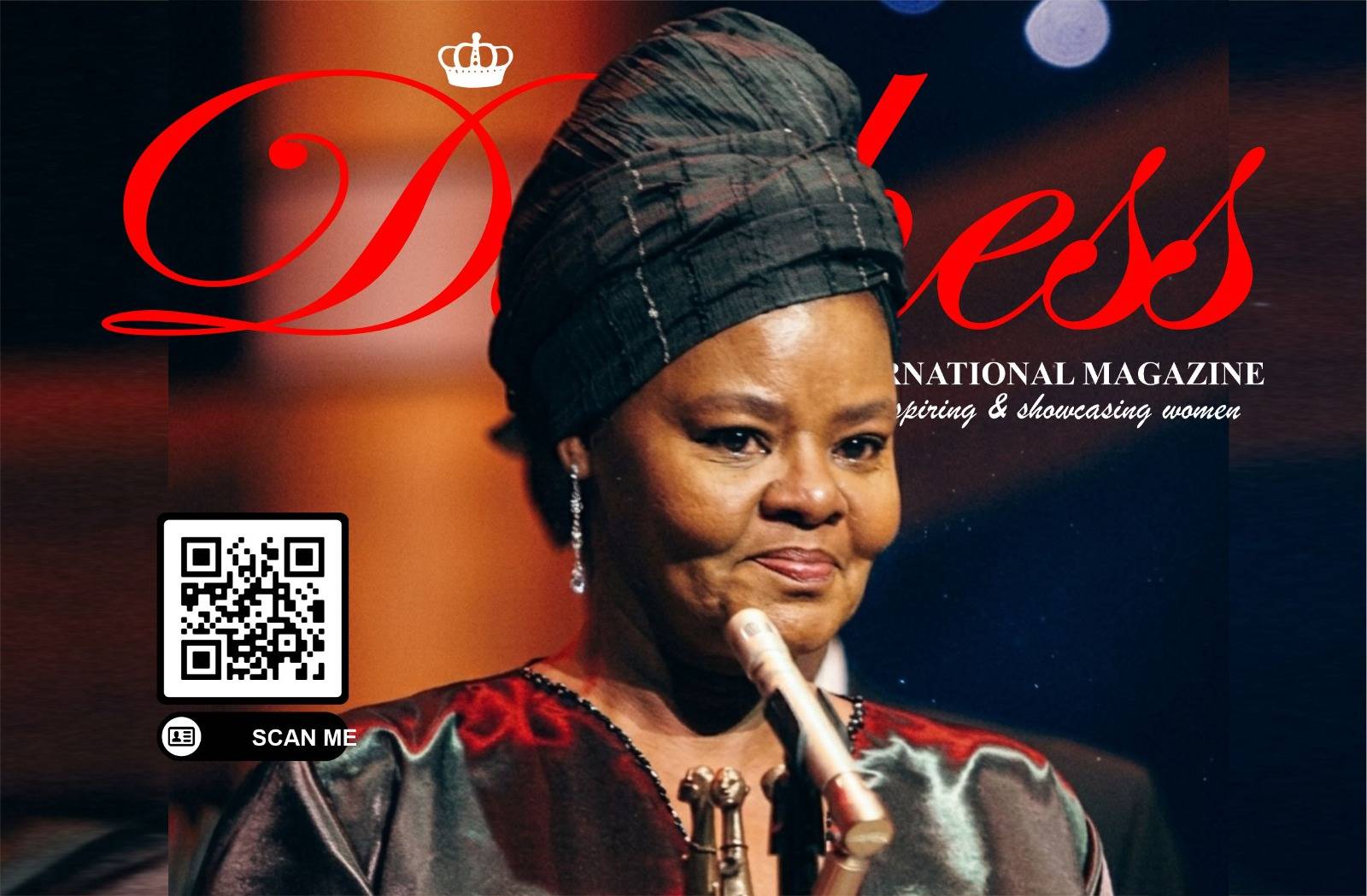
Measured and highly disciplined in tone, Cynthia Shange has emerged as a distinctive voice in contemporary nonfiction. Her essays are structured around clarity and sustained argument rather than stylistic flourish, and they are defined by a consistent focus on institutions, language, and systems of power rather than individual experience or personality. This approach has positioned her within a smaller but influential circle of contemporary essayists working in cultural criticism. Her work is often discussed in relation to questions of authority, structure, and institutional continuity.
Shange was born in Johannesburg in 1984 and grew up during the transitional years following the end of apartheid. Her early environment was shaped by civic responsibility and institutional tension. Her mother worked as a trade union lawyer, while her father served as a high school headmaster who was later dismissed after refusing to comply with state-imposed language policies in education. These experiences contributed to her early awareness of how authority operates through structure and policy rather than overt force alone. They also informed her later interest in how systems maintain control through formal processes that appear neutral on the surface.
In 1999, she moved to the United Kingdom with her family at the age of fifteen. The relocation marked a significant shift in environment and perspective, particularly in how identity and belonging were experienced across different social contexts. She has described this transition as a realization that systems of classification and difference do not disappear with geography, but rather adapt to new settings. This early experience of displacement became a recurring reference point in her later writing on culture and institutional memory.
She went on to study philosophy at the University of Warwick, followed by a master’s degree in social anthropology at the London School of Economics. Before gaining public recognition as an essayist, she spent several years working in editorial roles at a small political journal, The Lamp, where she wrote and edited anonymously. This period allowed her to refine her analytical voice outside the pressures of public attention. It also gave her sustained exposure to political and theoretical writing that later influenced her own approach to essay form.
Her first widely discussed publication came in 2019 with On Forgetting, an essay examining how historical memory is shaped, preserved, and selectively erased in post-colonial Britain. The work circulated widely across academic and intellectual spaces and was translated into several languages. Despite its reception, she remained outside the public circuit, avoiding interviews and promotional appearances, maintaining that the work itself should stand independently of its author. This position reinforced her reputation as a writer more concerned with ideas than visibility.
Since then, her writing has continued to focus on institutional structures, particularly how universities, museums, and cultural organisations absorb critique while maintaining underlying systems of continuity. Rather than focusing on individuals, her analysis consistently returns to patterns of governance, language, and institutional self-preservation. Her work often examines how reform narratives coexist with structural stability, rather than replacing it. This has made her essays especially relevant in debates about representation and institutional accountability.
Her most recent collection, The Edges of Whiteness, published by Faber & Faber, extends these themes through a series of essays that examine how liberal institutions construct narratives of inclusion while sustaining structural inequality. The work is methodical in its approach, relying on observation and analysis rather than rhetorical emphasis. It builds its arguments gradually, often through layered case studies and institutional examples. The overall effect is cumulative rather than declarative, reinforcing her preference for structural critique over personal commentary.
Shange currently lives in Hackney and maintains a deliberately low public profile. She does not use social media and limits public engagement. She teaches one seminar annually at Goldsmiths, University of London, focused on essay form and critical method. Her working environment reflects a strong commitment to focus and control over distraction. This distance from public visibility is not incidental but consistent with her broader approach to intellectual work.
Reception of her work remains divided but engaged. Supporters regard her as one of the most rigorous contemporary essayists working on culture and institutional power, while some critics argue that her writing is overly restrained and emotionally distant. Shange has acknowledged this interpretation, framing her stylistic restraint as a deliberate methodological choice rather than a limitation. The debate around her work often centres on the tension between emotional accessibility and analytical precision.
She is currently working on a second collection, provisionally titled The Sound of a Door Closing, which examines exile as a condition shaped by perception, dissonance, and belonging rather than physical displacement. The project continues her interest in how individuals navigate systems that feel both present and ungraspable. It also extends her long-standing concern with the limits of understanding within structured environments.
Overall, Shange’s work is defined by a consistent commitment to clarity, structure, and analytical precision. In a media environment shaped by immediacy and visibility, her writing distinguishes itself through its refusal of simplification and its insistence on sustained attention. This steadiness has become one of its defining features, allowing her essays to accumulate meaning over time rather than through instant impact.