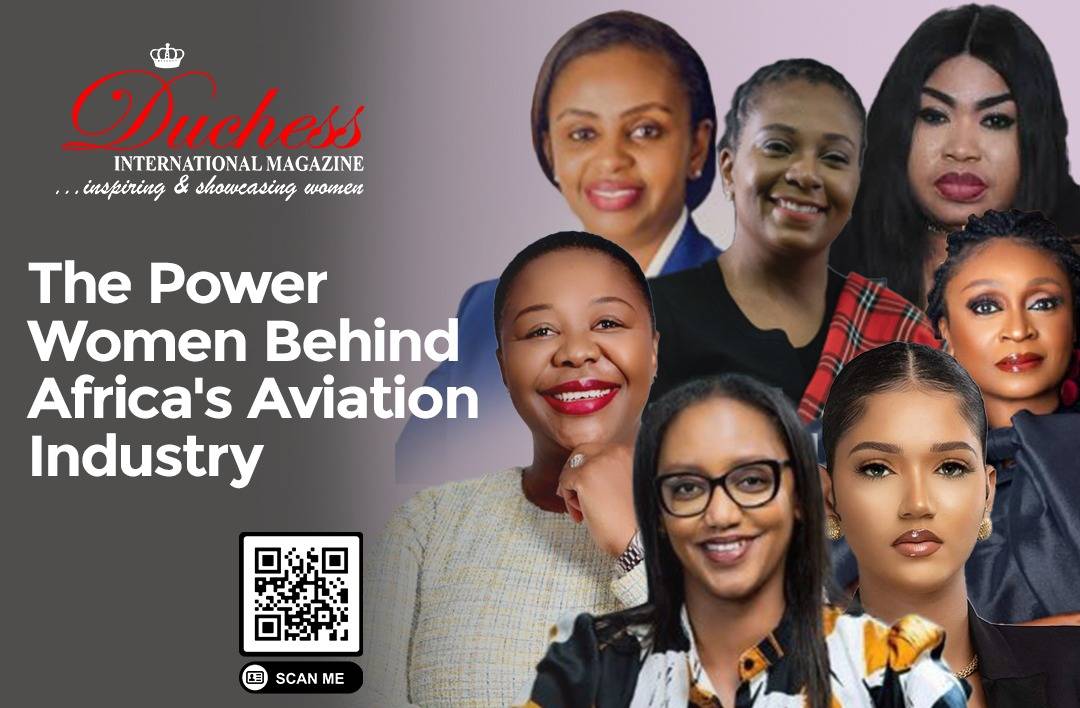
Aviation has never been an industry that hands out entry easily, let alone to women. Globally, women make up only around five percent of commercial airline captains, a statistic that has barely moved in decades. And yet Africa, a continent more often discussed in terms of its infrastructure gaps than its industry leadership, has quietly become home to one of the highest concentrations of women in senior aviation roles anywhere in the world. Airline CEOs, civil aviation regulators, ground-handling executives, and pilots who broke into cockpits when almost no one who looked like them had gone before. This is not a footnote to Africa’s aviation story. Increasingly, it is the story.
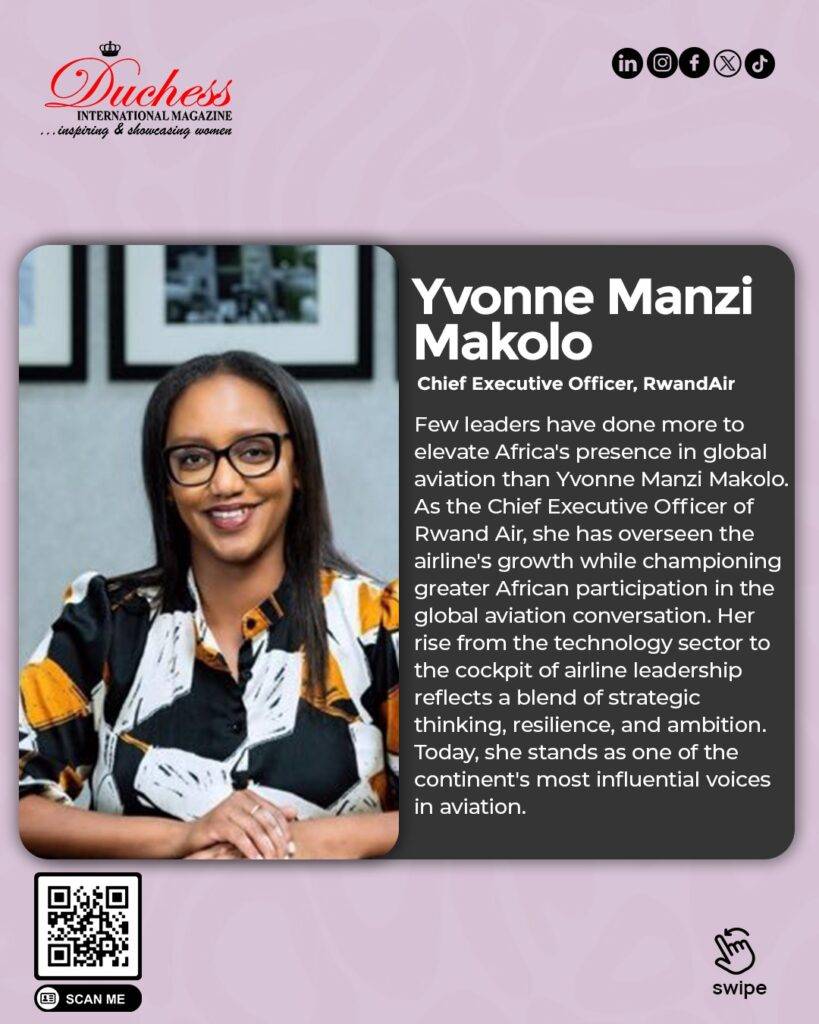
Start at the top of the industry’s global governing structure, and you find a Rwandan. Yvonne Makolo became CEO of RwandAir in 2018, after joining the airline as Deputy CEO for corporate affairs the year before. Under her leadership, RwandAir struck commercial partnerships with Qatar Airways and Turkish Airlines and expanded its route network into one of the most ambitious on the continent. In 2023, she became the first woman ever to chair the International Air Transport Association’s Board of Governors, the body that effectively sets direction for the global airline industry. It is difficult to overstate what that appointment means: for the first time in IATA’s history, the person steering conversations between the world’s largest airlines was an African woman.
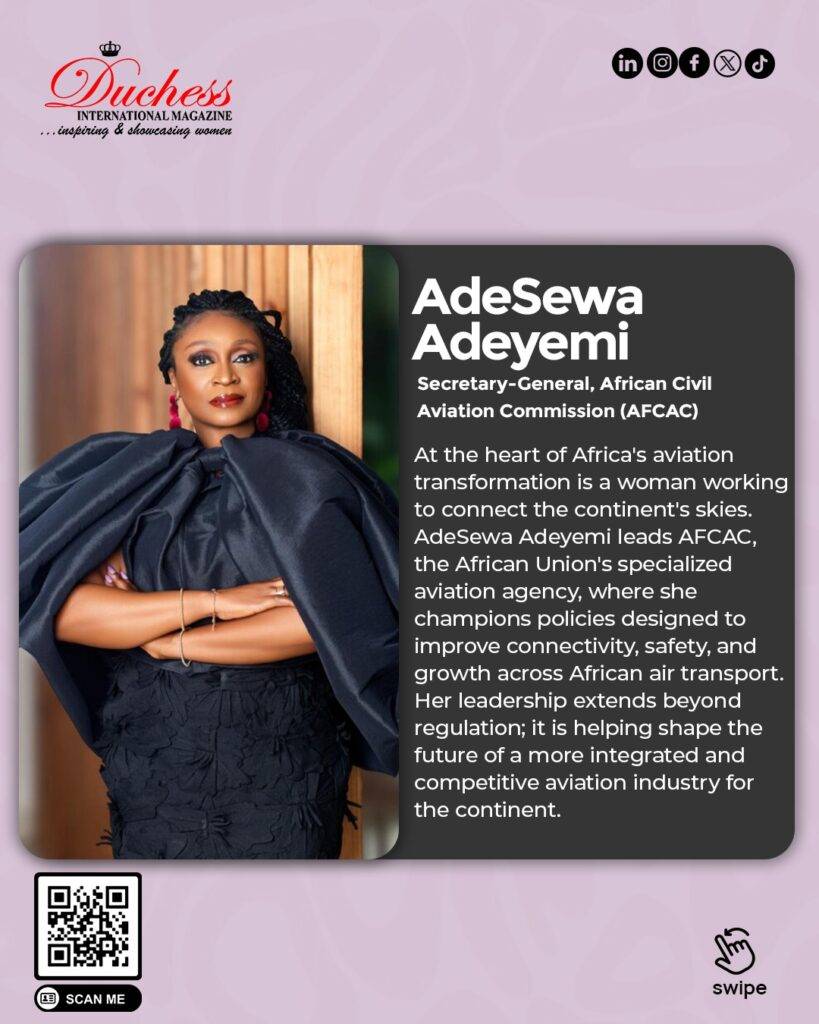
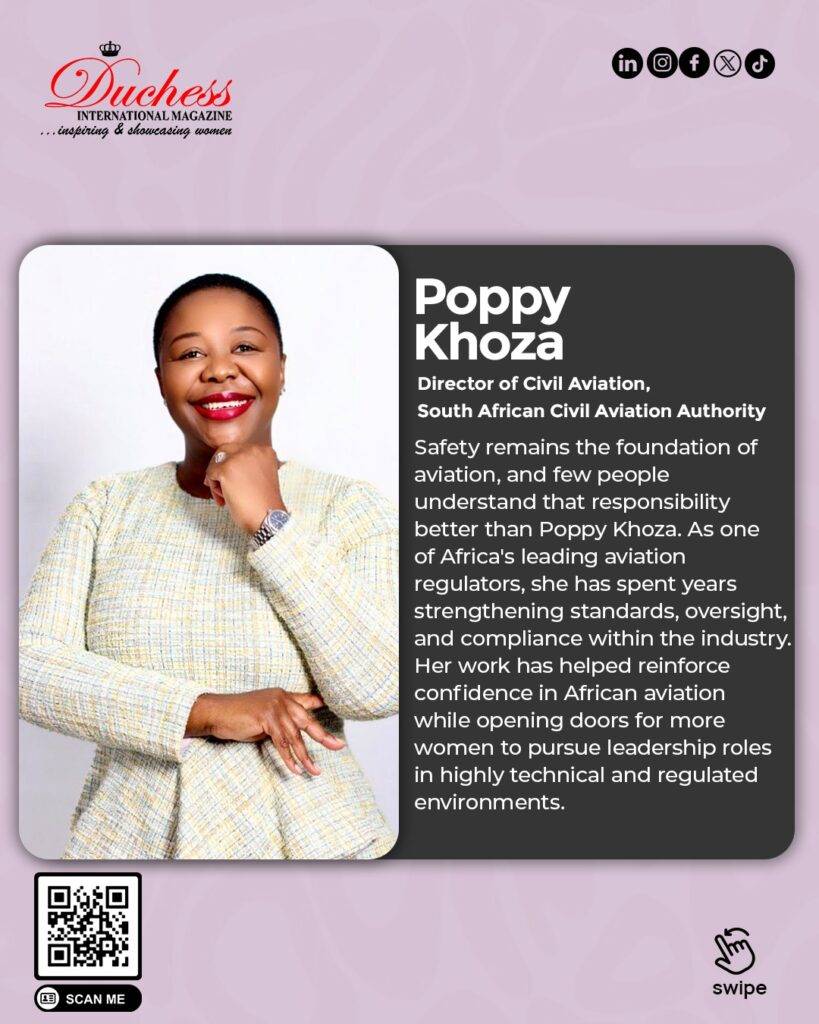
Regulation is where aviation’s real power quietly sits, since no airline flies without a regulator’s approval, and here too African women are running the machinery. Poppy Khoza leads South Africa’s Civil Aviation Authority, the body responsible for the safety oversight of every flight in the country’s airspace. Adefunke Adeyemi holds an even wider mandate as Secretary General of the African Civil Aviation Commission, effectively shaping aviation policy across all fifty-four African Union member states. These are not ceremonial positions. They are the offices that decide whether an airline is safe to operate, whose safety failures get investigated, and what standards an entire continent’s airspace is held to.
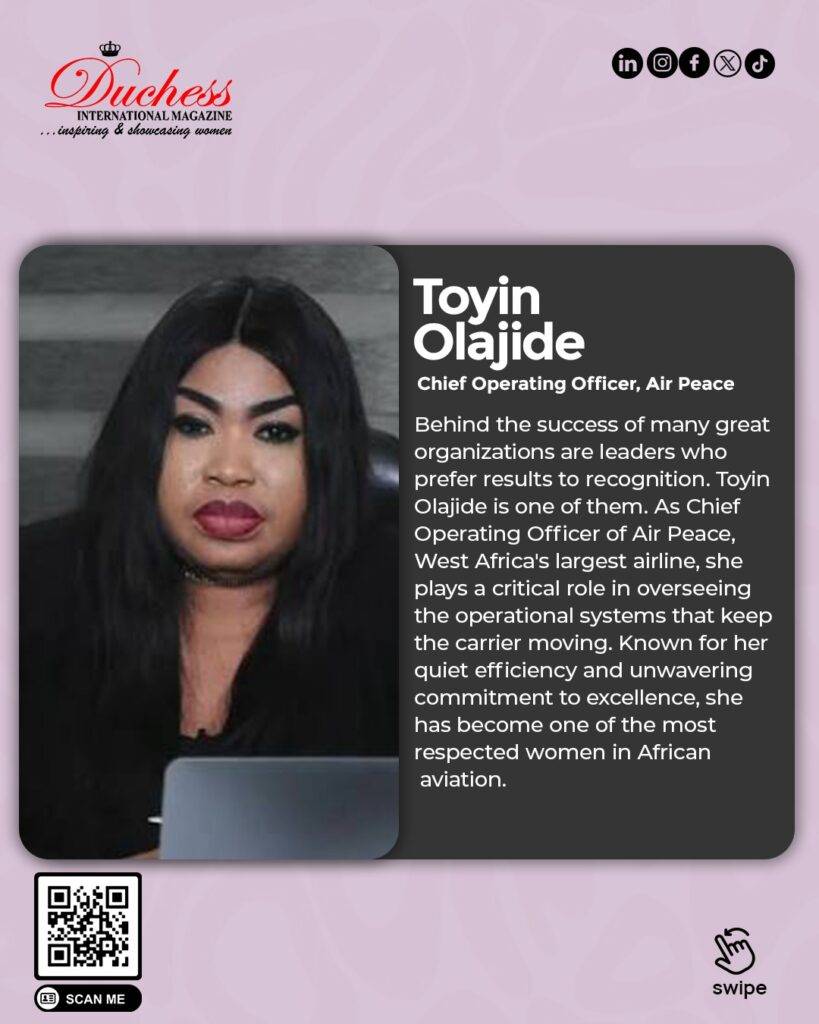
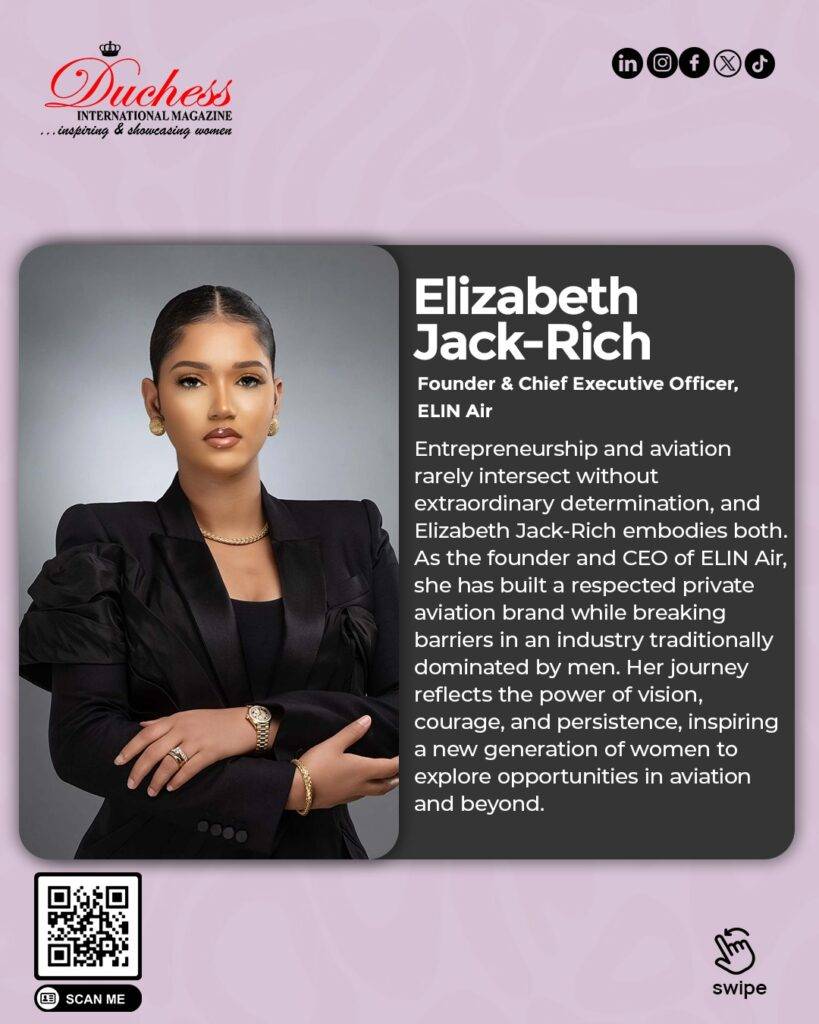
Nigeria’s aviation sector, valued at an estimated 2.5 billion dollars, has become a particularly striking case study in how quickly this shift has happened. Toyin Olajide has served as Managing Director and Chief Operating Officer of Air Peace, Nigeria’s largest privately owned airline, since 2014, becoming the first woman to hold that position at the company. Elizabeth Jack-Rich took a different route entirely, founding ELIN Group in 2017 and building an aviation arm inside a broader conglomerate spanning energy, maritime, and real estate, proof that women are not only rising through existing airline hierarchies but building entirely new ones from the ground up.
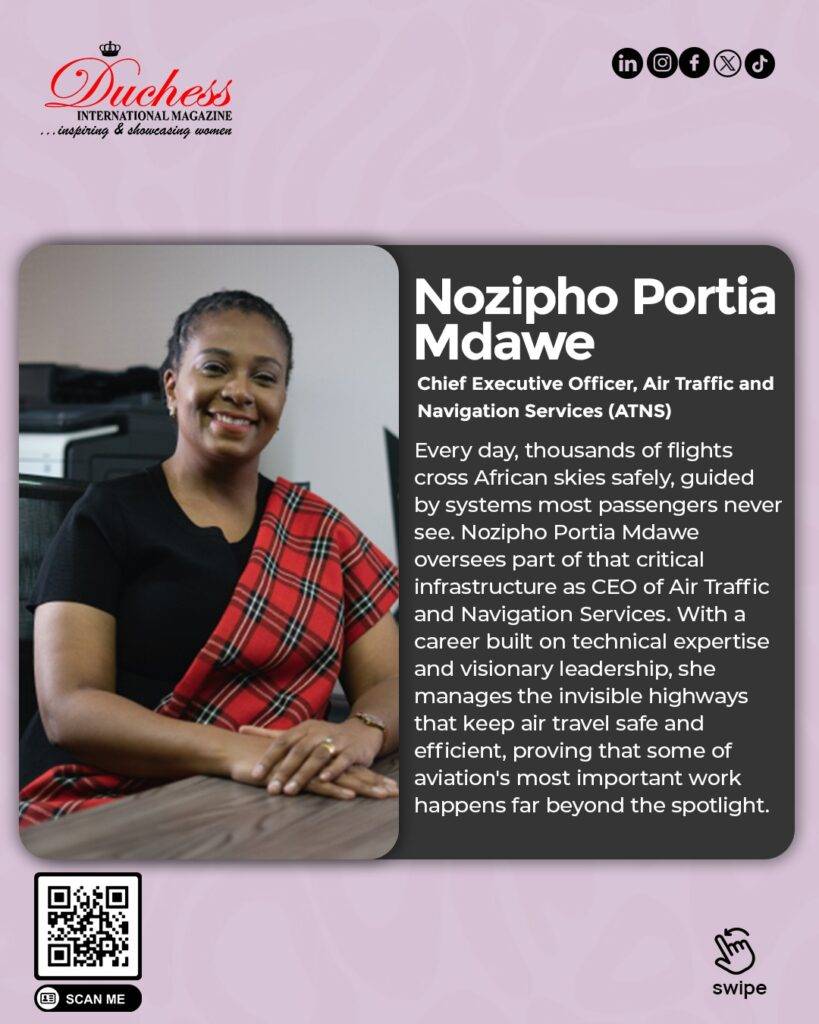
None of this executive presence would have been possible without the women who forced their way into cockpits when the idea of a female pilot was treated as a novelty rather than a normal career path. Chinyere Kalu became Nigeria’s first female commercial pilot, a title that sounds simple until you consider how long commercial aviation had existed in the country before a woman was allowed to hold it. In South Africa, Asnath Mahapa became the country’s first Black female pilot in 1998, entering an industry where, by her own account and that of others who followed her, being the only woman in the room meant working considerably harder just to be taken as seriously as her male classmates. These were not symbolic firsts. They were the individuals who had to prove, in real time and often without institutional support, that the job could be done.
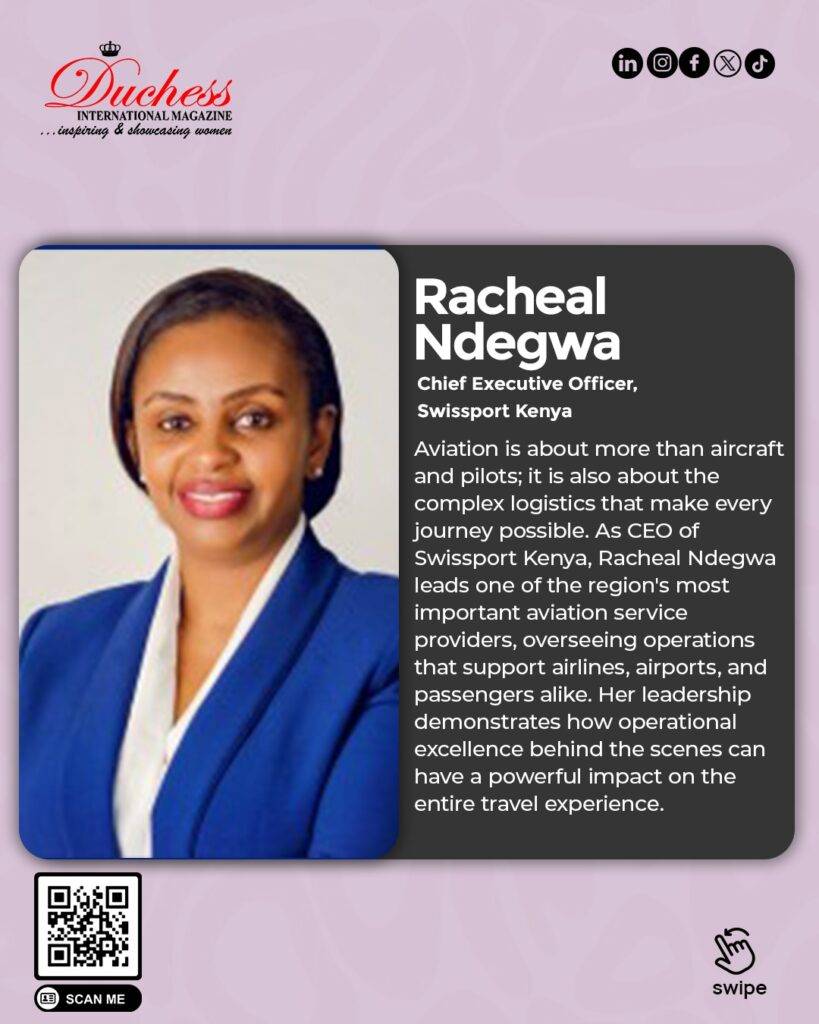
Beneath the executive suites and cockpits sits the operational backbone that keeps aviation running day to day, ground handling, logistics, cargo, the unglamorous machinery that determines whether flights actually depart on schedule. Racheal Ndegwa’s path to CEO of Swissport Kenya ran through the finance department, not the flight deck: she rose from Chief Financial Officer to Chief Operating Officer before taking the top job at one of the largest ground-handling operators on the continent. Her trajectory is a reminder that leadership in aviation does not only look like a pilot’s uniform or an airline logo on a jacket. Sometimes it looks like sixteen years of steadily proving competence in the parts of the industry that never make headlines.
What connects all of these women, the regulators, the airline executives, the pilots, the operations leaders, is not a shared background or a single origin story. It is that each of them entered an industry actively built around their absence and stayed long enough to redesign it around their presence instead. The global statistics on women in aviation remain stubbornly low. Africa’s numbers, by contrast, keep climbing, not because the continent’s aviation sector faced less resistance, but because a specific group of women decided the resistance was not going to be the final word.
The next time a plane lifts off from Lagos, Kigali, or Johannesburg, there is a real possibility that a woman signed off on its safety certification, runs the airline operating it, or once broke a barrier just to be allowed inside the cockpit at all. That is not a footnote to Africa’s aviation industry. It is, increasingly, its leadership.