

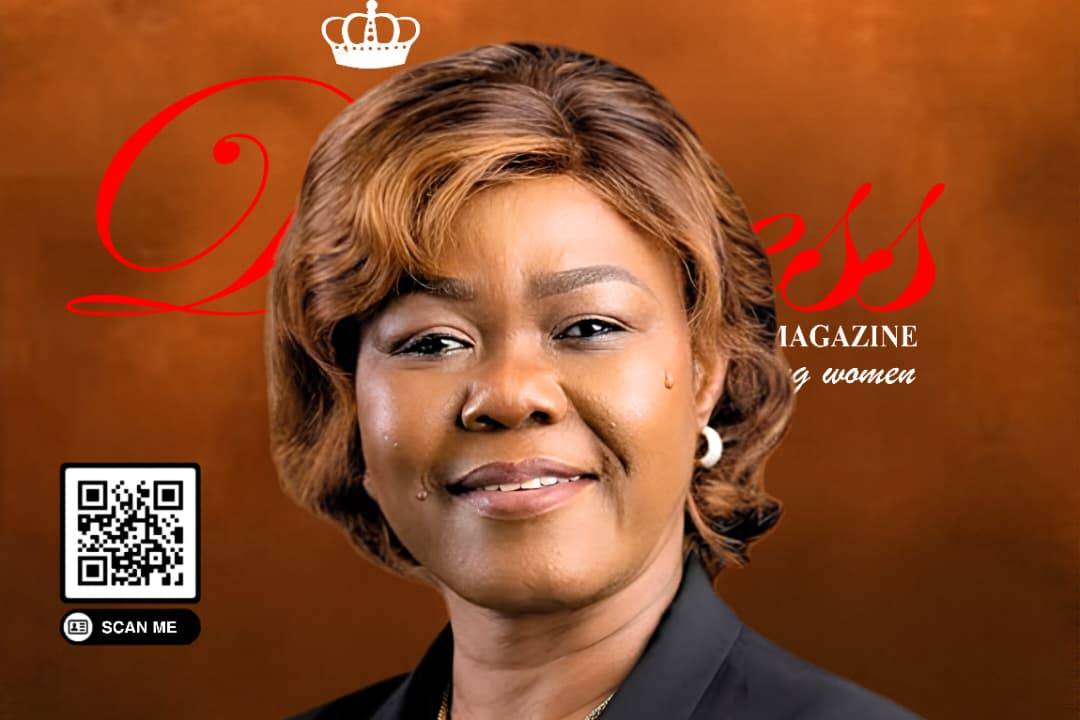
There are careers that unfold gradually, and there are careers that change the expectations attached to who gets to occupy positions of influence. For Nialé Kaba, the journey from economic scholarship and public service to some of the most consequential offices in Côte d’Ivoire has been marked by technical expertise, institutional responsibility and a steady rise through national leadership. An economist and statistician by training, she has built a career in which the language of budgets, public policy and development has translated into a place at the highest levels of government. Her story is particularly significant for women aspiring to influence decisions in spaces where leadership has historically been dominated by men.
Kaba’s academic foundation was laid in Côte d’Ivoire, where she attended Lycée Moderne d’Abengourou and obtained her Baccalaureate in Science in 1981. She went on to study Economics at the University of Côte d’Ivoire, earning a Master’s degree in the discipline. Determined to deepen her technical knowledge, she continued her education in France, obtaining qualifications in economic statistics and international and development economics through institutions associated with the Centre Européen de Formation des Statisticiens Économistes des pays en développement and the University of Paris 1 Panthéon-Sorbonne. In 1993, she completed further training in Economic Policy Management at the International Monetary Fund Institute. This combination of economics, statistics and policy training would become central to her professional identity. gouv.
Before entering the highest levels of government, Kaba developed experience in both academia and public administration. She taught macroeconomics, statistics and international economics at the National Higher School of Statistics and Applied Economics (ENSEA) in Abidjan. In 1991, she joined the Prime Minister’s Office, where she worked on economic, fiscal and budgetary matters. Her responsibilities expanded over the following years, taking her through senior positions in government, including roles within the Prime Minister’s Office, the Ministry of Economy and Finance, and the Ministry responsible for Crafts and the Informal Sector. These early appointments gave her experience of how public policy is developed, administered and translated into government priorities. economie-ivoirienne.
Her professional journey also took her beyond the traditional corridors of economic administration. Between 2005 and 2007, Kaba served as Director General of Côte d’Ivoire Tourism, adding a different dimension to her experience of public-sector leadership. In 2011, she entered the Ivorian government as Minister of Housing Promotion. The appointment marked the beginning of a new phase in her career, placing her directly in the political leadership responsible for national development. It was followed by a historic milestone in November 2012, when she became the first Ivorian woman appointed to lead the Economy and Finance portfolio, a position she held until January 2016.
That appointment was significant not only because of the barrier it broke, but also because of the responsibilities attached to the office. Economic and financial leadership requires the ability to engage with public expenditure, revenue generation, fiscal priorities and the wider forces shaping a country’s economic direction. Kaba’s background in economic statistics and policy management provided a technical foundation for the role. Her tenure placed her at the centre of national economic decision-making at a time when Côte d’Ivoire was pursuing an ambitious development agenda. For women watching from outside these institutions, her presence at the head of such a critical portfolio offered an important example of what professional preparation and sustained public service could make possible.
In January 2016, she was appointed Minister of Planning and Development, a position she held until October 2023. The portfolio placed her at the centre of the country’s National Development Plans, which set out government priorities for economic transformation and social progress. During this period, she also served as Côte d’Ivoire’s Governor to the African Development Bank (AfDB) and the Islamic Development Bank. Her responsibilities extended beyond domestic planning to international development financing and cooperation, giving her a prominent role in discussions about how African countries mobilise resources for long-term growth. In October 2023, she took on an expanded portfolio as Minister of Economy, Planning and Development.
One of her most notable international leadership milestones came through the African Development Bank. From June 2019 to August 2020, Kaba chaired the Bank’s Board of Governors, becoming a leading figure in a period of significant institutional decision-making. During her tenure, the Bank secured its Seventh General Capital Increase, a 125 per cent expansion that raised its authorised capital from US$100 billion to US$225 billion. The increase strengthened the institution’s financial capacity to support development across the continent. She also presided over the Board during the re-election of Akinwumi Adesina as President of the AfDB. These responsibilities placed her among the women contributing to the direction of one of Africa’s most important multilateral development institutions.
Her work has also received recognition beyond the institutions in which she has served. In March 2025, the Ivorian Press Agency reported that Kaba had been included in Forbes Afrique’s selection of 50 influential African women. The recognition reflected her profile as an economist and public official whose career has crossed national economic management and international development leadership. Yet her professional significance is not limited to titles or distinctions. Her progression through technical, administrative and ministerial roles illustrates the importance of expertise in public leadership, particularly in fields where decisions have far-reaching consequences for national economies and the everyday lives of citizens.
In January 2026, Kaba entered another major chapter of her public career when she was appointed Minister of State, Minister of Foreign Affairs and International Cooperation of Côte d’Ivoire. The transition from economic policy to diplomacy brought a new set of responsibilities, placing her at the centre of the country’s international relations and cooperation agenda. It also demonstrated the breadth of confidence placed in her experience across different areas of government. From her early work in economic research and public administration to her leadership of national ministries and an international financial institution, Kaba’s journey has been one of continued responsibility and professional evolution.
Nialé Kaba’s story is ultimately about the long work that precedes recognition: the education, technical preparation, institutional experience and persistence required to enter rooms where consequential decisions are made. Her achievements have included breaking a historic gender barrier in Ivorian economic leadership, shaping national development planning and presiding over a landmark expansion of the African Development Bank’s capital. Her latest appointment adds diplomacy to an already extensive public-service career. For women pursuing influence in economics, governance and international affairs, her path offers a reminder that occupying the table is important, but arriving prepared to contribute meaningfully is what gives leadership its lasting value.

