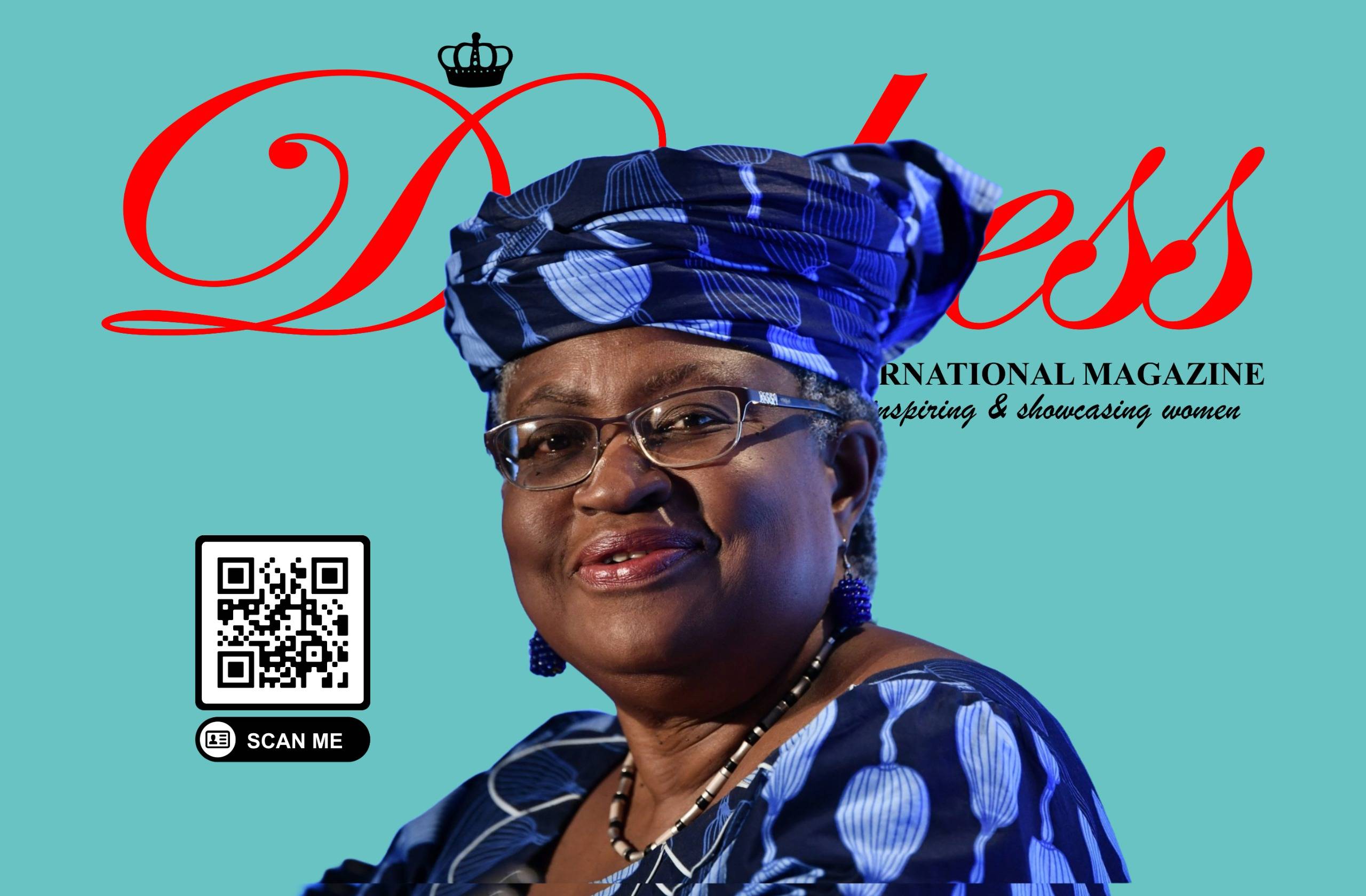
In a world grappling with economic shocks, geopolitical tensions, and the urgent demand for inclusive growth, few leaders have left as indelible a mark as Ngozi Okonjo-Iweala. A powerhouse economist, reformer, and trailblazer, she has spent decades shaping policy at the highest levels—breaking barriers not just for herself, but for generations to come. Today, as the first woman and the first African to lead the World Trade Organization (WTO), she stands at the forefront of reimagining global trade for a turbulent century.
Born on June 13, 1954, in Ogwashi-Ukwu, Delta State, Nigeria, Okonjo-Iweala grew up in a family that blended tradition and intellect. Her father, Professor Chukwuka Okonjo, was both an academic and the Obi of the Obahai royal family. Education was central to her upbringing, and she excelled in Nigeria’s top schools before moving abroad to pursue higher studies. At Harvard University, she graduated magna cum laude in Economics in 1976. Not stopping there, she went on to earn a PhD in Regional Economics and Development from MIT, where her dissertation—funded by the American Association of University Women—explored rural credit systems and agricultural growth in Nigeria. It was an early sign of her lifelong commitment: connecting sound economic policy to human development.
Okonjo-Iweala began her career in 1982 at the World Bank, an institution where few Africans, and even fewer women, had reached senior ranks. Over 25 years, she rose steadily to become Managing Director of Operations, overseeing an $81 billion portfolio across Africa, South Asia, Europe, and Central Asia. When the global food and financial crises hit in 2008–2009, she was at the center of the Bank’s response, directing aid and credit flows to struggling low-income nations. Her tenure demonstrated not just her technical expertise, but her ability to steer global policy through moments of deep uncertainty.
Her impact was perhaps most visible at home. In 2003, she made the bold choice to leave the World Bank and serve as Nigeria’s Finance Minister under President Olusegun Obasanjo. Within two years, she negotiated one of the most consequential deals in Africa’s modern history: the cancellation of $30 billion of Nigeria’s debt by the Paris Club of creditors. That victory freed the country from decades of fiscal constraints and redirected billions toward health, education, and infrastructure. She also introduced fiscal reforms, created the Excess Crude Account to cushion oil price volatility, and pushed for unprecedented transparency in public finances. Called back in 2011 under President Goodluck Jonathan, she doubled down on reforms, publishing government revenues for public scrutiny and championing social programs such as Growing Girls and Women in Nigeria (GWIN), which targeted youth and female economic empowerment.
By 2021, her career reached a historic pinnacle: she was elected Director-General of the WTO—the first woman and the first African to head the 75-year-old institution. She assumed office at a moment of crisis: global trade was reeling from the pandemic, supply chains were buckling, and vaccine nationalism was stoking inequality. Okonjo-Iweala has since pushed the WTO to confront these realities head-on. From advocating equitable vaccine access to reviving the organization’s weakened dispute settlement system, she has sought to make trade not just a tool for growth, but a lever for fairness and resilience. Her agenda emphasizes sustainability, inclusivity, and adaptability—principles she believes are essential for a global economy facing climate change, technological disruption, and shifting power balances.
Okonjo-Iweala’s journey is more than the story of an accomplished economist—it is a reflection to resilience and vision. From Ogwashi-Ukwu to Harvard, from the corridors of Abuja to the boardrooms of Geneva, she has consistently challenged systems to work better for the many, not the few. Her legacy will be measured not only in reforms and policies but in the inspiration she provides to young leaders—especially women and Africans—who see in her proof that international institutions can be reimagined for equity, innovation, and shared prosperity. As the world navigates its next chapter of uncertainty, Ngozi Okonjo-Iweala remains a guiding figure: a reminder that leadership grounded in integrity and inclusion can indeed reshape the global order.