

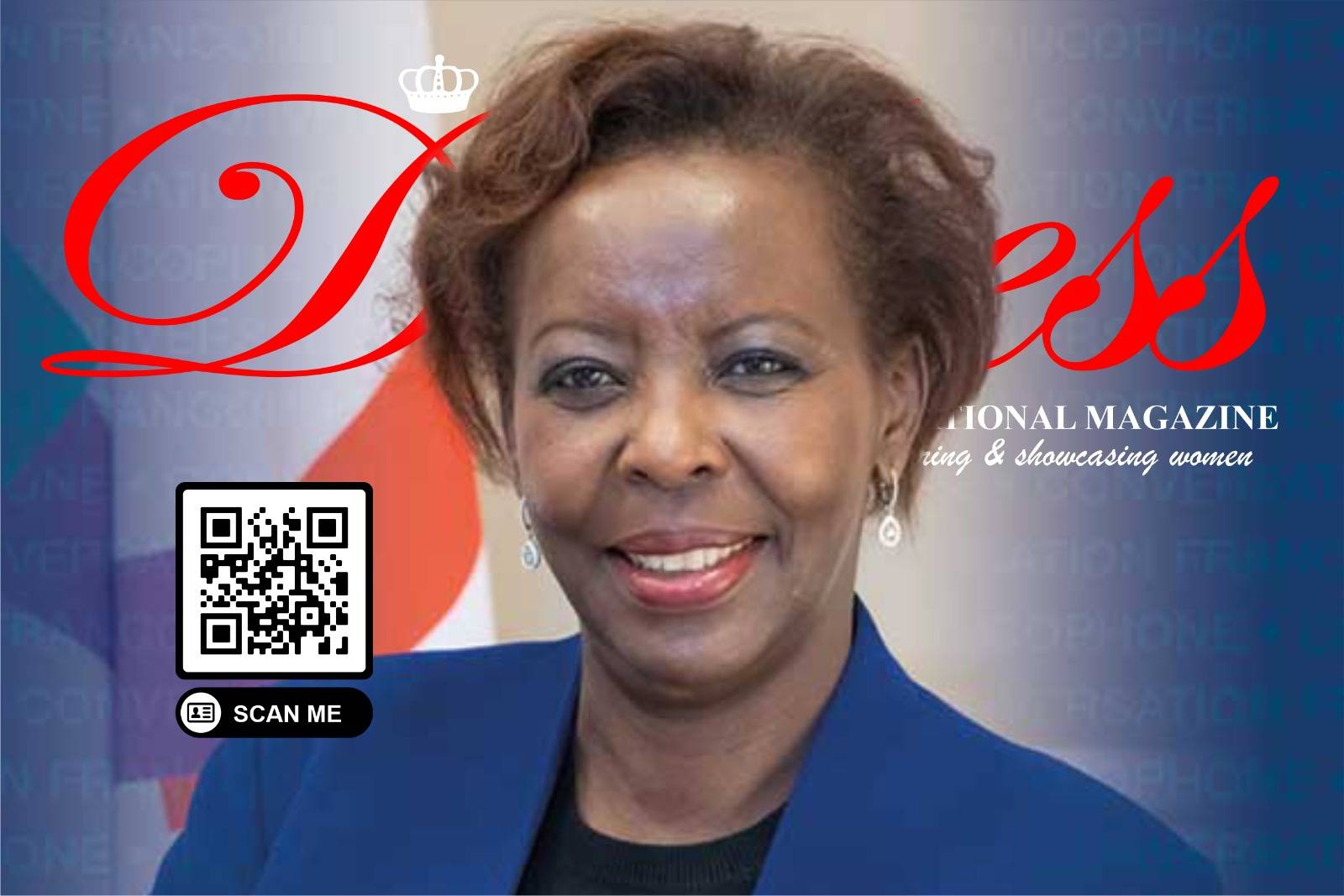
An interpreter’s work is to be invisible. She listens to one person, carries the meaning faithfully to another, and the best ones are barely noticed at all. Louise Mushikiwabo trained for exactly that discipline, earning a master’s degree in languages and interpretation. It was a safe, respectable path. But destiny had a much louder stage waiting for her. Because a woman who understands the power of words cannot stay hidden forever. Three decades later, she is no longer carrying other people’s sentences. She is writing her own narrative as the first African woman to lead the Organisation internationale de la Francophonie.
Born in Kigali in 1961, Mushikiwabo’s early life was framed by books, language, and the quiet ambition of a bright young woman. She graduated from the National University of Rwanda in 1984, and soon after, she took a leap of faith that many young African women of her generation could only dream of. She spent two decades in the United States, navigating a completely different culture. She worked, she studied, and she absorbed the world beyond her homeland. But the turning point of her life and the foundation of her strength came from a place of profound pain.
In 2006, she co-wrote a memoir, Rwanda Means the Universe, with journalist Jack Kramer. The book was not merely a career milestone; it was a personal reckoning. It traced her family history and her experience as a diaspora daughter carrying the weight of the 1994 genocide against the Tutsi. Writing that book required a vulnerability that goes against the polished, guarded nature of politics. It revealed the kind of woman she was long before she held power: someone who understood that grief must be given language, and that the way we tell our story ultimately determines how the world sees us. It was her first real lesson in commanding a room.
That sense of narrative followed her back home. In 2006, she left her life in the U.S. to become the Director of Communication at the African Development Bank in Tunisia. She was building a steady, impressive career in the background. But in 2008, President Paul Kagame called her back to Rwanda. She was appointed Minister of Information. For a woman who had spent years studying how language bridges gaps, it was time to apply that knowledge to a nation that was actively working to be seen as more than the story of its worst tragedy. She was no longer just a communicator; she was the voice of a country.
A year later, she was appointed Minister of Foreign Affairs, a role she held for nearly a decade. For a young African woman to take the helm of a nation’s diplomacy was a radical statement. In a global arena historically dominated by older men in grey suits, Mushikiwabo brought a distinct style, sharp, direct, and unapologetically African. She traveled the world, not just to negotiate policies, but to reshape the narrative of her country. She learned that diplomacy is not just about treaties; it is about perception. And changing perceptions is a game of confidence.
In October 2018, she stepped onto a completely different global stage. She was confirmed as the Secretary General of the Organisation internationale de la Francophonie (OIF), an alliance of 90 states and governments. The appointment was historic. She was the first African woman to lead the organisation. It was a moment of immense triumph, but it was not without its thorns. Her appointment sparked conversations about gender, power, and leadership. She stepped into a role where the scrutinies were fierce. But as a woman who had already navigated both the corporate world of the US and the high-stakes political arena of Africa, she was not easily rattled.
Once in the role, Mushikiwabo refused to be a placeholder. She pivoted the organization toward the future, modernizing its digital strategy. But her most passionate work has been in the field of youth empowerment. She launched programs like D-Clic, which trains young people in digital skills, aiming to reach over 100,000 beneficiaries. She has actively pushed for what she calls an “economic Francophonie,” focusing on small businesses, youth entrepreneurship, and investing in the economic power of women. She understands that the real strength of a language is not just in the literature it produces, but in the economic independence it can create for the next generation.
Her tenure has not been quiet. She has weathered the storms of political criticism and the departure of member states. Yet, she has remained resolute. When asked why she is seeking a third term in office this year, her answer is refreshingly simple and profoundly human. “I love what I do,” she says. It is a reminder that behind the heavy titles and diplomatic briefs is a woman who actually loves the work of connecting cultures. She understands that leadership is a heavy crown, but she wears it with the quiet grace of a woman who has finally found her true calling.
Looking back at her life, the trajectory is nothing short of poetic. She started as an interpreter, someone who translated the words of others. Today, she sits at the head of the table, speaking her own mind. The journey from the classroom in Kigali to the high-level summits in Europe and Africa is a testament to the fact that a woman’s voice is her most powerful asset. Mushikiwabo’s life is a blueprint for any woman who has ever felt invisible. She proves that you can start by listening, but you must never be afraid to speak. Because one day, the world will stop looking for a translator and start asking for your opinion.

