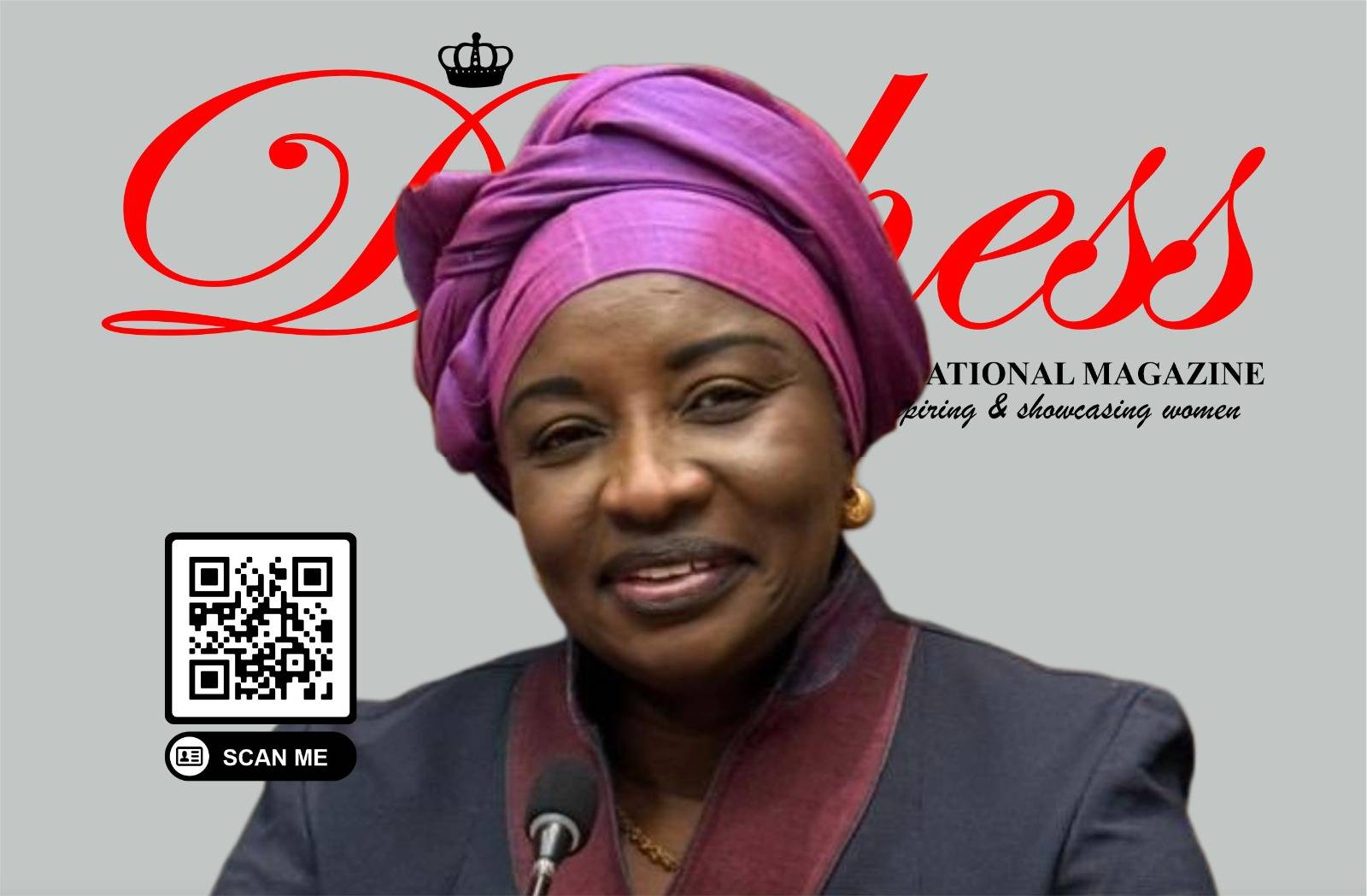
Aminata Touré stands as one of Senegal’s most influential modern political figures, widely recognised for her sustained focus on governance reform, judicial accountability, and public sector integrity. A trained lawyer and economist, her career reflects a steady progression shaped by legal precision, administrative discipline, and a firm commitment to strengthening state institutions.
Born on 12 April 1962 in Dakar, she pursued studies in law and economics, building a strong academic foundation that shaped her professional direction. Before entering senior political office, she worked in public administration and international development environments, gaining exposure to governance systems beyond Senegal. This experience helped shape a reform-oriented outlook and positioned her as a technocratic figure associated more with institutional efficiency than political symbolism.
Her entry into high-level government came in 2012 when she was appointed Minister of Justice under President Macky Sall. From the outset, her tenure focused on accountability, legal reform, and anti-corruption enforcement. She became closely associated with efforts to reinforce judicial independence, strengthen prosecutorial capacity, and improve the state’s response to financial crime within public institutions.
It was during this period that the prosecution of Karim Wade on charges of illicit enrichment became one of the most defining legal episodes in Senegal’s recent history. While the courts handled the proceedings, the Ministry of Justice provided the institutional framework that enabled the case to move forward. As a result, Touré became closely associated in public perception with the government’s broader anti-corruption drive, and the case came to define much of her political identity.
Beyond this landmark case, her tenure also included structural reforms aimed at modernising the justice system. These efforts focused on improving court efficiency, reducing delays in legal proceedings, and strengthening mechanisms for financial crime enforcement. Collectively, they formed part of a broader national effort to enhance institutional credibility and reinforce public trust in the rule of law.
In September 2013, she was appointed Prime Minister of Senegal, becoming only the second woman to hold the position. As head of government, she coordinated ministerial activity and oversaw the implementation of national policy priorities. Her leadership style was defined by administrative discipline, strict oversight, and a strong emphasis on execution and results.
Although her tenure lasted less than a year, ending in July 2014, it reinforced her image as a structured and performance-driven leader within Senegal’s executive system. Her time in office reflected continuity of her earlier reform orientation, now applied at the highest level of government coordination.
After leaving the premiership, Touré remained active in public service. She later led the Economic, Social and Environmental Council (CESE), where she contributed to national policy advisory work. In this role, she continued to engage with governance reform, social development, and economic planning, maintaining a visible presence within Senegal’s institutional landscape.
Throughout her career, she has attracted both strong support and critical scrutiny, reflecting the complexity of anti-corruption governance in politically sensitive environments. Supporters view her as a principled reformer committed to accountability and institutional strengthening. Critics, however, have occasionally questioned the political context surrounding certain enforcement actions and reform processes.
Despite these differing interpretations, Aminata Touré remains a significant figure in Senegal’s governance history. Her career reflects a leadership style grounded in legal expertise, institutional discipline, and administrative reform. Ultimately, her legacy is defined by a consistent effort to strengthen systems, enforce accountability, and improve the credibility of public institutions within Senegal’s evolving democratic framework.