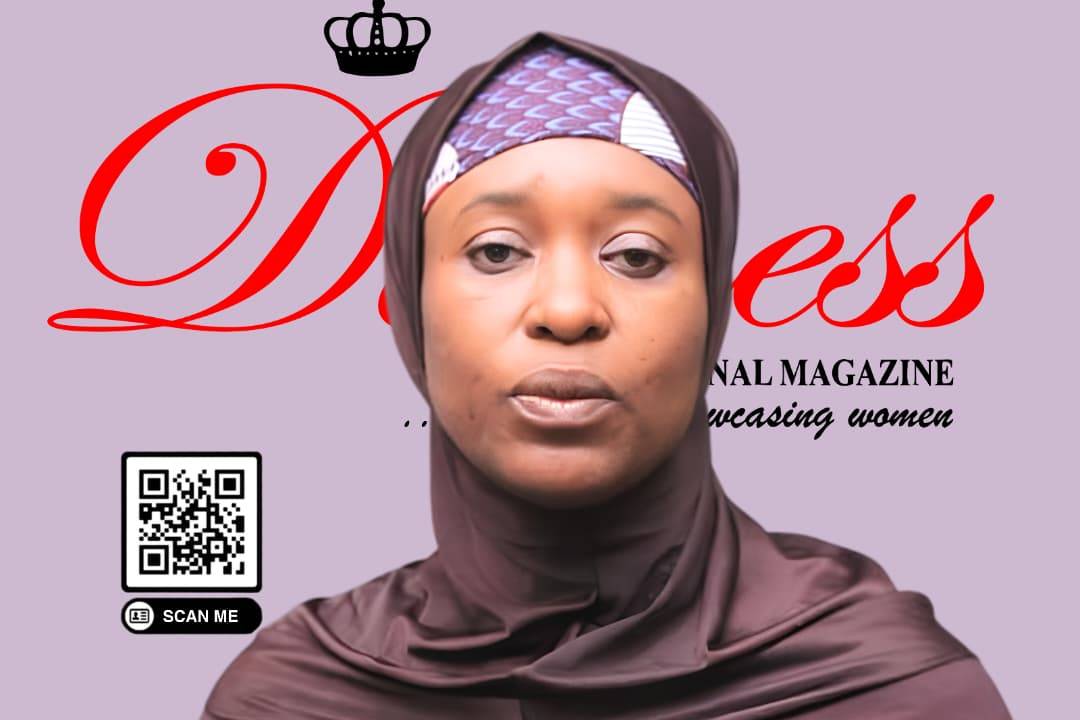
In Nigeria’s public life, where speaking against those in power can attract criticism, controversy, and intense scrutiny, Aisha Yesufu has built a reputation around one enduring conviction: citizens must be willing to demand accountability from their leaders. A businesswoman, civic activist, and public speaker, Yesufu has become one of the country’s most recognisable voices in conversations about good governance, justice, and the rights of ordinary Nigerians. Her influence extends beyond the speeches she delivers or the protests she joins. It lies in her determination to keep difficult questions in the public conversation, even when doing so attracts opposition. From the campaign for the return of the Chibok schoolgirls to the nationwide EndSARS protests against police brutality, she has repeatedly placed herself within movements demanding that institutions respond to the people they are meant to serve. Her journey offers a compelling portrait of a woman who has chosen to make civic participation an active part of her life’s work.
Raised in Kano State by parents originally from Edo State, Yesufu has spoken openly about growing up in an environment where girls’ opportunities could be restricted by social expectations. In interviews, she has described how many girls around her were married at a young age, while her own determination to pursue education offered a different direction. Books helped her recognise that life could extend beyond the immediate circumstances in which she was raised, strengthening her desire to explore the opportunities education could provide. Her academic journey was not straightforward: after attending other universities, including Usmanu Danfodiyo University and Ahmadu Bello University, she eventually completed a degree in Microbiology at Bayero University Kano. These experiences are important to understanding her public outlook, but they do not need to be turned into a story of individual triumph alone. They also reveal the wider questions that have shaped her advocacy: who gets access to opportunity, whose ambitions are encouraged, and what happens when social expectations attempt to determine the limits of a person’s future? Yesufu’s own account of her life offers a useful starting point for understanding why questions of freedom, education, and personal agency remain central to her public identity.
Her emergence on the national stage became unmistakable in 2014, following the abduction of 276 schoolgirls from Chibok, Borno State, by Boko Haram. The kidnapping provoked international outrage and exposed the urgency of Nigeria’s security challenges, particularly the vulnerability of children in conflict-affected communities. Yesufu became a prominent figure in the BringBackOurGirls movement, which she co-convened alongside other advocates, including Oby Ezekwesili. Through public demonstrations, sustained advocacy, and demands for government action, the movement worked to keep the girls’ plight from disappearing from national attention. For Yesufu, the issue was not simply a political controversy; it concerned the lives and futures of young people whose safety and education should have been protected. The campaign demonstrated how citizens can use collective action to challenge official inaction and keep an urgent humanitarian concern before the public. It also underscored an important principle that remains relevant to her work: the responsibility of a government to protect its citizens should not depend on their wealth, social standing, or political connections. The story of the Chibok girls continues to remind Nigerians that public attention must be accompanied by sustained efforts to secure the safety and future of those affected by violence.
Six years later, Yesufu became an instantly recognisable face of another major civic movement. During the EndSARS protests of October 2020, Nigerians took to the streets to demand an end to police brutality and abuses associated with the Special Anti-Robbery Squad. The protests brought together young people and other citizens who wanted greater accountability from law enforcement and meaningful reform of the policing system. Amid this national mobilisation, a photograph of Yesufu standing in a hijab with one fist raised became one of the defining images of the demonstrations. The photograph resonated because it captured a woman visibly participating in a movement that challenged established authority, while her appearance also challenged narrow assumptions about how a Muslim woman should express herself in public life. Yet the significance of EndSARS should not be reduced to one photograph or one individual. Thousands of Nigerians participated in the protests, organised support, documented events, and demanded reform. Yesufu’s place within that collective action reflects the importance of visible leadership, but also the power of citizens who work together to insist that their experiences and concerns be taken seriously. Her participation helped reinforce her public identity as an activist willing to stand alongside Nigerians demanding justice.
For Yesufu, activism has not been confined to the streets. Her work also reflects a belief that an engaged citizenry needs knowledge, practical skills, and the confidence to participate in shaping public life. Through Citizens Hub, the not-for-profit organisation she founded, she supports civic development and financial literacy, with the stated aim of helping people become financially independent, active, and responsible citizens. This work connects two issues that are sometimes treated separately: economic independence and political participation. A person who understands how to manage money, assess financial decisions, and build a livelihood may have greater room to make independent choices, although financial literacy alone cannot remove the structural causes of poverty or political exclusion. The wider point is that democratic participation requires more than the right to vote. Citizens also need access to information, an understanding of their responsibilities, and opportunities to make decisions without undue pressure. By combining business experience with civic advocacy, Yesufu has developed a public profile that extends beyond protest and into questions of personal development and community participation. Her work through Citizens Hub offers another dimension of her approach to social change: strengthening the individual while encouraging people to recognise their place within the larger civic system.
In 2026, Yesufu’s decision to pursue elected office marked a significant development in her political journey. After moving from the African Democratic Congress to the Nigeria Democratic Congress, she entered the race for the NDC’s Federal Capital Territory senatorial ticket. Her decision raised an important question about the relationship between activism and formal politics: should those who challenge institutions from outside attempt to enter them and influence decisions directly? For Yesufu, the move created an opportunity to test whether her experience in civic mobilisation could translate into electoral representation.
Her attention has since turned towards the 2027 general elections and the question of how citizens can protect the integrity of their votes. In October 2026, Yesufu publicly endorsed the social media campaign known as the “Osun Script”, encouraging voters to cast their ballots, remain at their polling units, observe the counting process, and photograph result sheets where permitted. The campaign draws its name from the 2026 Osun State governorship election and promotes active participation in the voting and counting process. In a country where electoral credibility remains central to public confidence in democratic institutions, voter education and lawful observation can help citizens better understand how results are recorded and reported. At the same time, election monitoring must follow the law, respect the safety of voters and officials, and avoid actions that could interfere with the process. Yesufu’s endorsement places her within a broader conversation about the responsibilities that accompany the right to vote. Rather than treating an election as a single day of political excitement, the approach encourages citizens to understand the process and take an active, informed role in it. Whether such campaigns produce lasting improvements will depend on public participation, credible election administration, lawful observation, and the willingness of institutions to address concerns transparently.
For readers of Duchess International Magazine, Yesufu’s journey offers a perspective on female leadership that goes beyond conventional measures of professional success. Her public identity combines business, civic education, political participation, and outspoken advocacy, demonstrating that leadership can take different forms and can involve working both within and outside established institutions. Her visibility also challenges assumptions that a woman’s religious identity or personal background should determine the limits of her public voice. This does not mean that every position she takes must be accepted without question, or that a commitment to activism makes a person immune to criticism. Public figures should be assessed on the strength of their arguments, the accuracy of their claims, their conduct, and the consistency between their stated principles and their actions. That standard is especially important in a democracy, where accountability should apply to activists and elected officials alike. What makes Yesufu a noteworthy subject is not simply that she is outspoken, but that her career has kept questions of citizen responsibility, institutional transparency, and public participation in view. Her example invites a wider conversation about how women can exercise influence in political and civic spaces without being confined to roles traditionally considered acceptable.
Aisha Yesufu’s story is ultimately part of a much larger Nigerian story: the ongoing struggle to build institutions that listen to citizens and a public culture in which people feel responsible for demanding better. Her work in the BringBackOurGirls movement helped keep the plight of abducted schoolgirls in the national conversation; her participation in EndSARS placed her among the visible voices calling for an end to police brutality; and her more recent political activities have brought her into the practical challenges of party politics and electoral participation. These chapters are different, and each has its own limitations and unresolved questions, but together they reveal a consistent interest in how power is exercised and how citizens can respond. For women who aspire to leadership, her journey is a reminder that influence does not always begin with a formal title. It can begin with asking a difficult question, organising others around a shared concern, acquiring the knowledge to participate effectively, or refusing to treat injustice as somebody else’s problem. Lasting change, however, requires more than courage from individuals. It also depends on collective action, responsible institutions, and citizens prepared to sustain their involvement long after public attention has moved elsewhere. The enduring question raised by Yesufu’s work is not whether one activist can change a nation alone, but whether enough people will choose to participate in building the country they want to live in.