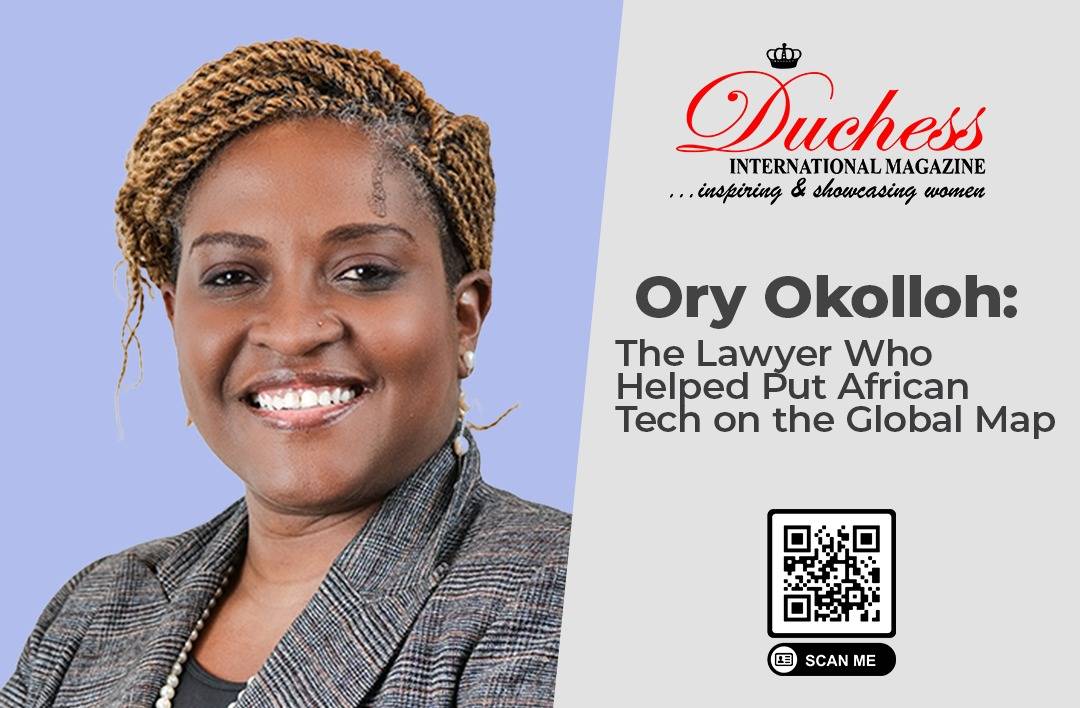
In early 2008, Kenya was grappling with the aftermath of a disputed presidential election. Violence had erupted across parts of the country, communities were divided, and reliable information was often difficult to obtain. People were witnessing events unfold around them, yet there was no efficient way to gather, verify and visualize what was happening in real time. Amid the uncertainty, a simple but powerful idea emerged: what if ordinary citizens could report incidents themselves and those reports could be mapped for the world to see? The idea would eventually become Ushahidi, a platform that transformed crisis reporting and helped introduce the world to a new reality—that some of the most innovative technology solutions could emerge from Africa. At the centre of that story was Ory Okolloh, a lawyer whose influence would extend far beyond the courtroom and into the heart of Africa’s growing technology ecosystem.
At first glance, Okolloh did not appear destined to become one of the most influential figures in African technology. Born in Kenya, she pursued a legal education and later earned a Juris Doctor from Harvard Law School, one of the world’s most prestigious institutions. A traditional legal career would have been the expected path. Yet Okolloh’s interests consistently stretched beyond legal practice. She was deeply interested in governance, civic participation and the role information plays in shaping societies. Through blogging and public commentary, she became known for her thoughtful perspectives on political accountability and citizen engagement. Long before she became associated with technology, she was already asking questions about power, transparency and how ordinary people could make their voices heard.
Those interests would prove crucial during Kenya’s political crisis. As reports of violence emerged from different parts of the country, traditional information channels struggled to keep pace. Citizens had information, but there was no effective system to collect and organize it. Together with a group of collaborators, Okolloh helped spark the creation of Ushahidi, a platform that enabled people to submit reports via SMS and the internet, which could then be mapped and analysed. The innovation addressed an immediate problem, but it also revealed a much larger possibility. Technology was not merely a tool for entertainment or commerce; it could strengthen civic participation, increase transparency and empower citizens during moments of uncertainty. In a period defined by instability, Ushahidi demonstrated the power of digital innovation to create clarity.
What made Ushahidi remarkable was not only what it did, but where it came from. At the time, conversations about technology innovation were still largely centred on Silicon Valley, Europe and parts of Asia. Africa was often viewed as a market for technology rather than a creator of it. Ushahidi challenged that perception. Developed in response to an African problem, it quickly gained international attention and was adapted for use around the world. Communities used it to monitor elections, coordinate disaster response efforts and gather information during crises. The platform’s success sent a powerful message: innovation did not have to originate in traditional technology capitals to have global relevance. Solutions built in Nairobi could influence how the world responded to emergencies thousands of miles away.
The impact of Ushahidi also helped reshape perceptions of Africa’s technology sector. Nairobi began attracting greater attention as a centre of innovation, while African entrepreneurs increasingly found themselves part of global conversations about technology and problem-solving. Although many people contributed to this transformation, Okolloh became one of its most recognizable voices. She represented a generation of African leaders who were proving that local knowledge could produce globally significant solutions. Rather than attempting to replicate ideas from elsewhere, they were building technologies rooted in the realities of their own communities. That approach would become one of the defining strengths of Africa’s technology ecosystem.
Yet Okolloh’s influence did not stop with a single platform. Her career reflects a broader understanding of how innovation ecosystems are built. She later joined Google as Policy and Government Relations Manager for Africa, working on issues related to internet access, technology policy and the regulatory environments that shape digital growth. While startup founders often receive the spotlight, sustainable innovation also depends on infrastructure, policy and access. Okolloh understood that groundbreaking ideas require supportive environments to flourish. Her work at Google allowed her to contribute to the broader conditions necessary for Africa’s digital economy to expand and mature.
From there, her journey evolved once again into philanthropy, impact investing and venture support. Through leadership roles at Omidyar Network, Luminate and later Verod-Kepple Africa Ventures, she became involved in identifying and supporting entrepreneurs tackling challenges across the continent. The move was consistent with a pattern visible throughout her career. Rather than focusing solely on personal achievement, Okolloh repeatedly positioned herself where she could help others build. She moved from creating solutions herself to helping create the conditions in which many more solutions could emerge. In doing so, she became part of the machinery that powers innovation behind the scenes, supporting founders, ideas and institutions capable of creating long-term impact.
Perhaps what makes Okolloh particularly fascinating is the consistency of her mission despite the variety of roles she has held. Whether working in law, technology, policy, philanthropy or venture capital, her work has repeatedly centred on participation, access and empowerment. She has often operated at the intersection of technology and society, focusing not simply on what technology can do, but on who benefits from it and who gets to shape its future. This perspective helps explain why her career has remained influential across sectors. She has never viewed innovation as an end in itself. Instead, she has consistently treated it as a tool for solving problems, expanding opportunities and strengthening communities.
Recognition followed naturally. Okolloh was named a Young Global Leader by the World Economic Forum, appeared on TIME’s list of the 100 most influential people in the world in 2014 and earned recognition among Africa’s most influential women. Yet her legacy cannot be measured only by awards or titles. Long before investors began describing Africa as a rising technology frontier, Ory Okolloh was helping prove that world-class innovation could emerge from African realities. Through Ushahidi, policy leadership, investment and advocacy, she helped challenge assumptions about where transformative ideas come from and who gets to build them. The map of African technology was already being drawn by countless innovators across the continent. Ory Okolloh helped ensure that the rest of the world paid attention.