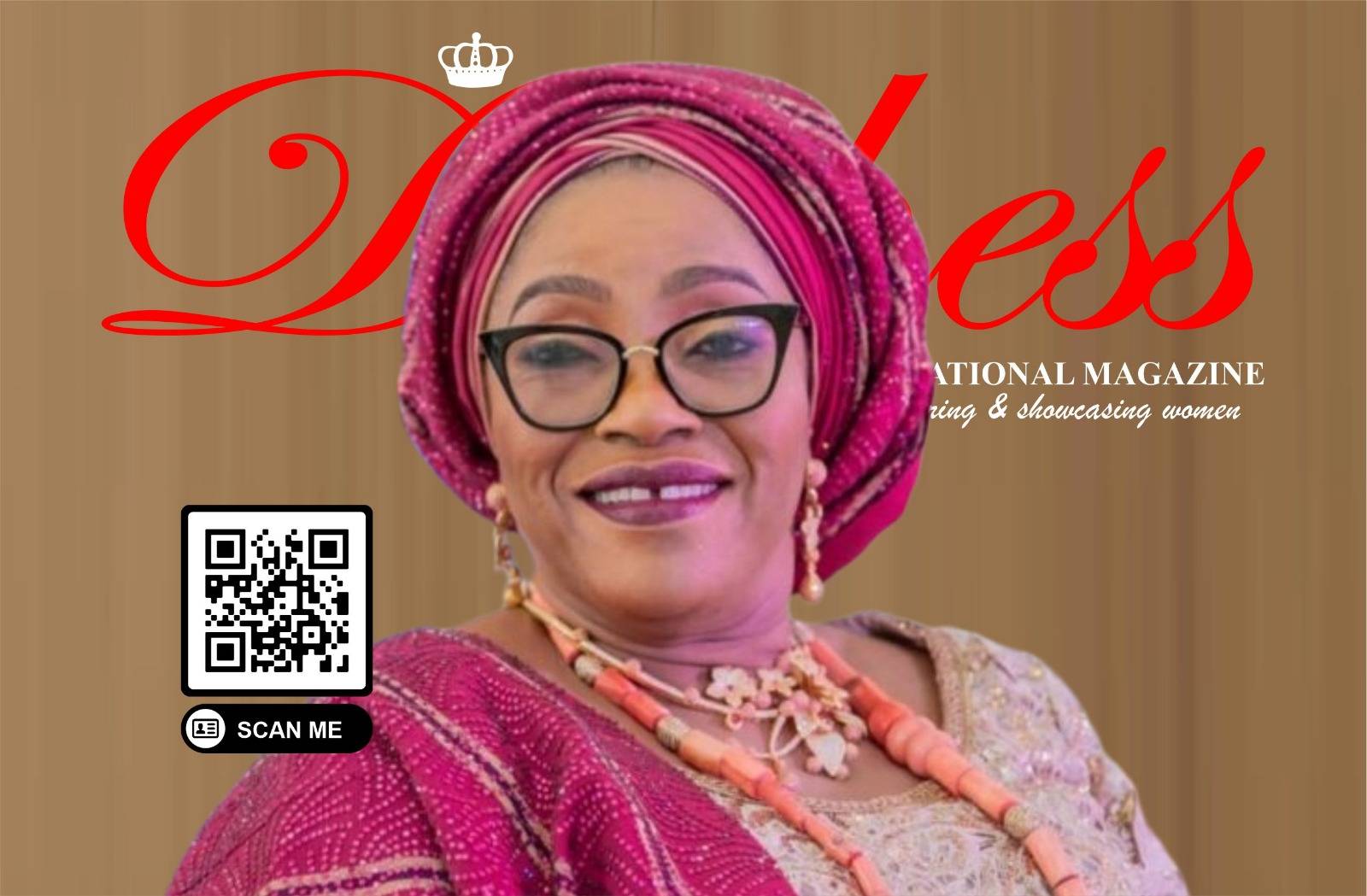
“Culture is not just our history; it is the lens through which we see ourselves and the compass guiding our future.” This belief has guided Hon. Olubunmi Amao throughout her career, shaping her into one of Nigeria’s most accomplished cultural administrators. Her professional journey spans public service, entrepreneurship, and cultural advocacy, demonstrating how vision and commitment can transform heritage into both identity and empowerment. Through her work, Amao has consistently shown that culture is not merely a reflection of the past, but a living force capable of influencing social cohesion, economic development, and national pride.
Born in Kano State and an indigene of Ibadan, Oyo State, Amao’s early life exposed her to Nigeria’s rich diversity of people, traditions, and languages. Growing up amidst this multiplicity nurtured a deep appreciation for identity, history, and coexistence—values that became central to her worldview. From childhood, she developed a curiosity about how culture shapes perception and drives society, an interest that would guide her education and professional choices. Her upbringing instilled the importance of service, discipline, and bridging differences—qualities she carried into both business and governance.
Her academic path further strengthened her strategic and analytical abilities. Educated in the United Kingdom and the United States, she earned a Bachelor’s degree in Business Administration and Accounting, followed by an MBA in Business Administration and Finance. These qualifications provided her with a robust understanding of organizational management, finance, and strategic planning. Amao’s education laid the foundation for her unique ability to blend creative thinking with structured leadership, a combination that would become central to her later success in both corporate and public roles.
Amao began her professional career in accounting after completing her national service, steadily advancing to become Group Managing Director of Joas Group of Companies. She also co-founded House of Furniture and Designs Limited, where she combined business acumen with creative innovation, showcasing her ability to turn vision into practical enterprise. These experiences honed her skills in organizational leadership, project management, and strategic decision-making, equipping her to navigate complex institutions and ambitious projects with confidence and precision.
Her move into public service further expanded her impact on society. She served as Special Adviser on Culture and Tourism and later Special Adviser on Establishment and Training to the late Governor Abiola Ajimobi of Oyo State. In these roles, Amao gained firsthand experience in policy coordination, governance, and institutional reform. She also used these platforms to reinforce her belief that culture is an engine of social cohesion and economic growth, designing initiatives that supported local artisans, promoted heritage tourism, and built capacity among young professionals.
Amao’s national prominence reached its peak during her tenure as Director-General of the Centre for Black and African Arts and Civilisation (CBAAC), beginning in September 2020. At CBAAC, she revitalized the institution, positioning it as a hub for African cultural engagement, education, and research. Under her leadership, the center hosted exhibitions, lectures, and collaborative programs that connected youth to African heritage, strengthened Nigeria’s role in Pan-African cultural discourse, and emphasized the economic potential of arts and traditional crafts. Her initiatives highlighted culture not only as a form of identity but as a driver of empowerment and social transformation.
Today, as former DG of CBAAC, Hon. Olubunmi Amao leaves behind a legacy of renewed institutional relevance and an enduring vision for cultural leadership in Nigeria. Her career exemplifies how purpose-driven leadership, rooted in education, experience, and conviction, can harness heritage for national development. Amao’s work continues to inspire a generation of leaders and creatives, proving that African culture, when preserved and promoted with care and foresight, becomes a living instrument capable of shaping identity, empowering communities, and defining Africa’s place in the world.