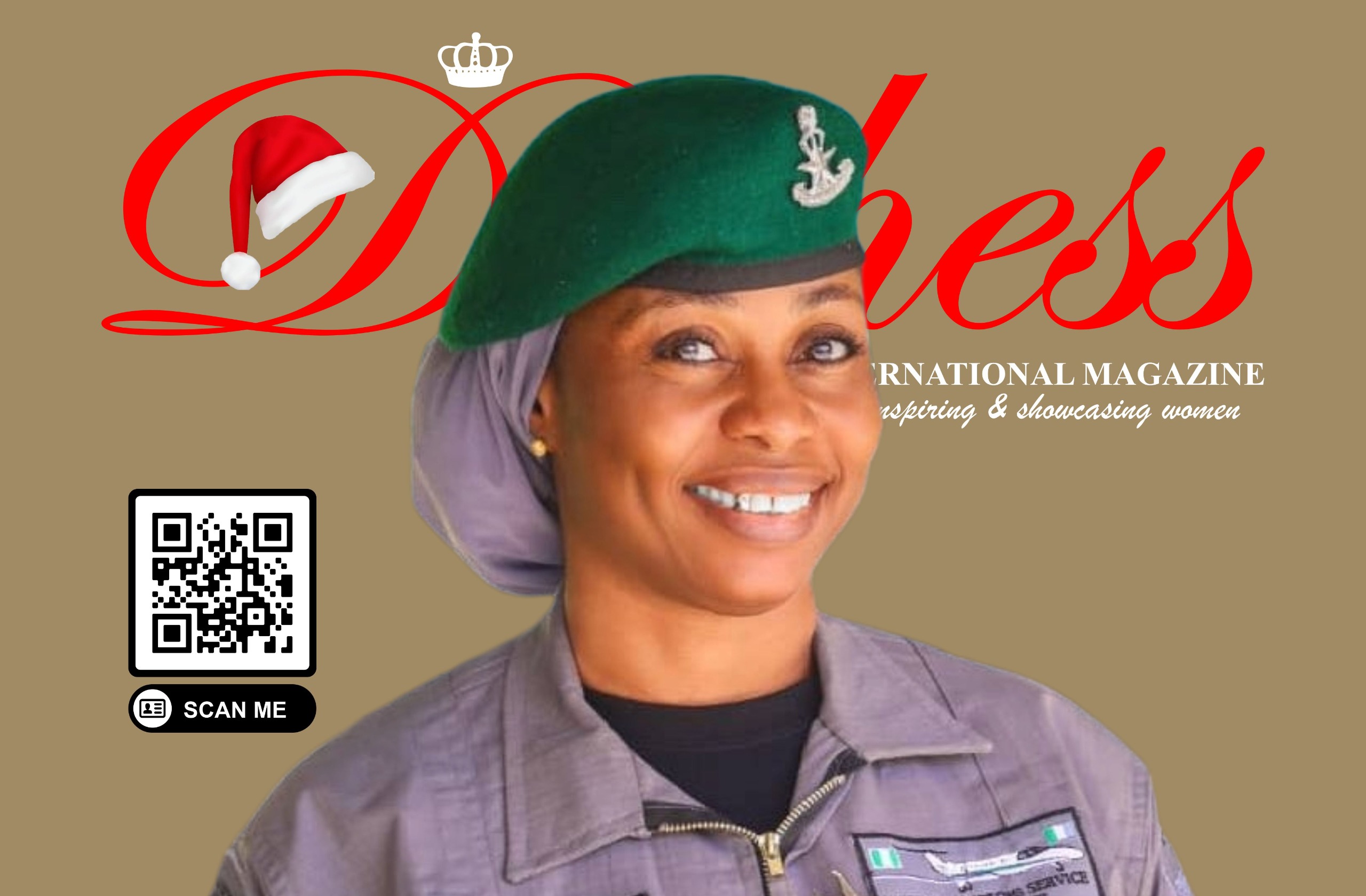
For generations, the aerial division of the Nigeria Customs Service existed as a realm of quiet exclusivity, its cockpit doors seemingly closed to one half of the nation’s talent. Aviation, with its exacting technical demands, was perceived as a preserve of male officers, a specialist frontier far removed from the established career paths available to women in uniform. That is, until Olanike Nafisat Balogun gracefully altered the trajectory of history, ascending not only into the skies but into the annals of progress as the first female pilot in the service’s storied existence.
Her narrative, however, transcends the remarkable personal milestone of commanding an aircraft. It is a testament to institutional evolution, a story about the deliberate dismantling of barriers and the elegant redefinition of possibility for women within Nigeria’s paramilitary fabric.
Commissioned as a Deputy Superintendent, Balogun distinguished herself from the outset through a poise that belied a formidable resolve. Her career unfolded during a pivotal period of modernisation for the Service, as its Airwing expanded to meet the sophisticated challenges of combating smuggling, illicit cross-border trade, and transnational crime. Where some might have seen only a traditionally male domain, Balogun recognised a critical national need and an opportunity to serve in an unparalleled capacity.
With characteristic determination, she embarked upon the most rigorous of aviation training regimens, mastering complex systems and meeting the most stringent international standards of flight proficiency and safety. The wings she earned were more than a qualification; they were a key, unlocking a role of profound trust and operational significance. Suddenly, the powerful surveillance aircraft of the Nigeria Customs Service, essential tools for border security and revenue protection, had a new, pioneering commander.
The resonance of her achievement, though born in the cockpit, echoes profoundly on the ground. In institutions where visibility so often dictates opportunity, Balogun’s quiet competence presented a powerful, alternative doctrine: that capability is defined by skill and dedication, not by gender. She became, almost unwittingly, a symbol of aspirational progress, a living assurance to women across the security services that no role, however technical or perceived as high-risk, is inherently beyond their reach.
Today, the legacy of Olanike Nafisat Balogun is measured in more than flight hours. It stands as a definitive turning point, a chapter wherein the Nigeria Customs Service not only enhanced its operational capacity but also consciously broadened its own horizon. She did not simply break a barrier; she illuminated a pathway. And in doing so, she has ensured that the skies above Nigeria remain, forever more, a domain open to all its dedicated guardians, inspiring future generations of women to aspire, to train, and ultimately, to lead.