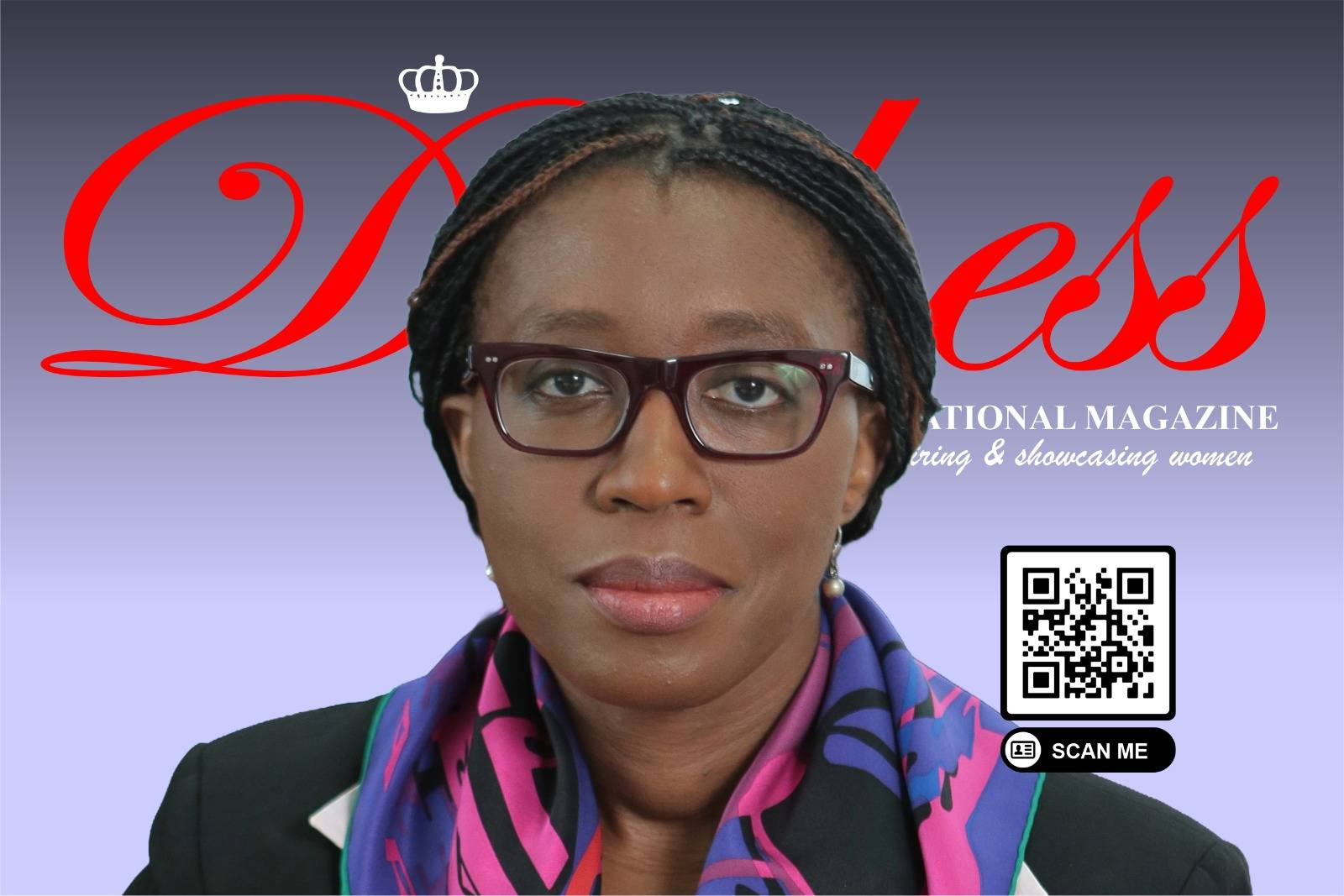
From Debt Premiums to Climate Panels: Dr. Vera Songwe’s Quiet Reconstruction of African Finance
For generations, African nations have largely approached global financial institutions as recipients rather than architects, accepting the terms of aid and debt relief set elsewhere rather than shaping them. Dr. Vera Songwe’s career has been built around narrowing that gap, not through a single dramatic intervention, but through decades of work inside the very institutions that set those terms, followed by the creation of new ones designed to change them.
Her path there was unusually broad from the start. Born in Cameroon, Songwe holds a PhD in Mathematical Economics from the Université Catholique de Louvain in Belgium, alongside a Master’s in Law and Economics and degrees in Economics and Political Science from the University of Michigan. She spent roughly a decade of her career based in Asia, working on World Bank programmes in Mongolia, Cambodia, and Morocco, before taking on roles as Country Director for Senegal, Cape Verde, The Gambia, Guinea-Bissau, and Mauritania, and later Regional Director for West and Central Africa at the International Finance Corporation. By the time she arrived at her best-known role, she had already spent years learning precisely how international development finance actually functions from the inside.
From 2017 to 2022, Songwe served as United Nations Under-Secretary-General and Executive Secretary of the Economic Commission for Africa, the ninth person to hold that position. It was during this period, as the COVID-19 pandemic threatened to push multiple African economies into default, that she became one of the most visible advocates for emergency liquidity measures, including an expanded allocation of Special Drawing Rights and a coordinated debt service suspension initiative, arguing that African economies needed breathing room to avoid a far costlier collapse. For that body of work specifically, the African Bankers Association named her African Icon of the Year in 2022.
Her most distinctive institutional legacy may be the Liquidity and Sustainability Facility, which she founded and now chairs. The facility was built to address a specific, long-standing distortion in global finance: African sovereign bonds have historically traded at a persistent premium relative to their actual default risk, raising borrowing costs across the continent for reasons that have as much to do with market perception as economic fundamentals. The LSF functions as a repo facility designed to bring greater liquidity and efficiency to African sovereign debt markets, giving international investors a more structured way to hold and trade it, the kind of financial infrastructure that, in theory, should narrow that premium over time.
Her influence extends deliberately into climate finance as well. She co-chairs the Independent High-Level Expert Panel on Climate Finance alongside economist Lord Nicholas Stern, work that has produced the widely cited Songwe-Stern report and informed climate finance discussions at COP27 and COP28. She has consistently argued that climate finance commitments made to the Global South by wealthier nations need to translate into actual, deployable capital rather than remaining largely rhetorical, a position that has placed her at the centre of some of the most contentious debates in international climate diplomacy.
Her work has not stayed confined to debt markets and climate panels. She has pushed to build functioning carbon markets across Africa, created the African Women’s Leadership Fund alongside Standard Bank, an impact fund designed specifically to accelerate the growth of African women fund managers, and launched the Digital Centre for Excellence, providing technical advice to governments navigating digital identity systems and the broader digital economy. Each initiative reflects a consistent pattern in her career: identifying a specific structural gap, inside finance, climate policy, or gender representation in capital markets, and building an institution rather than simply issuing a recommendation.
Recognition has followed across very different registers of influence. Forbes named her among its 50 Most Powerful Women in Africa, Jeune Afrique listed her among the continent’s 100 Most Influential people, and the Financial Times included her among its 25 Africans to Watch as early as 2015. More recently, she was named a member of the Pontifical Academy of Social Sciences, a Vatican body that advises on social and economic questions at the intersection of ethics and policy, placing her economic expertise in a markedly different forum than finance ministries or G20 panels.
What ties Dr. Vera Songwe’s career together is not a single institution or a single crisis response, but a consistent refusal to accept that African economies must simply absorb the terms set by others. Whether negotiating emergency liquidity during a pandemic, designing new market infrastructure to correct a pricing bias, or pushing climate finance commitments from promise into practice, her work has operated on the same underlying premise: that genuine economic standing is not requested from existing institutions, it is built, deliberately and technically, until the rest of the system has no practical choice but to engage with it on different terms.