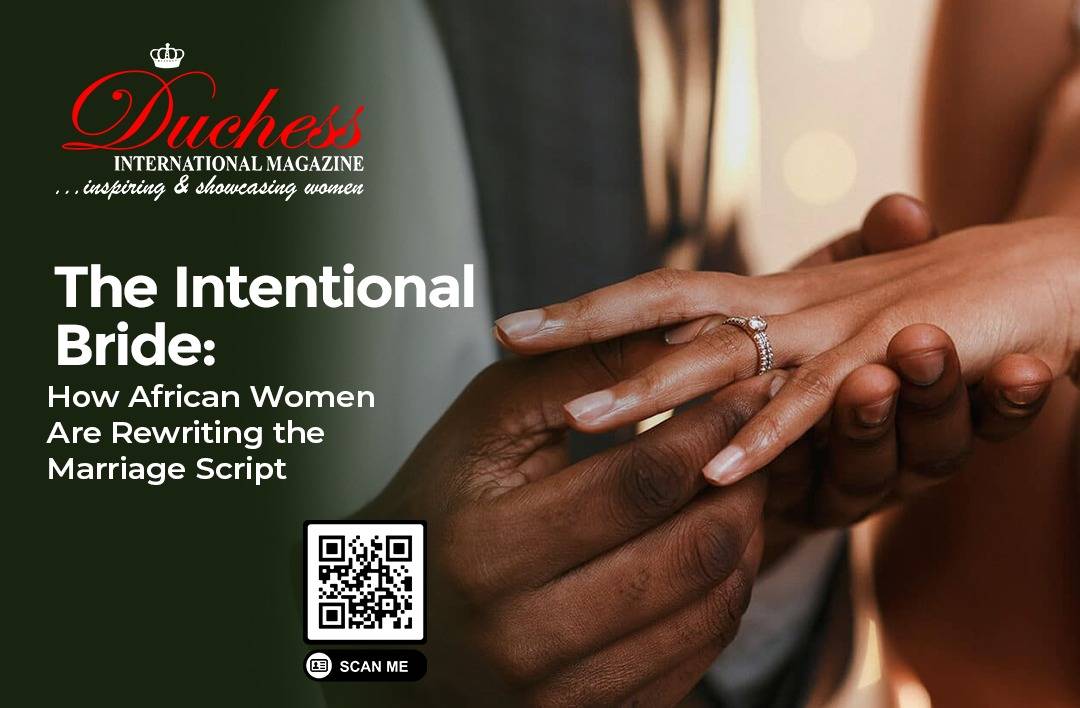
There was a time, not too long ago, when a young African woman’s life was expected to follow a predictable script. Finish school, find a good man, settle down, and build a home. Marriage was not just an option. It was seen as the defining milestone of womanhood, the moment a girl truly became a woman in the eyes of her family and community. But across the continent today, that script is being rewritten. A growing number of African women are choosing to delay marriage, not because they reject the institution, but because they are prioritising education, career, financial stability, and personal growth before walking down the aisle.
This shift is not happening in isolation. It is part of a broader transformation in how African women see themselves and their futures. More girls than ever before are completing secondary school and pursuing higher education. More women are entering the workforce, starting businesses, and building careers that demand time, focus, and sacrifice. The result is that many women are simply not ready to marry at the age their mothers or grandmothers did. They are not saying no to marriage. They are saying not yet, and they are saying it with clarity and confidence.
One of the strongest drivers of this change is education. Across Nigeria, Ghana, Kenya, South Africa, and beyond, young women are staying in school longer and aiming higher. A woman who spends years earning a degree, building a profession, or launching a business often wants to see the fruits of that investment before taking on the responsibilities of marriage. For many, this is not about rejecting partnership. It is about entering marriage as a complete person, with her own identity, her own income, and her own sense of purpose.
Financial independence is another powerful factor. In the past, marriage was often seen as a pathway to security. A woman married to a stable man was considered settled. Today, many African women are building their own security. They are earning salaries, running businesses, and investing in their futures. This financial freedom gives them options. It allows them to choose marriage from a place of want rather than need. It also means they are less likely to rush into a union simply because society expects it or because they feel they have no alternative.
There is also a growing awareness of the weight of marriage itself. Marriage, for many African women, comes with significant expectations. It often involves managing a home, raising children, supporting extended family, and navigating complex relationships with in-laws. It is a beautiful institution, but it is also a demanding one. Many young women today are honest about the fact that they are not emotionally or mentally ready for that level of responsibility. They want to grow first, to know themselves, to travel, to build friendships, to explore their faith, and to understand what they truly want from life.
The conversation around marriage is also changing because women are talking to each other differently. Social media, podcasts, and women’s communities have created spaces where women can share their experiences openly. They discuss the joys of marriage, but they also discuss the challenges. They talk about communication, compatibility, emotional labour, and the importance of choosing a partner wisely. These conversations have helped many young women understand that marriage is not a race and that marrying late is better than marrying wrong.
Of course, this shift still sparks debate. In many African communities, a woman who is unmarried by a certain age attracts questions, pity, or suspicion. Families worry. Friends make jokes. Religious leaders preach about the importance of marriage. The pressure is real, and many women feel it deeply. But even in the face of that pressure, many are choosing to wait, and they are doing so with a quiet conviction that their timing is valid.
It is important to note that this is not a story about men versus women. It is a story about changing times. Many young men are also prioritising career and stability before marriage. The economy is tough, the cost of living is high, and the responsibilities of family life are significant. Delaying marriage is often a practical decision made by both men and women who want to build a strong foundation before saying “I do.” The difference is that women have historically carried more social pressure to marry early, so the shift is more visible and more talked about when it involves them.
What is emerging across Africa is a more intentional approach to marriage. Young women are not rejecting love or partnership. They are simply asking for the time and space to become the best versions of themselves before they commit to sharing their lives with someone else. They are choosing to enter marriage with their eyes open, their finances in order, and their identities intact. That is not a rejection of tradition. It is an evolution of it.
For parents, communities, and institutions, the challenge is to support this shift rather than fight it. Young women need encouragement to pursue their dreams, not pressure to abandon them. They need mentors who understand that a woman’s value is not measured by her marital status. They need families who trust that a delayed marriage can still be a beautiful and lasting one. And they need a society that celebrates women for who they are becoming, not just for who they marry.
The changing timeline of marriage in Africa is not a crisis. It is a sign of progress. It reflects the fact that more women are educated, more women are financially independent, and more women are aware of their worth. They are not running away from marriage. They are walking toward it with intention, on their own terms, and in their own time. And when they finally say “I do,” they will do so not because they have to, but because they are ready.